





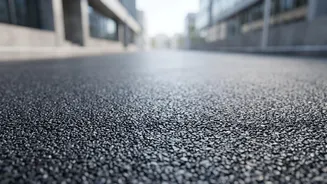
The Perennial Problem with Potholes
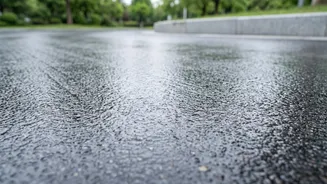
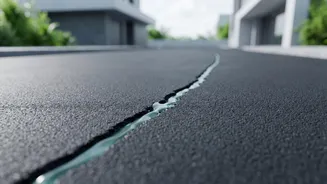
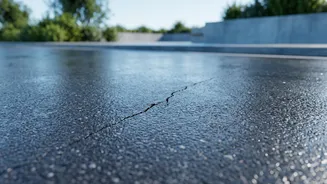
Every year, it's the same story. Heavy rains saturate the ground beneath our roads. Water seeps into tiny, almost invisible cracks in the asphalt. The pressure from passing vehicles does the rest, weakening the road's foundation and forcing the cracks to widen
until a chunk of the road gives way, creating a pothole. This cycle of damage is not just an inconvenience; it's a costly and dangerous affair, leading to vehicle damage and tragic accidents. The traditional solution involves a constant, disruptive, and expensive game of patch-up that rarely lasts, especially in areas with persistent rainfall. This is where the idea of a road that can fix itself becomes more than just science fiction.
Introducing Self-Healing Asphalt
Imagine an asphalt mix that can autonomously repair the microcracks that eventually become potholes. That's the core promise of self-healing asphalt. It’s not an entirely new material but rather conventional asphalt enhanced with smart additives. Instead of waiting for damage to become visible and require manual repair, this technology works to mend the road from within. By stopping tiny cracks in their tracks, it prevents them from growing into the craters that plague drivers. The goal is to dramatically extend the lifespan of our roads, reduce long-term maintenance costs, and improve overall road safety by creating more resilient and durable surfaces.
How Does It Actually Work?
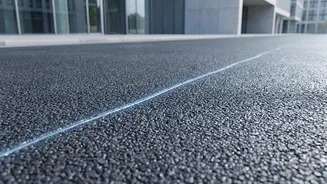
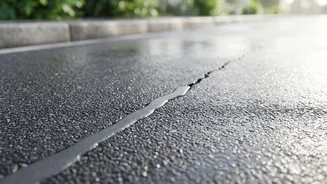
There are several clever methods to make asphalt heal itself, but two primary approaches stand out. The first involves embedding tiny capsules containing a rejuvenating agent, such as sunflower oil, into the asphalt mix. When a microcrack forms, it breaks open nearby capsules. The oil is released, flowing into the crack and softening the surrounding bitumen (the glue that holds asphalt together), allowing it to fuse back together, much like a healing wound. The second popular method uses induction heating. Fine steel fibres or iron oxide nanoparticles are mixed into the asphalt. When damage occurs, a special maintenance vehicle passes over the road, generating a magnetic field. This field heats the metallic fibres, which in turn melt the surrounding bitumen just enough for it to flow and seal the cracks before resetting into its original structure as it cools.
The ‘Effortless’ Advantage
The term ‘effortlessly’ in the headline refers to the autonomous or semi-autonomous nature of the repair. Instead of dispatching road crews to manually fill potholes after they’ve already formed, the healing happens proactively. With the capsule method, the repair is entirely passive—the road simply reacts to damage as it occurs. The induction method requires a vehicle to initiate the healing, but the process is quick, targeted, and far less disruptive than traditional roadwork. This could mean fewer traffic jams caused by maintenance, lower labour costs, and a significant reduction in the raw materials and CO2 emissions associated with frequent repairs. While the initial installation cost is higher, studies suggest its lifespan could be doubled, making it more economical over time.
The Future of Roads in India
So, could this be the answer to India's pothole woes? The potential is enormous. The National Highways Authority of India (NHAI) is actively exploring this technology, particularly the steel fibre-infused variant, as a way to combat the chronic issue of road damage. Research institutions like IIT-Madras are also working on variants suited for India’s specific climate and heavy traffic loads. However, widespread adoption faces challenges. The primary hurdle is the higher upfront cost compared to traditional asphalt, which can be a significant barrier for large-scale infrastructure projects. Furthermore, the technology is still being tested to prove its long-term performance and scalability in real-world conditions, from monsoon-heavy regions to bustling city corridors.