



The Psychology of the 'Special' Box
Why do we keep beautiful things locked away? Often, it stems from a fear of loss or damage. We worry that using a grandmother's teacup will lead to it breaking, erasing a physical link to a cherished memory. Psychologically, we hold onto objects out of a fear of forgetting
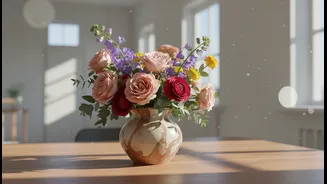
or a belief that we might need them someday. This creates what can be called a 'velvet rope' syndrome around certain possessions. We treat them like museum pieces, too precious for daily life. The irony is that in trying to preserve them, we deny them their purpose. A cup is meant to be held, a plate is meant to serve food, and a vase is meant to hold flowers. An object gathering dust in a box tells no new stories and brings no daily joy.
Honouring an Object Through Use
The true purpose of a gift, as tidying expert Marie Kondo suggests, is to be received and appreciated. When someone gives you a beautiful piece of pottery or you inherit a family set, the giver’s intention was for it to bring you happiness. Keeping it in storage arguably does the opposite of honouring that sentiment. Using an heirloom is a way of keeping the memory of the person who gave it to you alive in your daily routines. Eating a simple weekday lunch on a beautiful plate transforms an ordinary moment into something special. It’s a small act of rebellion against the idea that joy must be saved for a future date. Objects, especially handmade ones, are infused with the story of their creation. By using them, we add our own chapter to that story.
From Storage to Centrepiece
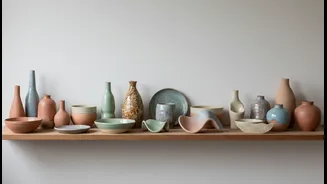
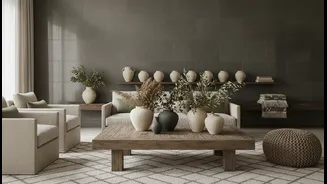
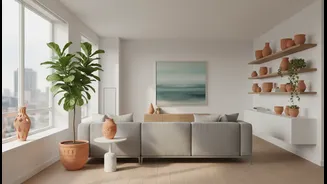
Liberating your ceramics from their cardboard prisons can dramatically enhance your living space. The key is to see them not just as functional items, but as decorative art. You can create a stunning gallery wall by hanging a collection of mismatched but color-coordinated plates. Floating shelves are perfect for showcasing unique vases or sculptures, allowing them to be appreciated from multiple angles. Consider the backdrop; a coat of paint inside a cabinet or on the wall behind a shelf can make your collection pop. You can also mix pottery with books, mirrors, and other art to create a layered, personal display. Even a single, striking piece of pottery can serve as a simple, elegant centrepiece on a dining table or mantel.
Creative and Unconventional Uses
Think beyond the original purpose of your ceramic pieces. A beautiful old teapot with a cracked lid can become a charming watering can for houseplants. Teacups can be repurposed as small planters for succulents, candle holders, or organizers for jewellery and office supplies. A large, ornate bowl that you never use for serving can hold keys and mail in an entryway, adding a touch of elegance to a functional space. Even broken pieces can find new life. Instead of throwing them away, you can use the shards to create a colourful mosaic for a tabletop, picture frame, or garden path, giving the object a new form of beauty.
What If It Breaks? The Beauty of Repair
The fear of an item breaking is a powerful deterrent, but it doesn't have to be the end of the story. The Japanese philosophy of Kintsugi, which means "golden joinery," offers a beautiful alternative. This art form involves mending broken pottery with lacquer mixed with powdered gold, silver, or platinum. Instead of hiding the cracks, Kintsugi highlights them, celebrating the object’s history of breakage and repair as part of its unique beauty. A mended piece is often considered more valuable, both monetarily and philosophically. Adopting this mindset allows us to see imperfections not as flaws, but as evidence of a life lived. It reframes a break not as an end, but as a transformation into something new and resilient.