

The Bread of Travellers and Farmers
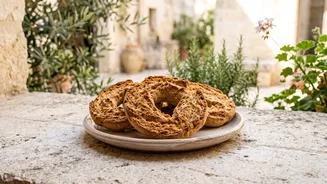
Friselle (pronounced 'free-zeh-leh') are hard, ring-shaped breads originating from Southern Italy, particularly the regions of Puglia, Campania, and Calabria. Their history is not one of gourmet kitchens but of practical need. Dating back centuries, they
were the ideal provision for sailors, merchants, and farmers who required food that wouldn't spoil during long periods away from home. In fact, they are sometimes called the 'bread of the Crusaders', as they were essential for troops travelling to the Holy Land. The iconic ring shape had a practical purpose: it allowed sailors to string them onto a rope for easy transport and storage on board ships.
The Secret is in the Second Bake
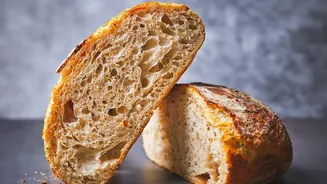
The key to friselle's remarkable shelf life lies in a simple but brilliant technique: double baking. The process begins with a standard bread dough, typically made from durum wheat or barley flour, water, yeast, and salt. The dough is shaped into rings and baked once. After this first bake, the still-warm bread rings are sliced horizontally and then returned to the oven for a second, slower bake at a lower temperature. This 'bisque' process, which literally means 'twice-cooked', drives out almost all the moisture from the bread, making it incredibly hard and dry. Without water, mould and bacteria cannot thrive, effectively preserving the bread for weeks or even months when stored in a dry place.
From Rock-Hard to Ready-to-Eat
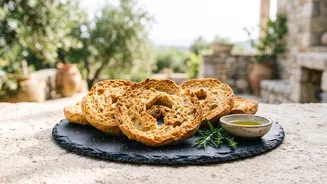
Eating a frisella straight from the bag would be a serious challenge for your teeth. The tradition of preparing them for a meal is a ritual in itself, known as 'sponzare' or 'bagnare'. This involves briefly rehydrating the bread by dipping it in cold water—some old traditions even called for using clean seawater—for just a few seconds. The goal is not to make it soggy, but to soften the porous, rough interior while leaving the smooth base with a satisfying crunch. This unique dual texture allows it to hold toppings without falling apart. Once softened, the frisella becomes the perfect canvas for simple, fresh ingredients.
A Taste of the Italian Summer
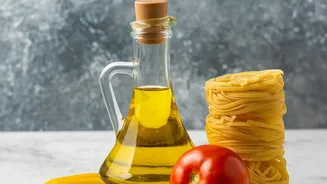
The classic way to enjoy friselle captures the essence of Mediterranean simplicity. After being softened, the bread is traditionally topped with fresh, chopped tomatoes, a generous drizzle of extra virgin olive oil, salt, and a sprinkle of oregano. This basic recipe can be endlessly adapted. Some add garlic by rubbing a clove on the bread before wetting it, while others might include capers, olives, or fresh basil. In Calabria, it's common to add sweet red Tropea onions. Historically, there were two main versions: a more rustic one made from barley flour for peasant families and a 'richer' one made from durum wheat for special occasions. Today, both are enjoyed as a light, refreshing meal, especially during hot summer months.