


Lingri ki Sabzi
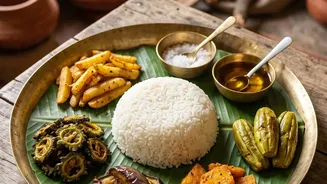
This unique dish comes from the hills of Himachal Pradesh and showcases a truly underused vegetable: the fiddlehead fern, known locally as 'lingri' or 'lungru'. These coiled fronds of a young fern are foraged from the forest floor during the monsoon season.
The sabzi is a simple stir-fry, typically prepared with mustard oil, cumin seeds, ginger, and turmeric, allowing the fern's earthy, slightly asparagus-like flavour to shine. The texture is crisp yet tender, making it a delightful and nutritious seasonal delicacy that connects directly to the local environment.
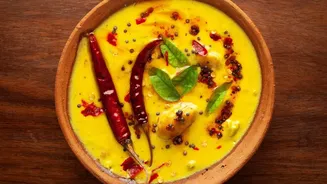
Kafuli
A comforting, nutritious staple from the Garhwal region of Uttarakhand, Kafuli is a thick, creamy curry made from leafy greens. While spinach and fenugreek (methi) leaves are the most common base, the dish truly represents the spirit of using what's available, sometimes incorporating other local greens. The greens are blanched and blended into a paste, then slow-cooked with a simple tempering of garlic, ginger, and cumin seeds in mustard oil. The dish is traditionally thickened with rice flour, giving it a smooth, hearty consistency that is perfect with steamed rice.
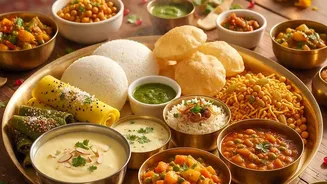
Authentic Undhiyu
Hailing from Gujarat, Undhiyu is a celebratory winter dish that is a masterclass in using seasonal produce. While popular, its authentic form uses a host of vegetables that are less common in other parts of India, such as 'surti papdi' (a type of flat bean), purple yam ('kand'), and raw bananas, alongside baby brinjals and sweet potatoes. The vegetables are stuffed with a flavourful masala of coconut, peanuts, and spices, and are traditionally slow-cooked upside down ('undhu') in an earthen pot. The result is a complex, layered dish where each vegetable retains its identity.
Kulith Usal (Horse Gram Curry)
Horse gram, or 'kulith', is a hardy, protein-packed pulse that has been a staple in rural Maharashtra and other parts of South India for centuries but remains largely under the radar in modern urban cuisine. Kulith Usal is a rustic, flavourful curry made from sprouted horse gram. The sprouting process enhances its nutritional value. The curry is often prepared with a base of onion, garlic, and traditional Maharashtrian spices like Goda masala, and has a wonderfully earthy flavour. It is a perfect example of turning a humble, resilient legume into a deeply satisfying meal.
Jackfruit Seed Curry
While ripe and raw jackfruit are widely used, their seeds are often discarded. However, in many South Indian kitchens, these seeds are treasured for their starchy texture and nutty flavour, reminiscent of chestnuts. Palakottai Poriyal or a similar curry from Kerala demonstrates this perfectly. The seeds are boiled until tender, their outer skin peeled, and then cooked into a delicious curry or a dry stir-fry (thoran) with coconut, mustard seeds, and curry leaves. It’s a fantastic zero-waste dish that turns a byproduct into the star of the show.
Chaulai ki Sabzi (Amaranth Leaves Stir-fry)
Amaranth, known as 'chaulai' or 'lal math', is a nutritional powerhouse, yet its leaves are often overlooked in favour of spinach or fenugreek. This simple stir-fry, popular in various forms across India including Goa and Maharashtra, is quick, healthy, and delicious. The red or green leaves are typically sautéed with garlic, onions, and green chillies, and sometimes finished with a sprinkle of grated coconut. The dish has a mild, earthy taste and is packed with vitamins and minerals, reviving an ancient green that deserves more attention.
Foxtail Millet Biryani
Before rice became ubiquitous, millets were the staple grains of India. Foxtail millet ('kangni' or 'thinai') is one such ancient grain making a well-deserved comeback. Substituting rice with foxtail millet in a biryani or pulao is not just a healthy switch but a nod to tradition. The millet grains are light, fluffy when cooked, and absorb the aromatic spices of the biryani beautifully. This dish demonstrates how ancient grains can be seamlessly integrated into popular, modern formats, offering a gluten-free and nutrient-dense alternative.
Panki
A delicate and lesser-known snack from Gujarat, Panki is a savoury pancake made from a fermented rice flour batter. What makes it unique is its cooking method: the thin batter is spread between two oiled banana leaves and cooked on a griddle. This steaming process imparts a subtle, fragrant aroma from the leaves into the soft, tender pancake. While rice flour is common, the preparation highlights an older, gentler cooking technique and uses a simple batter that can be adapted with other flours, truly celebrating the ingenuity of regional cuisine.