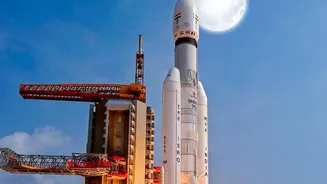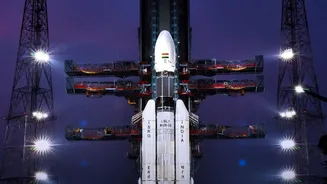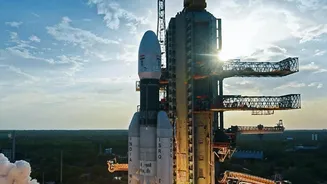



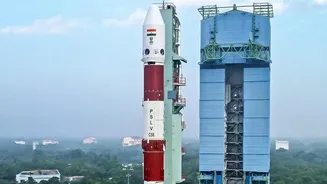
Meet Pushpak, India's Space Shuttle
Dubbed 'Pushpak', after the mythical flying palace from the Ramayana, ISRO's project is officially known as the Reusable Launch Vehicle - Technology Demonstrator (RLV-TD). Unlike traditional rockets that are discarded after a single use, Pushpak is designed
to fly back to Earth and land on a runway like an airplane. This capability is the cornerstone of its design, aiming to slash the high costs associated with space access. The configuration is that of a winged body, a hybrid between a spacecraft and an aircraft, which will serve as a test bed for various advanced technologies like autonomous landing and air-breathing propulsion. The goal is to create a fully reusable two-stage-to-orbit (TSTO) launch vehicle, where the winged craft would be the first stage, returning to base after releasing its payload-carrying upper stage.
The High Cost of Throwing Away Rockets
The primary reason space launches are so expensive is that the hardware, which can cost hundreds of crores, is typically expended during the mission. Imagine an airline building a brand-new aircraft for every single flight and you get the picture. The first stage of a rocket, which contains the most powerful engines and complex systems, can account for up to 80% of the vehicle's total cost. By recovering and reusing this stage, launch providers can offer their services at a fraction of the traditional price. ISRO's stated goal is to reduce the cost of putting a kilogram of payload into Low Earth Orbit by as much as 80-90%, potentially from around $20,000 per kg to a much more competitive figure. This economic shift is crucial for India to capture a larger share of the booming global satellite launch market, which is projected to grow significantly.
Nailing the Landing: A Major Milestone
The most critical and challenging part of developing a reusable spaceplane is proving it can return from its mission and land safely and autonomously. ISRO has conducted a series of crucial tests known as the Landing Experiments (LEX) to validate this capability. In a series of three tests completed between 2023 and mid-2024, the Pushpak vehicle was carried to an altitude of 4.5 kilometres by an Indian Air Force Chinook helicopter and released. In each test, the winged vehicle successfully navigated its way to a runway at the Aeronautical Test Range in Chitradurga, Karnataka, correcting its course against winds and landing with precision at speeds over 320 km/h. Critically, the third test reused the same vehicle from the second test, providing a direct demonstration of its hardware's reusability. With the landing phase now proven, ISRO is setting its sights on the next major challenge: an orbital re-entry experiment (ORE).
The Road Ahead and the Competition
While the successful landing tests are a significant achievement, the journey to an operational reusable launch vehicle is long. The next phase, the Orbital Re-entry Experiment (ORE), will involve launching the vehicle into orbit and having it survive the intense heat of re-entry before gliding back for a runway landing. This will require mastering hypersonic flight and robust thermal protection systems. Furthermore, the final version of the TSTO vehicle will depend on developing advanced air-breathing propulsion systems, like scramjets, which ISRO is also working on. The Pushpak programme is a key part of India's broader strategy to enhance its space capabilities, which includes developing a Next Generation Launch Vehicle (NGLV) and establishing the 'Bharatiya Antariksh Station' by 2035. This places ISRO in a global field where private companies like SpaceX have already operationalized reusable rockets, driving down launch costs and increasing flight frequency. India's approach, with a winged, runway-landing vehicle, is a different technological path aimed at achieving the same economic goal.