




The Universal Quest for the Perfect Match
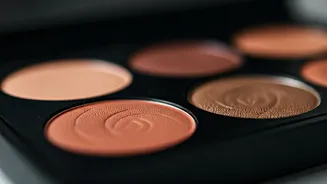
For decades, finding the right foundation has been a frustrating and often costly process. Many women purchase the wrong shade multiple times before finding a suitable match, leading to a drawer full of barely-used bottles. The challenge lies in the complexity
of human skin. A perfect match requires correctly identifying not just the skin's surface tone, but also its unique undertones—the subtle cool, warm, or neutral hues beneath the surface. Traditional methods, which rely on in-store swatches and subjective self-assessment, often fail to capture this complexity, resulting in a finish that looks unnatural, ashy, or orange.
How AI Is Changing the Game
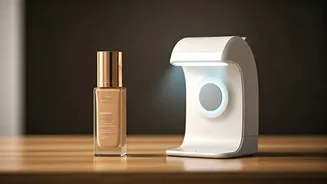
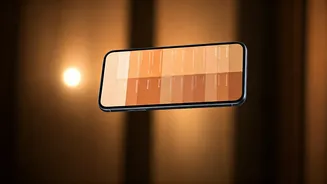
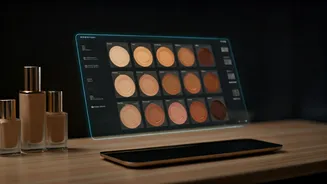
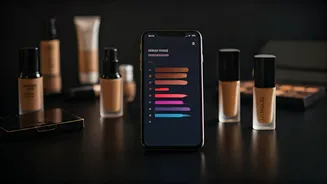
Artificial intelligence is stepping in to solve this age-old problem by replacing subjective guesswork with data-driven precision. Using your smartphone's camera, AI-powered tools analyse your skin in a way the naked eye cannot. These sophisticated algorithms scan multiple points on your face to detect your exact skin tone and, crucially, your undertones. Some advanced systems even take environmental factors like the current lighting into account to ensure the recommendation is as accurate as possible. Instead of you guessing whether your veins look more blue or green, the technology provides a scientific analysis, instantly cross-referencing your skin data with extensive databases of foundation shades to find your ideal products.
The Tech Behind the Brands
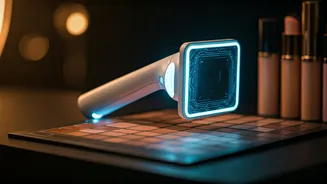
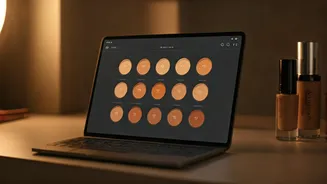
Several beauty brands and retailers are at the forefront of this technological shift. Il Makiage’s popular PowerMatch quiz uses a machine-learning algorithm developed by analysing data from hundreds of different skin-tone combinations. While it's a quiz, it's powered by extensive data to refine its suggestions. Sephora's in-store Color iQ service uses a handheld device to scan your skin and assign it a specific number, which then corresponds to precise matches across thousands of foundation options. Other technology platforms like Perfect Corp. partner with major brands like MAC and Estée Lauder, offering AI analysis that can identify nearly 90,000 unique skin tones. Some newer technologies, like one used by Clarins, even turn a smartphone into a scientific tool by capturing a rapid sequence of images in changing light to precisely measure pigmentation.
Does It Really Eliminate Guesswork?
The big question is whether these tools are truly foolproof. The answer is: they are exceptionally good, but not perfect. The accuracy of an at-home AI analysis heavily depends on external variables. The quality of your smartphone camera and, most importantly, the lighting conditions can significantly impact the result. An analysis done in dim, artificial light will be far less accurate than one done in natural daylight. While many users report finding their perfect match on the first try, others find the AI recommendation is a starting point that needs minor tweaking. These tools are vastly more accurate than traditional quizzes that rely on self-assessment. Brands report that AI matching has significantly increased conversion rates and reduced the number of returns due to shade mismatches, proving that the technology is a major leap forward.
Tips for Getting Your Best AI Match
To get the most out of this technology, a little preparation goes a long way. First, always use natural daylight for your scan; stand facing a window for the most even and true-to-life lighting. Ensure your face is clean and free of any makeup, which could skew the analysis. When you take your selfie, hold the phone at arm's length and make sure your face is fully in the frame. Some tools may ask you to hold a white card next to your face to help calibrate the colours. If you get a recommendation, use the virtual try-on feature if available. This allows you to see how the shade looks on your face in real-time, giving you an extra layer of confidence before you decide to purchase.