



The High Cost of Reaching for the Stars
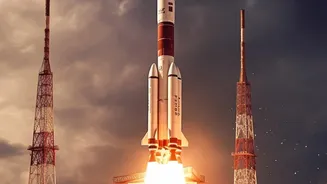
For decades, the standard model for space launches has been incredibly wasteful. A powerful, expensive rocket blasts off, delivers its payload—like a satellite—into orbit, and then its various stages are discarded, burning up in the atmosphere or falling
into the ocean. This is akin to building a brand-new aircraft for every single flight and then throwing it away upon arrival. The hardware and structural components of a launch vehicle account for the vast majority of its price tag, with some estimates suggesting fuel and other expendables make up only 20% of the total cost. This expendable model has kept the cost of accessing space prohibitively high, creating a significant barrier for satellite companies, researchers, and national space programs.
The Reusability Revolution
The solution to the high-cost problem is reusability. The concept is simple: if you can recover the most expensive parts of the rocket and fly them again, the cost per launch plummets. Companies like SpaceX have famously demonstrated the economic viability of this model with their Falcon 9 rockets, which perform vertical landings. ISRO, renowned for its cost-effective missions, is pursuing its own unique path to reusability. The goal is to slash launch costs by a factor of ten, potentially bringing the price of sending a kilogram to Low Earth Orbit down significantly from current rates. This would not only benefit India's national missions but also make it an even more formidable competitor in the global commercial launch market.
Enter Pushpak: ISRO's Winged Solution
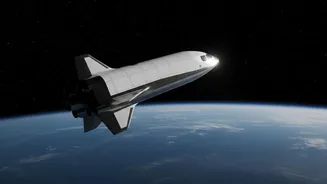
ISRO's answer to the reusability challenge is a winged space plane known as the Reusable Launch Vehicle-Technology Demonstrator (RLV-TD), officially named 'Pushpak'. Unlike rockets that land vertically using engine power, Pushpak is designed to re-enter the atmosphere and land horizontally on a runway, much like an aircraft or the former US Space Shuttle. This winged body design is a key part of ISRO's long-term vision for a Two-Stage-to-Orbit (TSTO) launch system, where a reusable winged vehicle would act as the upper stage, deploying a payload and then flying itself back to Earth. To perfect this crucial landing phase, ISRO has been conducting a series of tests called the Landing Experiment (LEX).
How Autonomous Winged Landing Slashes Expenses
The autonomous landing capability is where the real cost-saving magic happens. In a series of successful tests, Pushpak was carried to an altitude of 4.5 kilometres by a Chinook helicopter and released. From there, the vehicle had to navigate and land entirely on its own. Using a sophisticated suite of indigenous technologies—including navigation systems, control systems, and sensors—Pushpak demonstrated it could autonomously correct its course, manage its descent, approach a runway at high speed (around 350 kmph), and perform a precise, gentle touchdown. By mastering this autonomous landing, ISRO eliminates the need for expensive and complex ocean recovery operations. The vehicle lands on a conventional airstrip, where it can be inspected, refurbished, and prepared for its next mission. Reusing the vehicle's structure, avionics, and thermal protection systems multiple times means ISRO doesn't have to build a new upper stage for every single launch, directly translating into massive cost reductions.
The Path to an All-Indian Orbital Launcher
The successful landing experiments are critical steps, but they are part of a much larger journey. ISRO has proven the vehicle can land autonomously from a simulated high-altitude approach. The next phases will involve launching it into sub-orbital and then orbital space to test its ability to withstand the harsh conditions of re-entry before performing its autonomous landing. The ultimate aim is to integrate this technology into a fully operational, two-stage reusable rocket. Achieving this will position India as a leader in reusable launch technology, capable of offering highly competitive launch services for both domestic and international customers. This capability is crucial for deploying satellite constellations, supporting the future Bharatiya Antariksh Station, and enabling more ambitious deep-space exploration missions.