


Understanding the Price Spike
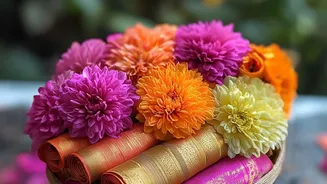
As Onam approaches, flower prices across Kerala and neighbouring states have surged. Poor rainfall and adverse weather in key cultivation hubs like Tamil Nadu and Karnataka have pinched supplies, driving up costs. Marigolds, a pookalam staple, have seen
prices jump to between ₹140 and ₹200 per kilogram in various markets, while flowers like chrysanthemums and oleander are fetching even higher rates of ₹400 to ₹600 per kg. This price hike is a direct result of supply chain issues and high festive demand, a challenge many families are facing this year.
Embrace Hyper-Local Flowers
The most authentic pookalams traditionally used flowers gathered from the neighbourhood. Revive this practice by looking around your own garden or locality. Small, vibrant blooms like the white Thumba (Leucas aspera), red Chethi (Ixora), hibiscus, and yellow Mukkutti are traditional choices that are often overlooked. Using these hyper-local flowers not only reduces costs and your carbon footprint but also connects you more deeply to the original spirit of the festival. Even common flowers like jasmine and hibiscus can add fragrance and colour without the high price tag of commercially transported varieties.
Go Green with Decorative Leaves
A pookalam doesn’t have to be made exclusively of petals. Incorporating various types of leaves can add beautiful shades of green, create interesting textures, and fill space economically. Use fresh mango leaves to create a traditional, authentic border for your design. You can also use other shapely leaves from your garden to form the base of the design or to create outlines between different coloured sections of petals. This reduces the total quantity of flowers needed and adds a lush, natural feel to your creation.
Think Beyond the Bloom
Get creative by incorporating other natural, biodegradable materials. Coloured rice, lentils, pulses, or even coloured sawdust can be used to fill in sections of your design, creating a unique mosaic effect. You can make your own natural dyes to colour these materials; turmeric powder creates a vibrant yellow, while beetroot juice can provide a deep pink or red. This method is not only cost-effective but also eco-friendly, ensuring your pookalam is both beautiful and sustainable.
Smart Designs and Smaller Sizes
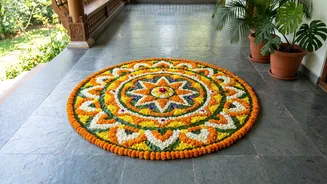
A beautiful pookalam is not defined by its size. For those living in apartments or with limited space, a smaller, more intricate design can be just as impactful. Consider making a compact pookalam right at your entrance. Simple geometric patterns, mandalas, or concentric circles often require fewer flowers but look elegant and festive. Planning your design on paper first can help you estimate the quantity of flowers needed, preventing waste. You can also draw your outline with chalk on a banana leaf or a woven mat as a biodegradable base.
Pool Resources with Neighbours
Onam is a community festival, and creating a pookalam can be a shared activity. Consider pooling funds with neighbours in your apartment building or on your street to buy flowers in bulk, which can often be cheaper. You could even create one larger, collaborative pookalam for the entire community to enjoy. This not only saves money but also strengthens community bonds and brings back the collective spirit of the celebration, where families and neighbours traditionally gathered to create these floral masterpieces together.