








The New Face of Financial Fraud
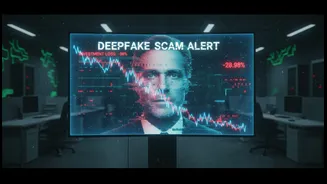
A new and alarming form of financial fraud is targeting Indians, using artificial intelligence to create highly realistic but completely fake videos of celebrities and public figures. These 'deepfakes' are used to endorse fraudulent investment schemes
that promise unbelievable profits. In one recent, stark example from July 2026, a professor in Bengaluru lost over ₹61 lakh after being duped by a deepfake video of Union Finance Minister Nirmala Sitharaman. The ad, which appeared on Facebook, directed her to a fake trading platform, and a sophisticated scam unfolded over Telegram and international calls, showing her fabricated profits to build trust before she lost her savings. This is not an isolated incident. Prominent figures like Ratan Tata, Sachin Tendulkar, Alia Bhatt, and Shah Rukh Khan have all had their likenesses stolen by scammers to create convincing but malicious content. A McAfee report noted that Shah Rukh Khan was the most exploited celebrity in India for deepfake scams in 2025, with 90% of Indians reporting they had encountered such fake endorsements.
Hype vs. Reality: What to Actually Worry About
The headlines about deepfakes can sound like something from a science fiction movie, creating a sense of panic. The 'hype' suggests that we are surrounded by flawless, undetectable fake videos. The 'reality' is more nuanced. While the technology is advancing, many deepfakes used in scams still have tell-tale flaws. The real danger isn't necessarily the technical perfection of the deepfake, but its psychological power. Scammers are not trying to win an Oscar; they are trying to exploit your trust in a familiar face and your desire for a financial shortcut. The threat is less about super-advanced AI and more about the clever use of 'good enough' fakes on platforms where content spreads quickly. The goal for an average person shouldn't be to become a forensic video analyst. Instead, the focus should be on developing a healthy skepticism towards financial offers that appear on social media, no matter who appears to be endorsing them.
How to Spot a Deepfake Investment Scam
You don't need to be a tech expert to protect yourself. The clues are often in the details of the video and the nature of the offer itself. Look for visual inconsistencies like unnatural eye movements or blinking patterns, blurry edges around the face, and lip-syncing that is slightly off. The audio can also be a giveaway; listen for a robotic, flat tone or strange pauses and rhythms in speech. However, the biggest red flag is always the message itself. Be extremely wary of any video promising 'guaranteed' or 'risk-free' high returns. Legitimate investments never come with such promises. Also, question the source. Is the video on a celebrity's official, verified social media account, or on a random page? Scammers often use counterfeit news websites that mimic well-known media outlets to add a layer of false credibility.
Your Financial Self-Defence Plan
Beyond spotting individual fakes, a robust financial defence strategy is crucial. First, always verify. If you see an investment opportunity, no matter how compelling, verify it through official channels. Visit the company's official website or check with financial regulators like the Securities and Exchange Board of India (SEBI) or the Reserve Bank of India (RBI). Both SEBI and the RBI have issued public warnings about these scams and are actively working to address the risks posed by AI. Never let a sense of urgency, a key tactic of scammers, rush you into a decision. Be cautious of requests for payments via cryptocurrency, wire transfers, or gift cards, as these are difficult to trace. Finally, if you encounter a suspicious video or ad, report it immediately on the social media platform to help prevent others from falling victim.