






The North Indian Thali: Hearty and Grain-Free
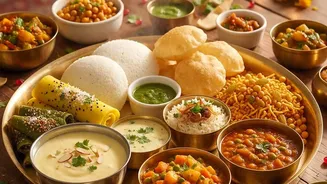
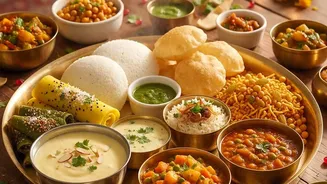
In North India, Navratri fasting is often strict, avoiding common grains and regular salt. The vrat thali here is a testament to the creative use of 'alternative' flours and pseudo-grains. Key ingredients include Kuttu ka atta (buckwheat flour), Singhare
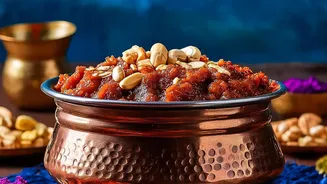
ka atta (water chestnut flour), and Sama ke chawal (barnyard millet). A typical platter might feature soft Kuttu ki puri or paratha, often paired with a simple yet flavourful potato curry (Aloo ki sabzi) made with rock salt (sendha namak), tomatoes, and ginger. Other popular dishes include Samvat rice khichdi, a comforting porridge-like dish, and a side of cooling cucumber raita. For dessert, a rich Singhare atte ka halwa completes this wholesome, earthy meal.
The Gujarati Thali: A Balance of Sweet and Savoury
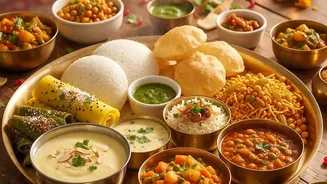
Gujarat, famous for its elaborate thalis, brings its signature sweet and savoury touch even to its fasting meals, often called 'farali' food. A Gujarati vrat thali is a delightful experience, featuring dishes like Rajgira puri (made from amaranth flour) and a mildly sweet and tangy potato curry. Another highlight is the Sabudana khichdi, prepared with soaked tapioca pearls, roasted peanuts, and mild spices. You might also find Farali Pattice, which are potato patties stuffed with a sweet mixture of coconut and dried fruits. To drink, there is often a creamy buttermilk (chaas) or a sweet lassi. The philosophy here is to create a meal that is both delicious and provides sustained energy for the day's festivities, including Garba and Dandiya.
The Maharashtrian Thali: A Love for Sabudana
In Maharashtra, the Navratri vrat menu is dominated by a few key ingredients, with sabudana (tapioca pearls) and peanuts taking centre stage. A classic Maharashtrian fasting thali is incomplete without the iconic Sabudana khichdi, which is fluffier and often spicier than its Gujarati counterpart. Another beloved item is the crispy Sabudana vada, a deep-fried patty of tapioca and potatoes, best enjoyed with a sweet yogurt dip. For a rice substitute, 'bhagar' or 'varai' (barnyard millet) is cooked into a savoury porridge. Roasted peanuts (shengdana) are used generously, either whole, crushed, or as a coarse powder, adding a nutty flavour and texture to many dishes. Sweet dishes like Ratalyacha Kees (grated sweet potato stir-fry) or Sabudana kheer add a perfect finishing touch.
The South Indian Approach: Prasadam and Sundal
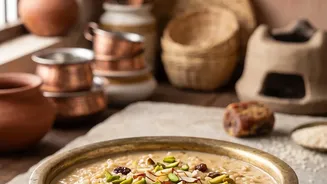
Fasting during Navratri in South India is interpreted differently. While some may fast strictly, the focus is often on preparing 'sattvic' food (without onion or garlic) to offer as 'prasadam' or 'naivedyam' to the Goddess and guests visiting the 'Golu' doll displays. Instead of a grain-free diet, the tradition revolves around preparing a different dish each day. The most iconic of these is Sundal, a savoury dish made from various legumes like chickpeas, black-eyed peas, or green gram, seasoned with mustard seeds, curry leaves, and fresh coconut. Sweet preparations are also vital, with dishes like Sakkarai Pongal (a sweet dish of rice, lentils, and jaggery) or Payasam (a milk-based pudding) being common offerings. This approach emphasizes community sharing and celebrating the harvest's bounty.