







What Exactly Are We Eating?
The term ‘ultra-processed food’ or UPF can be confusing. It doesn’t just mean processed. Making paneer at home is a process, but a world away from what defines a UPF. According to the widely used NOVA classification system, UPFs are industrial formulations
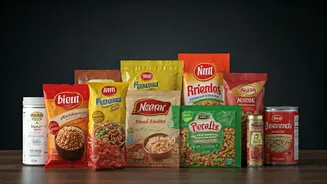
made mostly from substances extracted from foods (like fats, starches, and sugars) or synthesized in labs (like emulsifiers, artificial flavours, and colours). These aren’t really foods in the traditional sense; they are products with five or more ingredients, designed for hyper-palatability, long shelf life, and convenience. Think of packaged snacks, sugary breakfast cereals, instant soups, ready-to-eat meals, and fizzy drinks. In India, the market for these products has exploded, with sales growing a staggering 40-fold between 2006 and 2019.
The Hidden Health Consequences
This shift in our national diet is having dire consequences. A massive 2024 review in the British Medical Journal directly linked high consumption of UPFs to 32 harmful health effects. These include a roughly 50% higher risk of death from cardiovascular disease, a greater risk of anxiety and depression, and a 12% increased risk of type 2 diabetes. Other major studies have confirmed strong links to obesity, certain cancers, and other non-communicable diseases. The problem is that UPFs are engineered to make us overeat; studies show people consume hundreds of extra calories per day on a UPF-heavy diet. They displace nutritious whole foods, can damage our gut microbiome, and are often low in essential fibre and vitamins while being loaded with salt, sugar, and unhealthy fats. This isn't just a Western problem; in India, this dietary shift is directly fuelling our crises of obesity and diabetes.
Why Our Current Labels Fail Us
A consumer should be able to look at a food package and quickly understand if it's a healthy choice. Unfortunately, our current labelling system makes this nearly impossible. A product can have a green dot, indicating it's vegetarian, and be marketed with health claims like “added vitamins,” yet still be a UPF packed with sugar and chemical additives. The Food Safety and Standards Authority of India (FSSAI) has been deliberating on front-of-pack labelling (FOPL) for over a decade. Their 2022 draft proposal suggested an 'Indian Nutrition Rating' (INR), a system of 1/2 to 5 stars, similar to those on electronics. However, public health experts have criticised this model, arguing that a star rating can create a misleading “health halo.” A product high in sugar and fat could still get a couple of stars, confusing consumers into thinking it's a reasonable choice rather than an unhealthy one.
A Call for Unambiguous Warnings
There is a better way. Countries like Chile have shown a clear path forward. In 2016, Chile implemented mandatory black, octagonal 'stop sign' warning labels on products high in sugar, salt, saturated fat, or calories. There is no room for interpretation: the label clearly states 'HIGH IN SUGAR'. The results have been remarkable. These policies led to significant decreases in household purchases of products with warning labels, with reductions of 37% in sugar and 22% in sodium from labelled products. It also spurred the industry to reformulate products to avoid the warning labels. This is the kind of reality check Indian consumers deserve. We don't need a confusing star rating that requires calculation; we need a simple, science-backed warning that tells us immediately if a product is unhealthy.
Empowering Consumers Is a Public Health Duty
The argument that individuals should just “make better choices” ignores the reality that choices are only possible with clear information. The current environment, with misleading marketing and confusing labels, undermines personal responsibility. The Supreme Court of India recognised this, recently directing the government to finalize and implement FOPL rules. This is a matter of public health and consumer rights. A strong, unambiguous warning label system is not about banning foods; it is about providing the transparency necessary for people to protect their own health. It shifts the burden from the consumer deciphering complex ingredient lists to the manufacturer being honest about the nature of their product. As the consumption of UPFs continues to drive a national health crisis, the need for this reality check on our labels has never been more urgent.