




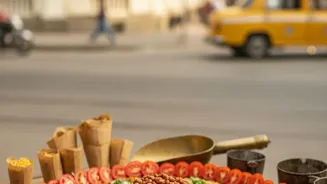
The Undisputed Hero: Puffed Rice
Before we get to the 'jhal,' or the spice, we must first pay tribute to the 'muri.' In Bengali cuisine, puffed rice is not just a snack ingredient; it's a staple. Eaten with curries for a light meal, mixed with ghee and sugar for a quick breakfast, or enjoyed
plain, muri is a canvas of delightful crunchiness. Its magic lies in its simplicity and its ability to absorb flavours without turning soggy immediately. A good Jhalmuri begins with high-quality muri—light, airy, and perfectly crisp. This isn't just a base; it's the soul of the dish. The puffed rice provides the texture that contrasts beautifully with the soft, spicy, and tangy elements that are added to it, making every spoonful a multi-layered experience. Its neutral taste allows the potent flavours of mustard oil and spices to shine, while its porous structure soaks them up to deliver a flavour bomb in every bite.
A Symphony of Flavours and Textures
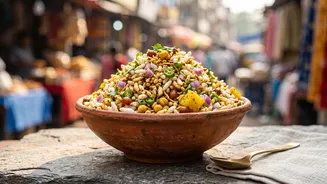
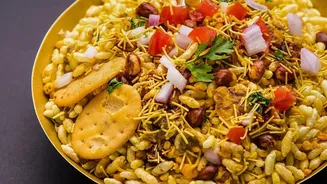
Jhalmuri is a masterclass in balancing flavours and textures. To the puffed rice, a medley of fresh ingredients is added. Finely chopped onions, tomatoes, and green chillies provide a sharp, fresh crunch. Boiled potatoes and chickpeas (chana) or sprouted lentils add a soft, earthy element. Often, you'll find slivers of raw mango or coconut, which bring in notes of sourness and sweetness respectively. The snack is then elevated with a generous sprinkle of 'chanachur' or Bombay mix, adding another layer of fried, crunchy goodness. But the single most important flavouring agent is the pungent, unrefined mustard oil, a non-negotiable in any authentic Jhalmuri recipe. Its sharp, almost sinus-clearing quality is what gives Jhalmuri its characteristic Bengali identity, distinguishing it from other similar puffed rice snacks found across India.
The Magic of the 'Bhaja Moshla'
Beyond the mustard oil, another secret weapon in the Jhalmuriwala's arsenal is the 'bhaja moshla'. This literally translates to 'fried spice mix' and is a closely guarded recipe that varies from vendor to vendor. Typically, it involves dry-roasting spices like cumin seeds, coriander seeds, and dried red chillies, and then grinding them into a coarse powder. This blend imparts a smoky, aromatic depth that pre-packaged spice mixes can never replicate. The bhaja moshla, combined with a pinch of black salt (bitnoon) and perhaps some tamarind pulp for tanginess, creates a complex flavour profile that is spicy, savoury, tangy, and aromatic all at once. The final act involves a vigorous, rapid tossing of all the ingredients in a steel container, a technique that perfectly coats every grain of muri without crushing it.
More Than a Snack, It's an Emotion
To call Jhalmuri just a snack would be an understatement. It is woven into the very fabric of Bengali life. It's the go-to treat on a local train journey, the perfect accompaniment to an evening 'adda' (a leisurely chat with friends), and the quick, satisfying bite after a long day of school or work. Served in a 'thonga' (a paper cone, often made from old newspapers), it’s the ultimate portable snack. Its appeal cuts across all ages and social classes. The act of sharing a cone of Jhalmuri is a communal experience, a simple joy that connects people. It evokes a powerful sense of nostalgia for anyone who has grown up in or around Bengal, a taste of home that is both simple and profoundly comforting.