


The Concept of Kofta
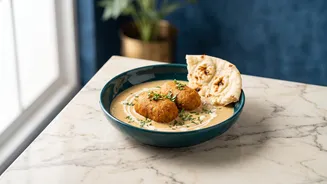
Before diving into the specifics, it's helpful to understand that 'kofta' refers more to a culinary concept than a single recipe. Originating from the Persian word 'kufta', meaning 'pounded meat', the dish traditionally involved minced meat shaped into balls.
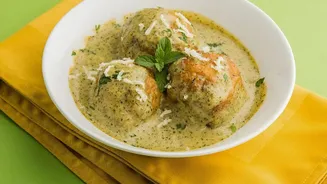
As this culinary idea travelled into the Indian subcontinent, especially during the Mughal era, it was brilliantly adapted to local tastes and vegetarian traditions. Today, a kofta can be made from minced meat, vegetables, cheese, or lentils, formed into spheres or ov-als, deep-fried or steamed, and served in an endless variety of gravies. This adaptability is the secret to its enduring popularity and the reason for its many delicious forms.
The Headliner: Malai Kofta
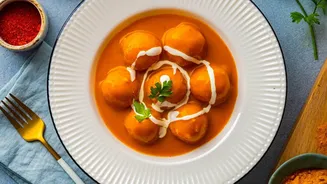
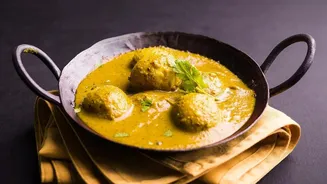
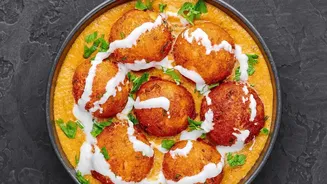
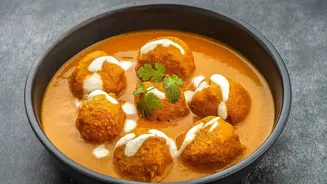
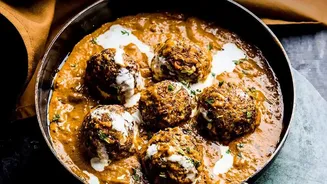
Malai Kofta is arguably the most famous vegetarian kofta and a star on restaurant menus. 'Malai' means cream, and this dish lives up to its name with a characteristically rich, smooth, and often mildly sweet gravy. The koftas themselves are the epitome of indulgence: soft, melt-in-the-mouth balls made primarily from mashed potatoes and grated paneer (Indian cottage cheese). Often, the koftas are stuffed with a small amount of chopped nuts and raisins, adding a delightful textural surprise. They are deep-fried to a golden crisp before being gently placed in a creamy gravy made from onions, tomatoes, and a paste of cashew nuts, which gives it its signature velvety texture and richness. Reserved for special occasions, Malai Kofta is a celebration of luxurious flavours.
The Wholesome Alternative: Lauki Kofta
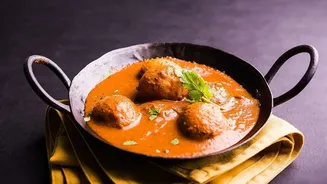
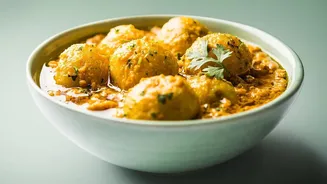
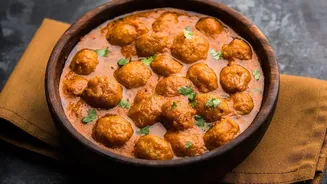
In stark contrast to the richness of Malai Kofta is the humble yet delicious Lauki Kofta. Here, the star ingredient is lauki, or bottle gourd. To make the koftas, the gourd is grated and mixed with gram flour (besan) and spices before being fried. This results in koftas that are incredibly soft, spongy, and light. They act like perfect little sponges, soaking up the flavour of the gravy they are simmered in. The gravy for Lauki Kofta is typically a simpler, tangier preparation based on onions and tomatoes, seasoned with everyday spices. It's a wholesome, comforting dish that is a staple in many North Indian homes, proving that koftas can be both healthy and flavourful.
The Dramatic Surprise: Nargisi Kofta
Nargisi Kofta is a culinary showstopper with a flair for the dramatic. Its name is said to be inspired by the Nargis flower (Narcissus), as the final dish, when sliced in half, resembles the flower's yellow and white petals. The 'surprise' inside is a hard-boiled egg. A spiced mixture, traditionally of minced meat like lamb or chicken, is carefully wrapped around the egg, which is then fried until golden. The koftas are then served in a rich, robust gravy. While the meat version is classic, vegetarian alternatives have also become popular, using a covering of paneer and potato to encase the egg. This Mughlai delicacy is a feast for the eyes as well as the palate, often reserved for festive meals.
A World of Other Koftas
The world of kofta extends far beyond these three. A Mixed Vegetable Kofta, as the name suggests, uses a combination of finely chopped or mashed vegetables like carrots, peas, and potatoes, bound with flour and fried. This creates a colourful and texturally diverse dumpling. Paneer Kofta focuses more singularly on Indian cottage cheese, resulting in a kofta that is denser and richer than its Malai Kofta cousin. For those who enjoy root vegetables, Arbi (colocasia) and Jimikand (yam) Koftas offer earthy flavours and unique textures. Even raw bananas (Kacha Kela) are used to create koftas in certain regions, showcasing incredible culinary ingenuity. Each variation tells a story of local ingredients and regional tastes.