







The Growing Data Privacy Dilemma
Educational institutions in India are handling unprecedented amounts of digital data, from administrative records to sensitive student research projects. The rise of AI promises to unlock new efficiencies, like personalized learning and automated assessments.
However, this progress comes with a significant risk. Most mainstream AI tools are cloud-based, meaning they process data on servers owned by third-party tech companies. Sending sensitive student information off-site creates potential vulnerabilities, from data breaches to unauthorized use, raising concerns for institutions now accountable under India’s Digital Personal Data Protection (DPDP) Act. This has left many universities in a bind: how to leverage the power of AI without compromising their duty to protect student privacy.
The Local, Open-Source Alternative
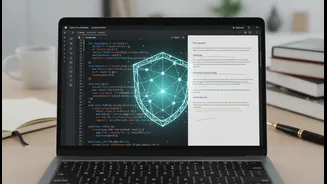
A powerful solution is emerging in the form of local, open-source AI. Let's break down what this means. 'Local' or 'on-premise' AI refers to running artificial intelligence applications entirely within an organization's own secure network. Instead of sending data to the cloud, all processing happens in-house. 'Open-source' means the software's underlying code is publicly accessible, allowing anyone to inspect, modify, and verify its security. This combination is the equivalent of owning your own house instead of renting an apartment; it requires more setup but offers complete control and privacy. Tools like Ollama and GPT4All are examples of frameworks that allow institutions to run powerful models locally, ensuring no data ever leaves their control.
AI-Powered Self-Audits Without Exposure
One of the key applications for this technology is the 'self-audit'. Institutions have a constant need to analyze their own data for various purposes, such as checking research for originality, ensuring compliance with funding requirements, or identifying trends in student performance. Traditionally, this might involve manually intensive processes or using external cloud services. With local AI, a university can conduct these audits internally. For example, it can use a local large language model to scan thousands of student research papers for potential plagiarism or analyze anonymized datasets for academic review without a single byte of sensitive information being transmitted to an outside party. This protects intellectual property and student confidentiality.
Key Privacy Protections Explained
The privacy benefits of this approach are multi-layered. First and foremost is data sovereignty; the institution maintains full control over its data, which remains within its own firewalls. This dramatically reduces the risk of data breaches and simplifies compliance with regulations like the DPDP Act, which mandates strict security safeguards. Second, the transparency of open-source code allows security teams to audit the tools for hidden backdoors or data-collection functions, fostering trust that is impossible with proprietary 'black box' systems. Finally, these tools can be configured to be completely 'air-gapped', meaning they can run on systems with no internet connection at all, providing the highest possible level of security for the most sensitive research data.
The Way Forward for Indian Education
For Indian educational institutions, adopting local open-source AI is not just a technical decision but a strategic one. It aligns with the principles of data minimization and purpose limitation outlined in the DPDP Act. While it requires an upfront investment in hardware and technical expertise, the long-term benefits of enhanced security, regulatory compliance, and greater trust are substantial. As AI becomes indispensable in academia, the ability to innovate responsibly will be a key differentiator. By building their AI capabilities on a foundation of privacy and control, institutions can harness the best of this technology while upholding their fundamental commitment to protecting their students' data.