


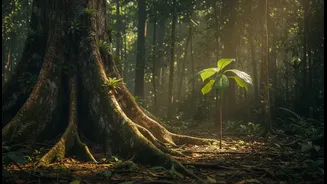

The Hidden World of Tree Plumbing
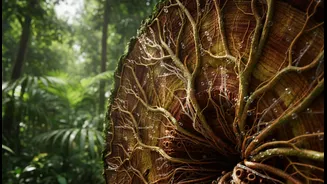
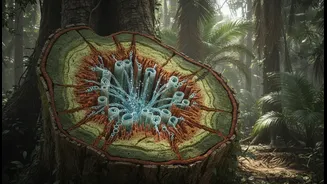
Inside every tree is a complex network of microscopic pipes, known as xylem. This system, often called 'plant plumbing', is a marvel of natural engineering, responsible for pulling water from the roots up to the highest leaves. Think of it as a tree's
circulatory system, constantly working against gravity to transport water and essential nutrients. This process, called transpiration, allows the tree to photosynthesise, grow, and release water vapour, which in turn influences local weather patterns. A single large, mature tree can move over 100,000 litres of water into the atmosphere in a single year, highlighting how crucial this internal plumbing is not just for the tree, but for the entire ecosystem.
Water Stress: A 'Heart Attack' for Trees
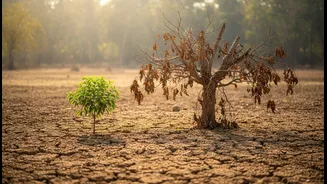
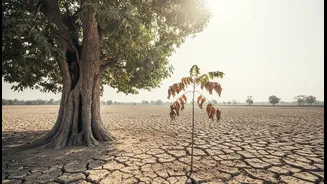
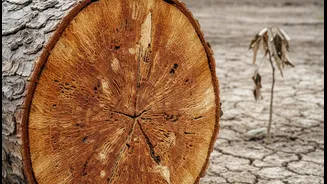
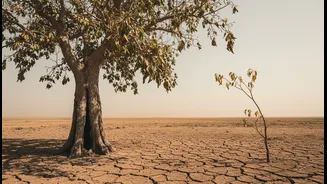
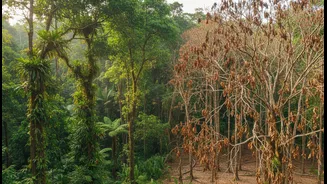
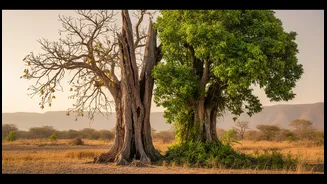
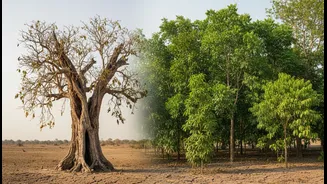
When rainfall ceases and the soil dries out, 'water stress' begins. The tree has to pull much harder to draw water from the parched earth. This creates immense tension within the xylem. If the tension becomes too great, a catastrophic failure can occur. Air bubbles can get sucked into the water-conducting vessels, causing blockages called embolisms. Researchers compare this to a heart attack in a human; the blockage stops the flow of water, starving the parts of the tree above it. If this happens in enough vessels, the tree can no longer hydrate its leaves, leading to die-back and, eventually, death. A tree's ability to withstand this tension is known as its 'hydraulic safety margin'.
The Tall vs. Small Conundrum
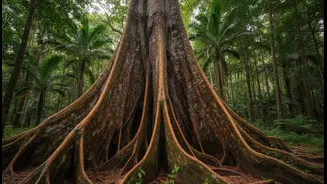
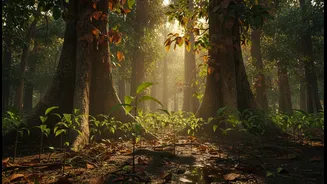
For a long time, scientists believed that the tallest trees were the most vulnerable to drought. The logic seemed simple: pulling water up an 80-metre trunk requires overcoming immense gravitational pressure, putting their plumbing under constant, extreme tension. However, very recent research from July 2026 has challenged this long-held belief. A study on giant Dipterocarp trees in Borneo's rainforests found that these giants are not necessarily more vulnerable than their smaller counterparts. They adapt as they grow, developing wider xylem vessels near the base to reduce resistance, much like using a wider hose to move water more easily. Their leaves also adapt to withstand greater water stress before wilting. This suggests that during a drought, both tall and small trees were impacted in similar ways.
It's Not Just Size, It's Strategy
While a 2015 study across 40 different drought events found that larger trees did suffer more on a global scale, the new findings highlight that this is not a universal rule. In many cases, larger trees are more exposed to sun and wind, and may be targeted by pests like bark beetles, increasing their vulnerability. Ultimately, survival isn't just about size but about hydraulic strategy. Some tree species are built for risk, with highly efficient but vulnerable plumbing, while others are more conservative, with slower but safer water transport systems. This diversity of strategies within a forest is key to its overall resilience. A forest with a wide variety of hydraulic traits among its species is better able to withstand a drought because different trees will react differently to the stress.
Why This Forest Drama Matters to Us
The fate of these tropical forests has global consequences. The tallest one percent of trees store more than half of the above-ground carbon in these ecosystems. Their survival is critical in the fight against climate change. Understanding which trees are most at risk helps scientists and forest managers predict how these vital carbon sinks will respond to more frequent and severe droughts. For a country like India, with its own magnificent and diverse forests facing climate pressures, this science is invaluable. By understanding the intricate plumbing that governs tree survival, we gain crucial insights into preserving forest health, protecting biodiversity, and ensuring these ecosystems continue to regulate our planet's climate for generations to come.