



Your Pre-Trip Vehicle Checklist
A safe trip begins two days before you even start the engine. Your car is your most important companion on this journey, and it needs to be in top condition. Start with the most critical safety components. Check your tyres for adequate tread depth; a minimum
of 3mm is recommended for monsoon safety, as worn tyres significantly increase the risk of skidding on wet surfaces. Ensure they are inflated to the manufacturer's recommended pressure. Next, inspect your brakes. Wet roads can double your car's stopping distance, so ensure your brake pads have sufficient thickness and the fluid is clean. Finally, focus on visibility. Test your windshield wipers; if they leave streaks or make noise, replace them immediately. Functional wipers are not a luxury in a Western Ghats downpour. Also, walk around your car and test all lights—headlights, taillights, indicators, and fog lamps—to ensure you can see and be seen in heavy rain or fog.
Mastering the Ghat Roads
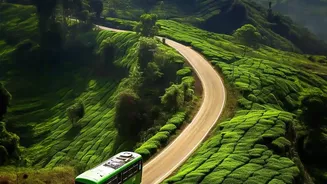
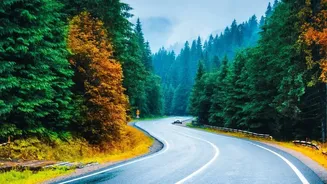
Driving in the ghats requires a different mindset and skillset. The golden rule is to go slow. You're not trying to save time; you're trying to stay safe on narrow, winding roads. When approaching blind curves and hairpin bends, honk to alert oncoming traffic of your presence. One of the most critical techniques is using the right gear. When driving downhill, use a lower gear (engine braking) to control your speed instead of relying solely on the brakes, which can overheat and fail. Conversely, maintain momentum in a lower gear when climbing uphill. A cardinal rule on hill roads is to give way to traffic moving uphill. Finally, maintain strict lane discipline, especially on curves. Do not cut corners, as you cannot see what is coming from the other side.
Navigating Monsoon-Specific Hazards
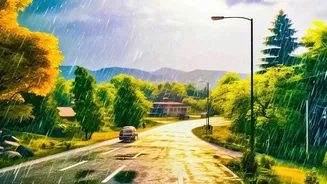
The monsoon brings unique challenges beyond just wet roads. Visibility can drop to near-zero in heavy downpours or dense fog. In such conditions, turn on your low-beam headlights, reduce your speed significantly, and if it gets too bad, find a safe spot to pull over and wait for the weather to improve. Never stop in the middle of the road or on a blind curve. Another major risk is hydroplaning, where your tyres lose contact with the road surface due to a layer of water. To avoid this, steer clear of large puddles and reduce your speed. If you do start to hydroplane, ease off the accelerator and steer gently in the direction you want to go, avoiding sudden braking. Be extremely wary of small streams of flowing water across the road; they can be surprisingly powerful and may hide the road's true condition. It's always best not to cross water if you can't gauge its depth.
Pack an Emergency Kit
While you hope not to need it, an emergency kit is non-negotiable for a monsoon ghat trip. Your kit should be prepared for a scenario where you might be stranded for a few hours. Include a powerful torch with spare batteries, a first-aid kit, and high-energy snacks like energy bars and nuts. Pack at least a few litres of drinking water. It’s also wise to have a car-specific kit containing jumper cables and a tow strap. A fully charged power bank for your phone is essential to stay connected and call for roadside assistance if needed. Keep a few microfibre cloths handy to quickly wipe the inside of your windshield if it fogs up. Lastly, given the terrain and weather, pack an umbrella and a raincoat for when you need to step out of the car.
Listen to Local Advice and Stay Updated
Technology is your friend, but so are the locals. Before you start, and even during your journey, check weather forecasts and any local traffic advisories for the Chikmagalur region. Roads can be closed due to landslides, a common occurrence during heavy monsoons. If you are staying at a homestay or resort, ask your hosts about the condition of the specific roads you plan to take. They often have the most current information. If you see locals avoiding a certain route, it’s a good idea to follow their lead. Plan your driving schedule to avoid being on the road after sunset; visibility worsens, and it becomes much harder to spot potholes and other hazards. Remember that in many remote areas, mobile network coverage can be patchy, so download offline maps of the region before you lose signal.