


More Than Just Nostalgia
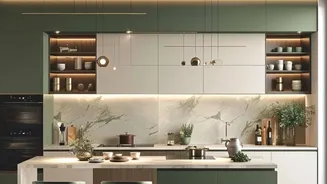
For decades, the trend in kitchen design leaned heavily towards fully fitted, seamless cabinetry. But a shift is happening. Homeowners are increasingly seeking character and flexibility, moving towards a more curated look that mixes fitted elements with
standalone pieces of furniture. The freestanding larder, or pantry cabinet, is at the forefront of this movement. Once a necessity in the era before refrigeration for keeping food cool, today’s larder has evolved into a desirable feature celebrated for its functionality and style. Its return signals a deeper appreciation for dedicated, intentional storage that solves one of the modern kitchen’s biggest problems: clutter.
The Power of Thinking Vertically
The core reason for the larder's triumphant return lies in its masterful use of vertical space. Standard base cabinets can often become deep, dark holes where items are forgotten, while countertops become magnets for everyday clutter. A tall, freestanding larder flips this on its head. By going upwards, it maximizes storage capacity on a small footprint. This vertical approach allows you to store a large volume of goods—from cereals and pastas to spices and baking supplies—in a single, consolidated location. Everything becomes more visible and accessible, reducing the need to rummage through multiple cupboards to find a single ingredient.
A Place for Everything
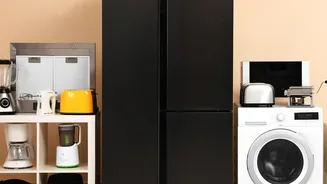
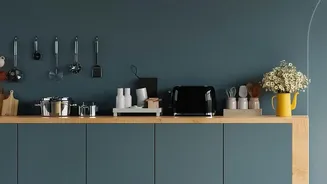
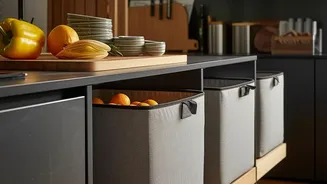
Modern larders are marvels of organizational design. They are far from the simple shelved cupboards of the past. Today's designs often feature a combination of deep drawers for packets and tins, narrow spice racks on the inside of doors, and adjustable shelving to accommodate items of all sizes. This tailored approach means everything has its designated spot. Many larders are now designed as hidden work zones or 'appliance garages,' providing space and power outlets for toasters, coffee machines, and mixers. This helps keep countertops clear, creating a calmer and more streamlined cooking environment.
The Freestanding Advantage
Choosing a freestanding larder over a built-in one offers unique benefits. Firstly, it provides immense flexibility; it can be moved to suit a new layout or even taken with you if you relocate, making it a great option for renters. Secondly, a freestanding unit is treated like a piece of furniture, adding a distinct focal point and personality to the kitchen. Available in styles from rustic farmhouse to sleek and contemporary, it can either blend in or stand out as a statement piece. This versatility allows homeowners to add significant, accessible storage without the cost and commitment of a full kitchen renovation.
Designing the Modern Larder
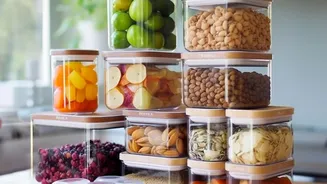
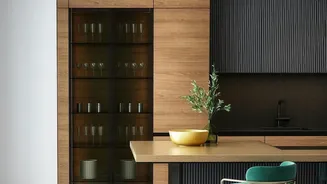
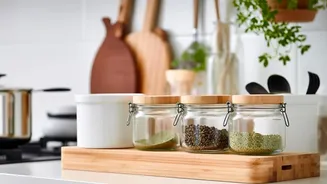
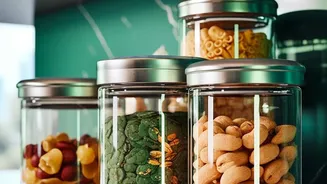
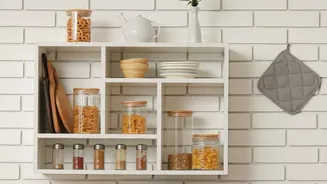
The modern larder is designed to be seen. Features like fluted glass doors offer a hint of the contents without revealing any mess, while pocket or sliding doors are perfect for tighter spaces. Inside, integrated lighting is a common feature, ensuring you can see everything at a glance, even at the very back of a shelf. Some designs take inspiration from high-end delis, using attractive glass jars and containers to turn everyday dry goods into a stylish display. Whether it's a slim, pull-out unit for a narrow gap or a larger cabinet that doubles as a breakfast station, the contemporary larder is a celebration of clever, beautiful, and highly practical design.