






A Calculated Risk or a Needless Gamble?
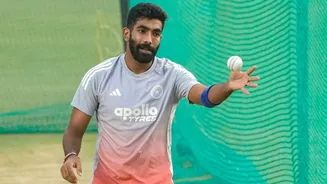
The news that Jasprit Bumrah has been included in the squad for the three-match T20I series against Afghanistan, starting September 13, comes with a significant caveat: his participation is contingent on a fitness clearance. The pace spearhead has been rehabilitating
from a knee injury sustained during the ODI series in England back in July, which also forced him to miss the subsequent Test tour of Sri Lanka. This selection, therefore, isn't a straightforward return; it's a test. The selectors are using a lower-pressure international series to gauge if their most prized asset is ready for the rigours of top-flight cricket. On the surface, it seems logical. However, with a packed calendar ahead, including series against West Indies and New Zealand, every match adds to a workload that has proven to be Bumrah's biggest adversary. The question is whether this is the right stage for such a test, especially when the long-term goal is the 2027 ODI World Cup.
The T20 Detour on the Road to 2027
The ultimate prize on the horizon for the Indian team is the 2027 ODI World Cup. Reports suggest that prior to his latest injury, the management's plan was for Bumrah to focus primarily on ODIs and Tests to preserve his body for that marquee event. His selection for a T20I series appears, at first glance, to be a deviation from this strategy. Why risk a fragile, match-winning bowler in the shortest format when the long-term priority lies with 50-over cricket? The answer seems to lie in a revised, more cautious approach to his recovery. The thinking is to ease him back into the competitive environment through T20 cricket, where he bowls a maximum of four overs, before exposing him to the greater physical demands of a 10-over spell in an ODI or the multi-day exertion of a Test match. It's a strategy born out of necessity, a tactical detour to ensure he gets game time without an immediate, significant strain on his body.
A History of Fragility
This cautious approach isn't without reason. Bumrah's career has been punctuated by injury breaks, a direct consequence of his unique, high-stress bowling action that, while devastatingly effective, puts immense strain on his body. He has a history of back problems and has often played through niggles, as was the case during the IPL earlier this year. Experts and former players have repeatedly described him as a 'national treasure' who must be managed with extreme care. The Board of Control for Cricket in India (BCCI) and the team management are acutely aware of this. The decision to rule him out of the Sri Lanka Tests was a clear indicator of their unwillingness to rush him back. This T20I selection is an extension of that same cautious mindset, albeit one that uses live matches as the final stage of rehabilitation—a move that will be intensely scrutinised.
The Fine Line Between Prudence and Pressure
The selection committee is walking a tightrope. On one side is the need to get their lead bowler match-fit and back in rhythm. On the other is the ever-present risk of a premature return leading to another breakdown, which would be catastrophic for India's World Cup ambitions. While the idea of using T20Is as a stepping stone is sound in theory, the reality of international cricket involves more than just bowling four overs. There's the intensity, the travel, and the pressure of performance. The selectors are not necessarily making a mistake by picking him; they are making a calculated, albeit risky, decision. They are betting that a carefully managed return in a home series against Afghanistan provides a controlled environment for his comeback. This strategy shows a clear prioritisation of his long-term fitness over any single series, even if it seems counterintuitive to use the T20 format as a pathway to ODI readiness.