




What Are 'Roasted' Planets?
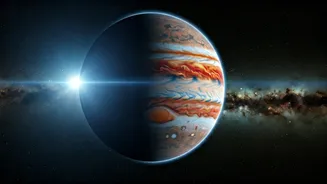
Imagine a planet larger than Jupiter, orbiting so close to its star that its year lasts only a few days. These are 'hot Jupiters,' a class of exoplanets that have become invaluable natural laboratories for scientists. Their proximity to their star means
they are blasted with intense radiation, heating their atmospheres to thousands of degrees Celsius and causing them to puff up like popcorn. This expansion makes their atmospheres much larger and easier for telescopes to see, a crucial advantage when you’re trying to study a tiny target from light-years away. These extreme worlds are the 'roasted' planets helping us decode the atmospheric secrets of the cosmos.
The Challenge of Tasting Thin Air
Studying the atmosphere of an exoplanet is an immense technical challenge. These planets are incredibly far away and are usually completely outshone by the light of their parent stars. The primary method used, called transmission spectroscopy, involves catching the faint glimmer of starlight that passes through the planet’s atmosphere as it transits, or moves in front of, its star. The chemicals in the atmosphere absorb specific colours of light, creating a unique barcode or spectrum that scientists can read. For smaller, cooler, Earth-like planets, the atmospheric layer is incredibly thin, making this barcode extremely faint and difficult to detect.
Why Extreme Heat Is the Key
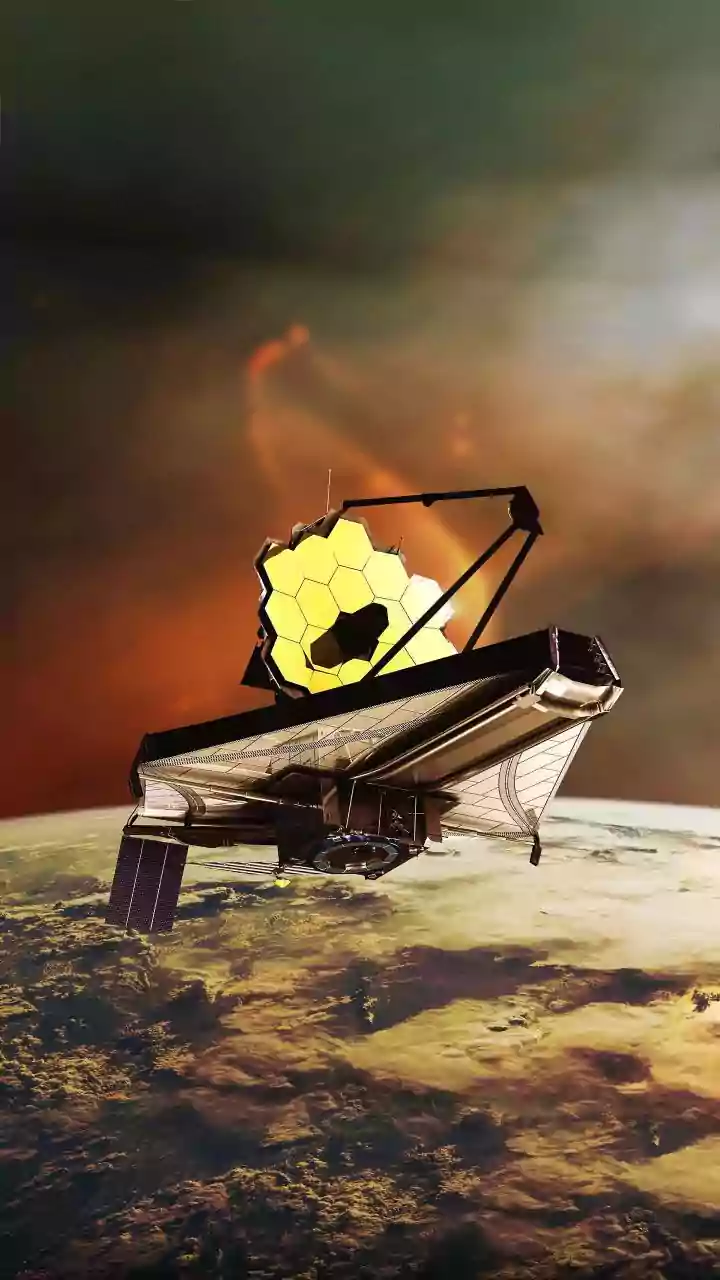
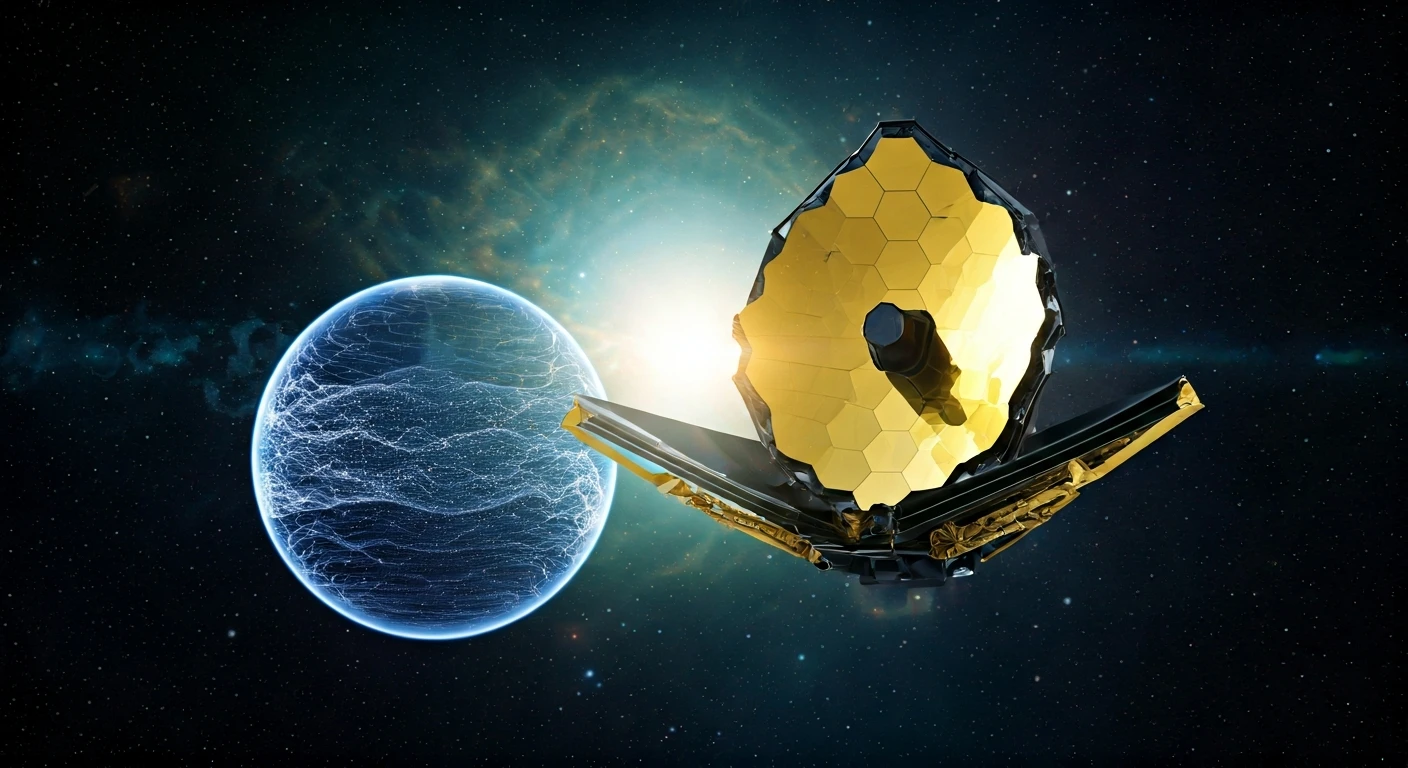
This is where hot Jupiters provide a breakthrough. Because they are so intensely heated, their atmospheres are bloated and extended, presenting a much thicker target for starlight to pass through. This creates a stronger, more obvious signal for telescopes like the James Webb Space Telescope (JWST) to analyze. The extreme temperatures also keep many chemical compounds in a gaseous state, preventing them from condensing into clouds that would otherwise hide the atmospheric composition from view. By studying these easier-to-read, 'roasted' atmospheres, scientists can test and refine their models of how planetary atmospheres work in general.
What We're Learning from the Heat
Thanks to the powerful infrared vision of the JWST, discoveries are coming thick and fast. On the hot Jupiter WASP-96b, the telescope detected the unmistakable signature of water vapour, and even evidence of clouds and hazes. On another, the super-Earth 55 Cancri e, which is so hot its surface is likely molten, JWST found an atmosphere rich in hydrogen and helium, likely a remnant from its formation. These observations are not just about cataloguing weird worlds; they test our fundamental theories of planet formation, migration, and atmospheric physics. Each discovery provides a crucial data point that helps build a more complete picture of how planets, including our own, form and evolve.
The Bigger Picture: From Hot Jupiters to Habitable Earths
While a 'roasted' gas giant is the last place we'd expect to find life, studying them is a critical stepping stone in the search for habitable worlds. The techniques and models developed to understand these extreme atmospheres are the same ones that will be used to scrutinize the thin air of Earth-sized planets in their stars' habitable zones. By proving the tools work on easier targets, astronomers build confidence that they can trust the much fainter signals from potentially life-bearing worlds. In a way, hot Jupiters are the perfect training ground. Understanding these planetary outliers helps us define the boundaries of what is possible, refining our search for a planet that looks a little more like home.