


A Tale of Two Telescopes
To understand where NASA is going, you have to look at where it's been. The Hubble Space Telescope, launched in 1990 into low-Earth orbit, was famously designed to be serviced. Astronauts on Space Shuttle missions visited it five times, correcting its
flawed mirror, upgrading its instruments, and extending its life far beyond its original plan. These missions turned a potential disaster into one of the greatest scientific instruments in history. Then came the James Webb Space Telescope (JWST). Parked a million miles from Earth at a gravitationally stable point called L2, Webb was a different beast entirely. Its enormous, foldable mirror and complex sunshield had 344 single points of failure, meaning if any one of those steps went wrong during its deployment, the $10 billion observatory could have become the world's most expensive piece of space junk. Astronaut repairs were never an option. It was a monumental gamble that, thankfully, paid off spectacularly. But the terror of its deployment left a lasting impression on the agency.
A New Mandate from the Scientific Community
The nail-biting Webb experience, coupled with the resounding success of the long-lived Hubble, has directly shaped the future. The next great observatory on NASA's books is the Habitable Worlds Observatory (HWO), a powerful telescope with the primary goal of searching for signs of life on Earth-like planets around other stars. But before a single design was drafted, the scientific community, via the influential Astro2020 Decadal Survey, laid down a new law: HWO must be serviceable. This wasn't just a suggestion; it's a foundational requirement. According to NASA's astrophysics division director, Shawn Domagal-Goldman, HWO will "have to" be serviceable to some extent. The goal is to avoid another high-stakes, one-shot deployment and ensure the multi-billion-dollar investment can be maintained and improved over its lifetime.
More Than Just Repairs
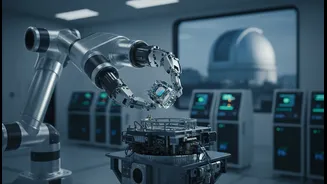
The push for serviceability isn't just about fixing things that break. It's a strategic shift towards sustainability and future-proofing. By designing the observatory with modular, replaceable parts, NASA can perform critical upgrades decades after launch. Imagine if, 15 years into HWO's mission, a new, more advanced camera or spectrometer is invented. With a serviceable design, a robotic spacecraft could be sent to install the new technology, effectively giving science a brand-new telescope for a fraction of the cost of launching a new one. This approach maximizes the scientific return on investment, extends the mission's lifespan, and allows the observatory to evolve with technology. As former astronaut and Hubble repairman John Grunsfeld noted, the main driver is being able to swap in new scientific instruments.
Enter the Robots
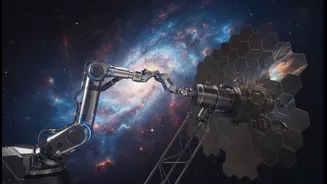
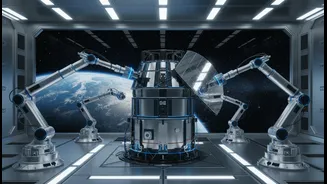
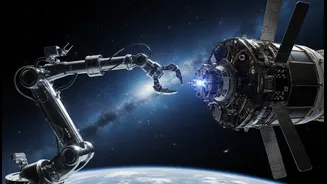
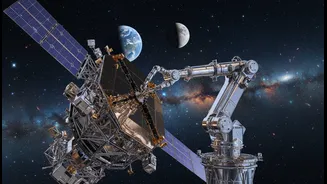
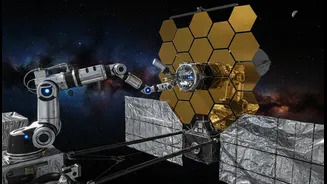
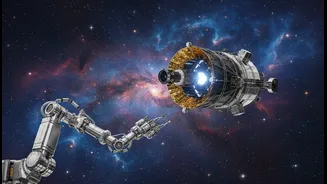
Since HWO will operate at the distant L2 point like Webb, human servicing missions are off the table with current technology. The solution lies in advanced robotics. NASA is mandating that HWO be designed from the ground up for robotic in-space servicing, assembly, and maintenance (ISAM). This means standardized ports, modular components that can be easily unplugged and replaced, and robotic systems capable of performing intricate tasks a million miles from home. This is a monumental engineering challenge, but one that NASA is already exploring. The recent robotic mission to rescue the aging Swift telescope is a prime example of this new capability in action, demonstrating that commercial partners can help service satellites not originally designed for it. For HWO, this capability will be built-in from the start, fostering a new commercial industry for in-space servicing and ensuring our next eye on the universe can be kept in focus for decades to come.