






The Sour Renaissance
For generations, the sour notes in Indian cooking were often predictable. While delicious, the familiar tang of lemon, yoghurt, or tomato dominated many kitchens. Today, a quiet revolution is underway. Chefs and home cooks are looking inwards, rediscovering
a treasure trove of regional souring agents that offer more than just acidity. This shift is driven by a growing curiosity about indigenous ingredients and a desire for more nuanced, authentic flavours. It’s a move away from generic tastes towards a celebration of terroir, where an ingredient tells the story of its origin. This movement champions the idea that not all sourness is created equal; the sharp zing of raw mango is worlds apart from the fruity tartness of tamarind or the subtle, acidic blush of kokum.
The Coastal Charm of Kokum
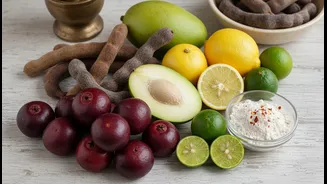
Hailing from the Western Ghats, particularly the Konkan coast of Maharashtra and Goa, kokum is a small, deep purple fruit with a unique flavour profile. Traditionally used in fish curries and to make the refreshing pink drink solkadhi, its sourness is gentle, with a slightly sweet and floral finish that doesn't overpower other ingredients. Often sold as a dried, dark rind, it imparts a beautiful pinkish-purple hue to dishes. What makes kokum so exciting now is its journey beyond traditional coastal kitchens. Modern chefs are using it in everything from salad dressings and cocktails to ramen broths and even desserts, appreciating its ability to add colour, acidity, and a distinct sense of place. Its cooling properties, long valued in Ayurveda, also make it a popular ingredient in summer beverages.
The Enduring Power of Tamarind
Tamarind, or imli, is arguably the most well-known of the three, a staple in kitchens across the country. This sticky, dark fruit pulp delivers a robust, sweet-and-sour punch that is fundamental to South Indian staples like sambar and rasam, as well as the chaat of the North. Its complexity lies in its ability to be both deeply savoury and tantalisingly tangy. While it has always been present, tamarind's role is also evolving. It serves as a natural meat tenderiser and forms the base of countless chutneys and sauces that balance spice and sweetness. From Hyderabadi khatti daal to tangy tamarind rice (puliyodharai), its versatility is unmatched, providing a foundational sourness that is both comforting and bold. Its widespread use makes it a culinary bridge, connecting diverse regional cuisines with a common thread of tangy flavour.
The Seasonal Zing of Raw Mango
Nothing heralds the arrival of Indian summer quite like the sharp, bright taste of kacchi kairi, or raw mango. This seasonal ingredient is a celebration in itself, used extensively across the country in a multitude of forms. Its sourness is crisp and unapologetic, lending itself perfectly to crunchy pickles (achaar), refreshing drinks like aam panna, and tangy dals. Chefs across India use it to add a zesty kick to everything from fish curries in Kerala to chutneys that accompany a variety of snacks. In Andhra, it's a key part of summer pickle-making rituals. Unlike amchoor (dried mango powder), which offers a more mellow tartness, fresh raw mango provides a vibrant, immediate sourness that enlivens any dish it touches, from simple salads to complex curries.