







The New Contender: Sant Ravidas Express
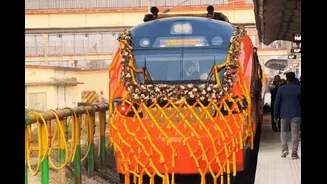
Indian Railways is set to flag off its second Vande Bharat sleeper train, the Sant Ravidas Express, on July 17, 2026. This new service will connect Varanasi in Uttar Pradesh with Chheharta, near Amritsar in Punjab. It's a significant step in modernising
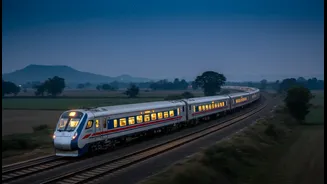
overnight travel on a key corridor that serves pilgrims, business travellers, and families. Unlike the daily chair-car Vande Bharats, this sleeper service will operate three times a week in each direction. The train itself is a leap forward from traditional rakes, featuring a self-propelled system capable of higher speeds, automatic doors, bio-vacuum toilets, and improved, cushioned berths across its 16 coaches, which include First AC, AC 2-Tier, and AC 3-Tier classes.
A Head-to-Head on Timings
The schedule is crucial for any overnight journey. The train from Varanasi to Chheharta (14623) will depart at 7:05 PM and arrive the next day at 5:10 PM. The return journey from Chheharta to Varanasi (14624) leaves at 2:05 PM, reaching its destination at 12:15 PM the following day. This makes the total journey time approximately 22 hours from Varanasi and 22 hours and 10 minutes from Chheharta. While designed for speeds up to 160-180 km/h, the actual operational speed depends on track conditions. Travellers must compare this with existing superfast trains on the route to see the real-world time savings, which also depend heavily on the number of stops.
The Strategic Importance of Stops
A train's utility is often defined by its halts. The Sant Ravidas Express will stop at several major cities across Uttar Pradesh, Haryana, and Punjab. The list of official stops includes Jaunpur City, Sultanpur, Lucknow, Shahjahanpur, Bareilly, Moradabad, Saharanpur, Ambala Cantt, Ludhiana, Jalandhar City, and Amritsar. This extensive list of halts aims to maximise connectivity across the region, catering to a wide range of passengers. However, more stops can sometimes mean a longer overall journey time compared to a non-stop Duronto or a limited-stop Rajdhani on other routes. Potential passengers should check if these stops align with their travel needs, as the convenience of a nearby halt might outweigh a slightly longer travel duration.
Breaking Down the Total Cost
The premium experience of a Vande Bharat sleeper comes at a cost. Fares are expected to be notably higher than those for Rajdhani Express trains on comparable routes. The pricing is structured on a per-kilometre basis, and a minimum fare equivalent to a 400-km journey will be charged, regardless of the actual distance travelled. For example, reports on the fare structure suggest per-kilometre rates of around ₹2.4 for 3AC, ₹3.1 for 2AC, and ₹3.8 for 1AC, plus GST. A key difference in booking is that Vande Bharat sleepers will only issue confirmed tickets, doing away with the Reservation Against Cancellation (RAC) system common in other trains. This ensures no sharing of berths but may also mean tickets sell out faster.
Beyond the Numbers: The Onboard Experience
The higher fare for the Vande Bharat sleeper buys more than just speed; it promises a significant upgrade in comfort and amenities. The trainsets are designed to offer a smoother, quieter ride with reduced vibrations, thanks to their aerodynamic build. Inside, passengers can expect ergonomically designed berths that are broader and better cushioned, individual reading lights, and conveniently placed charging sockets. The coaches feature sensor-based automatic doors, advanced odour-control systems in the bio-vacuum toilets, and even hot shower facilities for First AC passengers. With improved soundproofing, onboard catering with regional cuisine options, and enhanced safety features like the Kavach anti-collision system, the train aims to deliver a world-class travel experience.