

Venus: The Hostile Twin
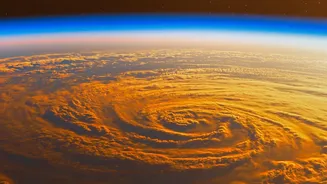
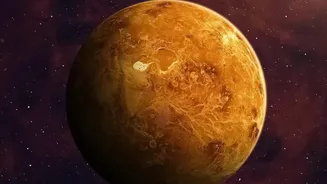
Venus may be similar to Earth in size and structure, but it is a world of crushing pressure and lead-melting temperatures. Its surface, reaching a scorching 467°C, is perpetually hidden by a dense blanket of clouds made primarily of corrosive sulfuric
acid. This runaway greenhouse effect, where heat is trapped by a thick carbon dioxide atmosphere, makes Venus the hottest planet in our solar system and serves as a stark warning of how planetary climates can change dramatically. These impenetrable clouds have long been a barrier to understanding the planet's surface and lower atmosphere, leaving many questions about its geological activity and evolution unanswered.
ISRO's Next Giant Leap
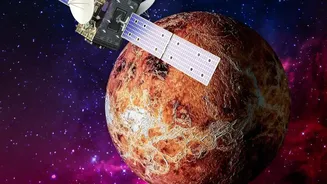
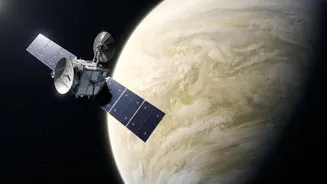
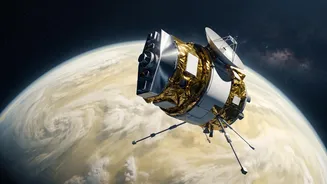
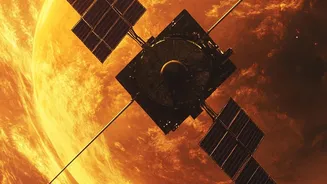
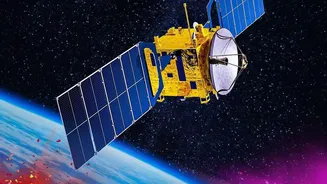
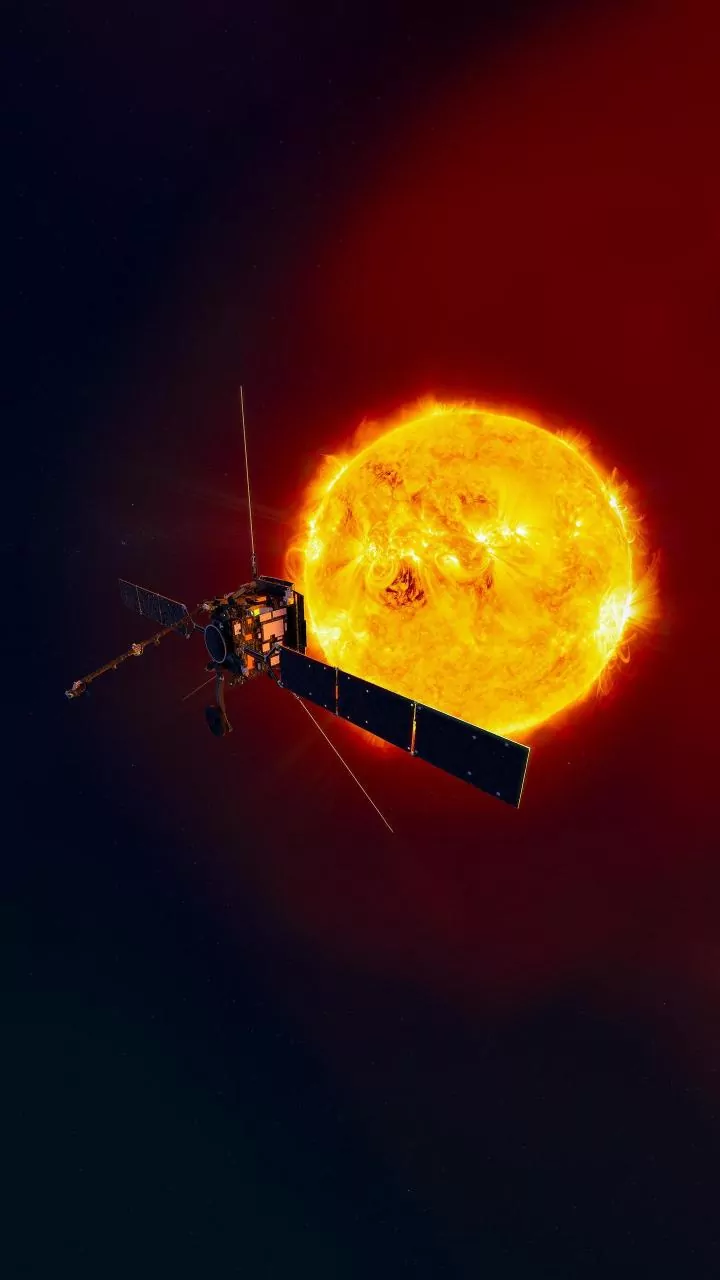
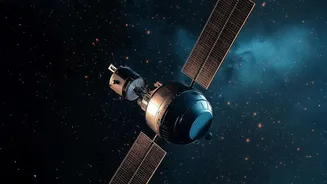
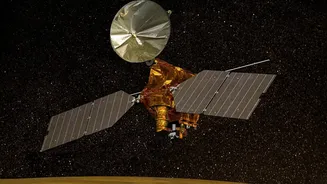
Building on the historic successes of the Chandrayaan moon missions and the Mangalyaan Mars orbiter, the Indian Space Research Organisation (ISRO) is setting its sights on Venus. The Venus Orbiter Mission, nicknamed Shukrayaan (Sanskrit for 'Venus Craft'), represents India's next major foray into interplanetary exploration. Approved by the government in September 2024 with a launch planned for March 2028, the mission is a testament to India's growing capabilities and ambitions in space science. Shukrayaan aims to conduct a detailed investigation of Venus, positioning a spacecraft in orbit to gather crucial data about its atmosphere, surface, and interaction with the sun.
Peering Beneath the Veil
The key challenge in exploring Venus is its opaque cloud cover. Shukrayaan is engineered to overcome this with a suite of sophisticated instruments. The headline sensor is a high-resolution Synthetic Aperture Radar (SAR), a powerful tool that can pierce through the thick clouds to map the planet's surface in unprecedented detail, day or night, and in any weather. Unlike previous missions like NASA's Magellan, Shukrayaan's radar is expected to have a much higher resolution. Even more groundbreaking is the inclusion of a ground-penetrating radar, an instrument designed to study the subsurface stratigraphy for the first time, potentially revealing buried lava channels and other geological secrets hidden meters below the surface.
Unlocking Atmospheric Secrets
Beyond mapping the surface, a primary goal of Shukrayaan is to unravel the dynamics of the enigmatic Venusian atmosphere. The orbiter will carry 19 scientific payloads, including Indian instruments and international collaborations, designed to study everything from the composition and structure of the atmosphere to its super-rotating winds that circle the planet in just four Earth days. Instruments will analyse Venusian airglow, study the solar wind's interaction with the planet's ionosphere, and examine dust in the atmosphere. A key instrument, VIRAL, developed in collaboration with Russia and France, will analyse atmospheric gases, contributing to the global search for understanding Venus's chemical makeup.
Why Venus Matters for Earth
Studying Venus isn't just about understanding another planet; it's also about understanding our own. Venus provides a natural laboratory for studying the long-term effects of a runaway greenhouse effect. By learning how Venus lost its water and evolved into its current hostile state, scientists can gain invaluable insights into planetary evolution and climate modeling for Earth. The mission will help answer fundamental questions about why two sister planets, born from the same solar nebula, followed such drastically different paths. Every discovery made by Shukrayaan will ultimately enhance our understanding of Earth’s past, present, and potential future, serving as a critical lesson in planetary science.