






The Ultimate Study Partner?
For students grappling with heavy syllabi and complex topics, AI can feel like a superpower. AI-powered platforms can act as personal tutors, adapting to a student's pace and providing practice questions on demand. They can summarize lengthy research
papers, explain difficult concepts in simple terms, and help organize study schedules. This technology can also break down barriers for students with disabilities or those learning in a second language by offering tools like real-time translation and text-to-speech functions. By automating tedious tasks, AI frees up mental energy, allowing students to focus more on understanding core concepts rather than getting bogged down in busywork. The promise is a more efficient, personalized, and accessible learning experience for everyone.
The Risk of Cognitive Offloading
However, the primary concern is the risk of “cognitive offloading”—the habit of letting technology do the thinking for us. When students can get a complete essay, a solved math problem, or a list of research points with a single prompt, the temptation to bypass the hard work of learning is immense. Over-reliance on AI can weaken the very skills education aims to build: problem-solving, analytical reasoning, and the ability to form an independent judgment. Studies suggest that individuals who lean too heavily on AI may show a decline in their ability to analyze problems on their own. There's a real danger that instead of developing foundational skills, students may simply become adept at generating answers without understanding the 'how' or 'why' behind them, potentially leading to a decline in long-term knowledge retention.
From Answer Engine to Thought Partner
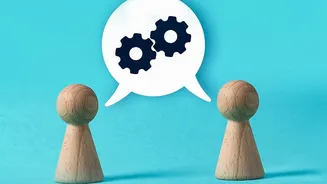
The solution isn’t to ban AI, but to change how we interact with it. The key is to shift from using AI as a simple answer machine to using it as an interactive thinking partner. Instead of asking, “What is the answer?”, a more effective approach is to use AI to explore, challenge, and deepen one's own thinking. For instance, a student can use AI to brainstorm initial ideas for a project, find counterarguments to strengthen their own thesis, or ask for feedback on a draft they have already written. This method keeps the student in control of the learning process. The goal is to use AI as a collaborator that expands perspective, not a ghostwriter that does the work.
Developing AI Literacy
For this partnership to work, students must develop AI literacy. This means understanding the limitations and potential pitfalls of the technology. AI models can be wrong, produce biased information, or even invent facts, often called 'hallucinations'. Responsible use requires a critical eye. Students must learn to always verify information from AI tools with reliable sources, question the output, and revise it to reflect their own unique voice and understanding. It's about being the final judge and taking responsibility for the work produced. Being transparent about when and how AI was used is also a cornerstone of academic integrity in this new era.
The Evolving Role of Educators
This technological shift also demands that educators adapt their methods. Teachers are moving from being the sole source of information to becoming facilitators of critical inquiry. This involves designing assignments that are more difficult for AI to complete on its own—tasks that require personal reflection, in-class discussion, or the application of knowledge to real-world scenarios. Many educators are now explicitly teaching students how to use AI tools ethically and effectively, incorporating them directly into lesson plans to support learning. The focus is shifting from policing AI use to guiding it, ensuring that technology serves pedagogy, not the other way around. By embracing this change, schools can prepare students for a future where collaborating with AI is a fundamental skill.