




The Downside of Counting
For generations, we’ve been told that weight management is a simple game of 'calories in, calories out'. While this has some scientific basis, applying this rigid mathematical approach to children and teenagers can be counterproductive and even harmful.
Focusing on numbers can strip the joy from eating, turning meals into a source of anxiety and stress. More critically, it can lay the groundwork for disordered eating patterns. When children are taught to obsess over every calorie, they risk developing an unhealthy relationship with food, viewing it as an enemy to be controlled rather than as nourishment to be enjoyed. This can lead to food restriction, guilt, and a long-term disconnect from their body's natural hunger and fullness signals.
What is Mindful Portion Mapping?
Mindful portion mapping is less a strict diet and more a holistic philosophy. It combines two powerful concepts: mindful eating and visual portion control. Mindful eating is the practice of paying full attention to the experience of eating, noticing the colours, smells, and textures of your food, and listening to your body’s cues. Portion mapping, on the other hand, uses visual guides—like your own hand or the composition of a plate—to estimate appropriate serving sizes without needing a measuring cup or scale. Together, they create an intuitive system that empowers young people to build balanced meals and recognise when they are comfortably full. The goal isn't restriction; it's building awareness and promoting a positive, lifelong relationship with food.
Using Your Hands as a Guide
One of the easiest ways to practise portion mapping is by using the hand as a portable measuring tool. It’s simple, always available, and grows as the child does, naturally adjusting for their needs. A general guide for a single meal includes: - **Protein (Dal, Paneer, Chicken, Fish):** One palm-sized serving. - **Carbohydrates (Rice, Roti, Potatoes):** One cupped-hand serving of cooked grains or one fist-sized serving of starchy vegetables. - **Vegetables (Sabzi, Salad):** Two cupped-hand servings. - **Fats (Ghee, Oils, Nuts):** One thumb-sized serving. This method isn't about perfection. It’s a flexible guideline to help visualise a balanced meal without the stress of numbers, encouraging a focus on including all food groups rather than excluding any.
The Balanced Thali Method
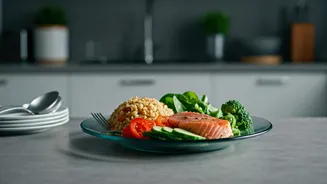
In India, we have an inbuilt system for mindful portion mapping: the thali. A traditional thali is a masterclass in balanced eating. By consciously composing a plate, you can ensure nutritional diversity. Aim to fill half the plate with vegetables, whether cooked sabzi or a fresh salad (kachumber). One quarter should be dedicated to a protein source, like a katori of dal, chana, or a paneer dish. The final quarter is for carbohydrates, such as a couple of rotis or a serving of rice. A small portion of curd or raita and a pickle or chutney for flavour complete the meal. This visual framework ensures a mix of macronutrients, vitamins, and minerals in a way that is culturally familiar and easy to implement daily.
Beyond the Plate: Cultivating Mindful Habits
Mindful portion mapping extends beyond just what's on the plate. It's about how we eat. Encourage children to eat slowly and chew their food thoroughly, which aids digestion and helps the brain register fullness. Create a distraction-free eating environment by putting away phones, tablets, and turning off the TV. This helps them focus on their meal and their body’s signals. Instead of asking “Are you finished?”, try asking, “Is your tummy happy and full?” This shifts the focus from a clean plate to internal satiety cues. The most important part is to model this behaviour yourself. When children see their parents enjoying a variety of foods in a mindful, relaxed manner, they are more likely to adopt those healthy habits themselves.