







The Rocket That Signals 'The Arrival'
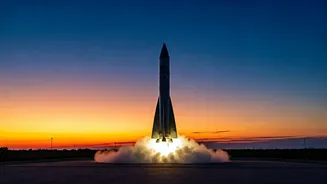
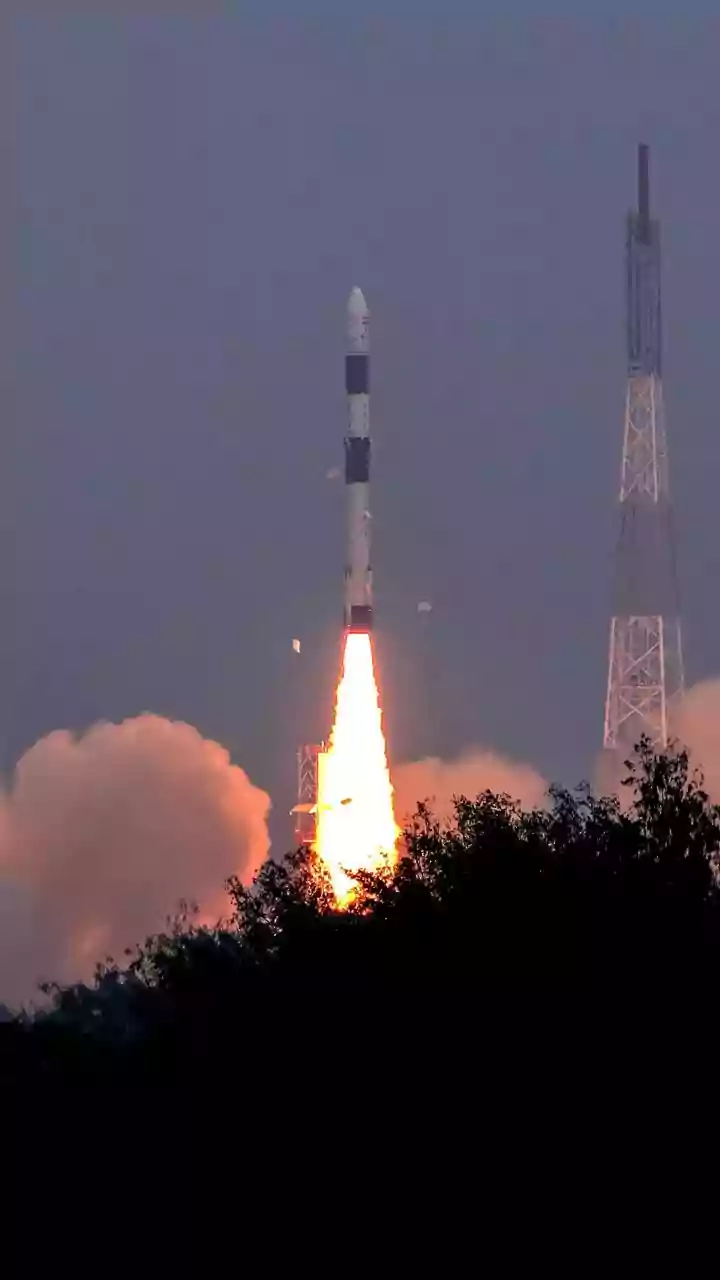
Hyderabad-based startup Skyroot Aerospace has announced that its maiden orbital rocket, Vikram-1, is set for its first test flight. The launch window for 'Mission Aagaman'—Sanskrit for 'The Arrival'—is scheduled between July 12 and August 4, 2026. This
isn't just another launch; it's a historic moment for India. While ISRO has made the nation a space-faring power, Vikram-1 represents the first time a private Indian company is attempting to place satellites in orbit. The mission follows Skyroot’s successful 2022 suborbital flight of Vikram-S, which proved a private company could build and launch a rocket from Indian soil. But Vikram-1 is the main event: a seven-storey-tall, multi-stage vehicle designed to compete in the booming global market for small satellite launches. Its success would transform a theoretical possibility into a commercial reality.
From ISRO Scientists to Startup Founders
The story of Skyroot Aerospace is as compelling as its technology. The company was founded in 2018 by Pawan Kumar Chandana and Naga Bharath Daka, two former scientists from ISRO. They left secure government jobs, driven by the vision to make space access as routine as commercial air travel. At the time, the idea was almost unthinkable. India’s space sector was a government monopoly with no clear rules or support for private rocket builders. Chandana, who worked on the powerful GSLV Mk III rocket, and Daka carried the DNA of ISRO's famed frugal engineering into their startup. They didn't try to reinvent everything; instead, they focused on innovative, cost-saving technologies like all-carbon composite structures and 3D-printed engines, which significantly reduce manufacturing time and cost.
An Engine for a New Economy
The Vikram-1 is specifically designed to serve the small satellite market, a rapidly growing segment of the global space economy. It can carry payloads of around 350-480 kg to Low Earth Orbit, making it an ideal 'taxi' for the constellations of small satellites used for communications, Earth observation, and data services. The rocket’s three solid-fuel stages provide powerful thrust, while a liquid-fueled upper stage allows for precise orbital insertion of the satellites. By using advanced materials and manufacturing techniques, Skyroot aims to offer rapid, reliable, and cost-effective launches, a key requirement for commercial satellite operators who can't always wait for a spot on a larger, government-run mission. A successful Mission Aagaman will be the ultimate proof of this business model.
The Policy Shift That Opened the Skies
Skyroot's journey would have been impossible without a monumental shift in government policy. In 2020, India opened its space sector to private participation, a move designed to unleash innovation and capture a larger share of the global space economy. The government established the Indian National Space Promotion and Authorisation Centre (IN-SPACe) to act as a single-window agency to regulate and support private companies. This reform gave startups like Skyroot and its competitor Agnikul Cosmos access to ISRO's world-class testing facilities and launchpads, drastically reducing the capital needed to get started. It was a signal to investors, both domestic and international, that India was serious about building a private space ecosystem. Skyroot has since raised significant funding, becoming one of India's first space-tech unicorns.
Making It 'Real'
The headline says Vikram-1 makes space entrepreneurship 'feel real', and this is the core of its significance. For years, the idea of a private Indian space industry existed mostly in policy documents and investor pitch decks. The 2022 suborbital launch of Vikram-S was the first spark, but an orbital launch is a different order of magnitude. It proves a company can master the complex interplay of propulsion, guidance, stage separation, and orbital mechanics. Seeing the fully assembled, seven-storey Vikram-1 standing on the launchpad at Sriharikota makes the entire endeavour tangible. As Skyroot's CEO Pawan Kumar Chandana noted, the moment Vikram-1 lifts off, India's private space industry will cross a threshold it has never crossed before. It validates the efforts of hundreds of engineers, gives confidence to a new generation of entrepreneurs, and tells the world that India is open for space business.