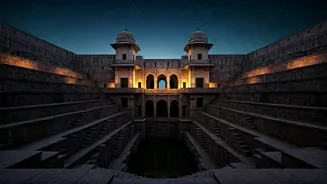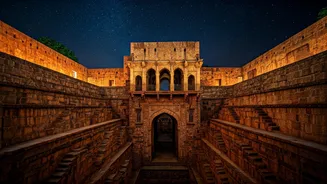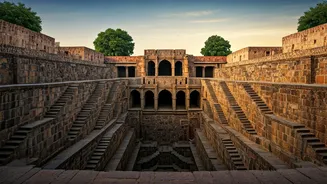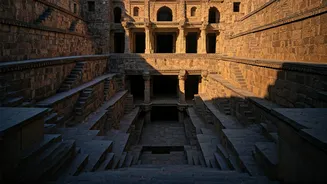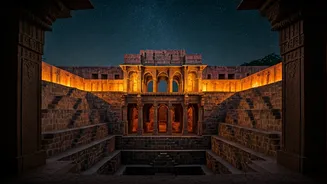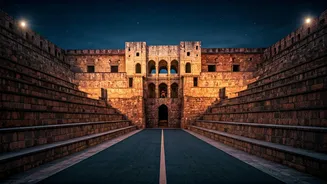



Why Shoot Stepwells After Dark?
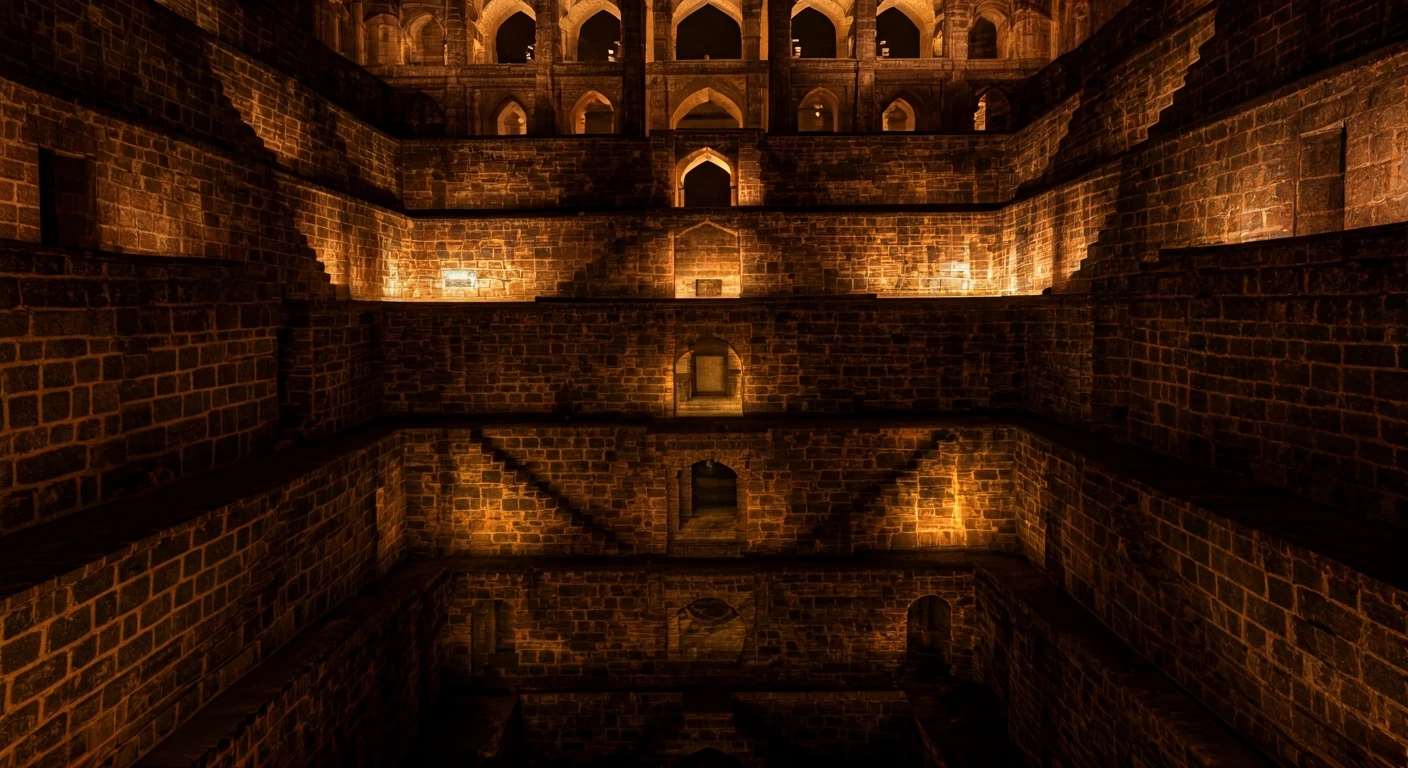
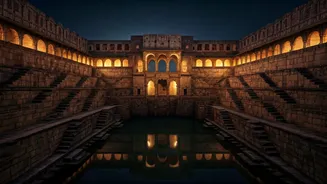
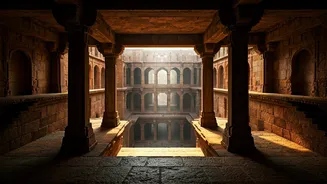
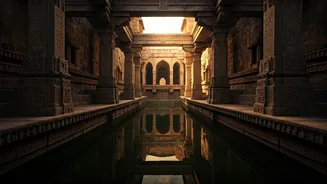
By day, India's magnificent stepwells, or 'vavs' and 'baoris', are buzzing hubs of activity. But as dusk settles, a profound transformation occurs. The intricate geometry, the endless steps descending into darkness, and the ornate carvings take on a new,
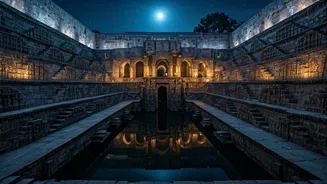
dramatic character. Night photography allows you to escape the crowds and connect with the true essence of these architectural wonders. Using long exposures, you can capture the soft glow of ambient light, the hypnotic patterns of the stairs, and even the star trails in the sky above. It’s a chance to see a familiar piece of heritage through a completely new and creative lens, creating images that are both haunting and beautiful. This is not just sightseeing; it's an artistic pilgrimage.
A Photographer’s Road Trip Circuit
A road trip is the perfect way to explore these scattered gems. The most rewarding circuits are in Gujarat and Rajasthan, where stepwells are a key part of the landscape. Here’s a starter itinerary connecting three iconic sites: 1. **Adalaj ni Vav, Gujarat:** Located just outside Ahmedabad, this five-storey stepwell is a fantastic starting point. Its Indo-Islamic architecture is stunning, and its proximity to the city means it's often beautifully illuminated at night, making it accessible for beginners. The three entrance staircases and ornate platforms offer endless compositional possibilities. 2. **Rani ki Vav, Gujarat:** A UNESCO World Heritage Site in Patan, this is often called the queen of stepwells. It's designed like an inverted temple, with over 500 major sculptures. While direct night access inside the complex may be restricted, capturing the structure from permissible vantage points during the blue hour—just after sunset—can yield breathtaking results. Always check local regulations first. 3. **Chand Baori, Rajasthan:** Perhaps the most famous and visually dramatic stepwell, located in the village of Abhaneri. Its 3,500 perfectly symmetrical steps are a photographer's dream. Capturing this geometric marvel under moonlight is a bucket-list shot. Plan to stay nearby, as the drive from Jaipur takes a couple of hours. As with other protected sites, confirm access rules and consider hiring a local guide who understands the best and safest spots for night shots.
The Essential Night Photography Kit
You don’t need the most expensive gear, but a few key items are non-negotiable for capturing sharp, compelling night photos. First and foremost is a sturdy tripod; it's impossible to shoot long exposures without one. Next, a camera with manual mode (most DSLRs and mirrorless cameras have this) is essential for controlling your settings. A wide-angle lens (e.g., 16-35mm) will help you capture the grand scale of the stepwells. Also, pack a remote shutter release or use your camera’s self-timer to avoid camera shake when you press the shutter. Finally, bring a headlamp or a small torch—not just for seeing in the dark, but for 'light painting' to selectively illuminate parts of the stepwell for a creative effect. And don't forget extra batteries, as long exposures drain them quickly.
Simple Settings for Stunning Shots
Night photography can seem intimidating, but you can start with a simple formula. Set your camera to Manual (M) mode. Begin with a wide aperture (the lowest f-number, like f/2.8 or f/4) to let in as much light as possible. Set your ISO to a relatively low number, like 800 or 1600, to minimise digital noise or graininess. The magic happens with your shutter speed: start with an exposure of 15 to 30 seconds. This will be long enough to capture the details in the shadows and the movement of the stars. Use your camera's live view screen to zoom in and manually focus on a bright point to ensure your image is sharp. Review your shot, and don't be afraid to experiment by adjusting the shutter speed or ISO to get the perfect exposure.