


An Exceptional Celestial Event
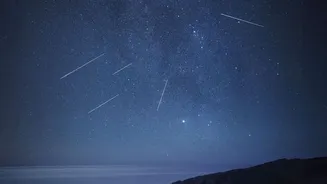
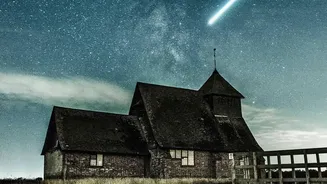
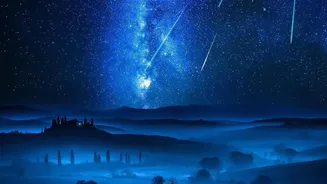
Every August, Earth passes through a trail of cosmic dust left behind by Comet Swift-Tuttle, creating one of the year's most brilliant celestial events: the Perseid meteor shower. This year, conditions are ideal. The shower's peak on the nights of August 12
and 13 coincides with a new moon, meaning the sky will be exceptionally dark, allowing even fainter meteors to shine. Under perfect conditions, observers can witness up to 100 meteors per hour—fast, bright streaks that often leave long, glowing trails. For viewers in India, the best time to watch is in the hours after midnight and before dawn, specifically between 2:00 AM and 4:30 AM IST on August 13.
Why Rural India Offers the Best Views
The single biggest obstacle to enjoying a meteor shower is light pollution. The bright haze that blankets cities and towns can wash out all but the most brilliant meteors, reducing a celestial spectacle to a handful of faint streaks. This is why escaping to the countryside is not just an option, but a necessity for a truly memorable experience. Remote rural spots in India offer the darkness needed for your eyes to become fully adapted, revealing thousands of stars and the full glory of the meteor shower. Places like the salt flats of the Rann of Kutch, the high-altitude deserts of Ladakh and Spiti, and the less-developed areas of the Thar Desert in Rajasthan are renowned for their dark skies. However, you don't need to travel to a famous reserve; any safe, open area far from the lights of a major town or village will provide a vastly superior viewing experience.
Finding Your Perfect Spot
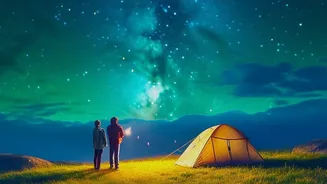
Selecting the right location is crucial. Look for a spot with a wide, unobstructed view of the sky, away from tall trees, buildings, and direct sources of light like streetlamps or headlights. Safety should be your primary concern. Choose a location that is easily and safely accessible, perhaps a quiet country road, a remote car park, or a clearing you are familiar with. It's always best to scout the location during the day to check for potential hazards. Inform someone of your plans, and if possible, go with a friend or a group. Some of the best stargazing destinations in India include designated dark sky reserves like Hanle in Ladakh, but also accessible locations like Jaisalmer in Rajasthan, Matheran in Maharashtra, and parts of the Coorg district in Karnataka.
Gear Up for a Night of Wonder
The best tool for watching a meteor shower is simply your own eyes. Telescopes and binoculars are not recommended because their narrow fields of view will cause you to miss most of the action. The most important gear is for your comfort. Since you'll be sitting still for a long time, bring a reclining chair, a blanket, or a mat to lie on. Even on warm nights, temperatures can drop, so pack extra layers of clothing, a jacket, and a warm drink. Your eyes will need about 20 to 30 minutes to fully adapt to the dark, a process that can be instantly ruined by a flash of white light from a phone screen or a regular torch. If you need a light source, use a red torch or cover a standard torch with red cellophane to preserve your night vision.
The Art of Patient Observation
Once you're settled in your comfortable spot, the method is simple: lie back, relax, and look up. Don't focus on a single point. Instead, take in as much of the sky as possible. The meteors will appear to radiate from the constellation Perseus, which will be in the northeastern sky, but they can streak across any part of the celestial canvas. Patience is key. Meteor showers are not constant; they come in spurts. There may be lulls with no activity, followed by several meteors in quick succession. Resist the urge to check your phone, as this will spoil your dark adaptation. Just give yourself time to connect with the night sky. The experience is as much about the quiet wonder and the vastness of the cosmos as it is about counting fireballs.