
A Tale of Two Moons
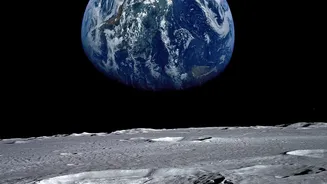
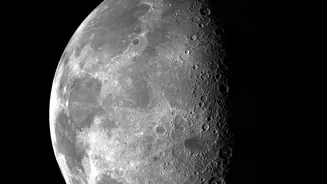
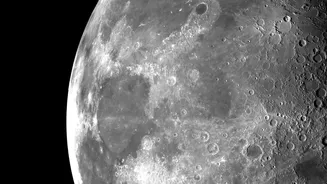
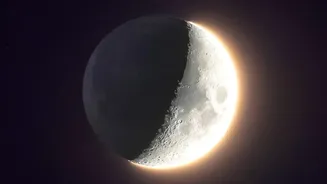
Anyone with a telescope, or even just sharp eyes, is familiar with the 'Man in the Moon'. These dark, smooth patches are vast plains of ancient, hardened lava called 'maria'. They dominate the Earth-facing side, giving it its familiar appearance. But
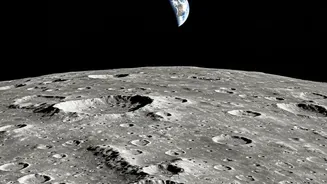
the far side is a different world entirely. When Soviet and American spacecraft first sent back images in the 1950s and 60s, they revealed a hemisphere that was rugged, mountainous, and absolutely pummeled with craters. Only 1% of the far side is covered in maria, compared to over 30% of the near side. This stark difference, known as the lunar dichotomy, has puzzled scientists for decades. The far side’s crust is also significantly thicker, which helps explain why less magma broke through to the surface. The question has always been: why?
A Mission to the Mysterious South Pole
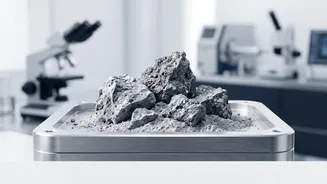
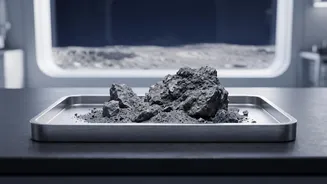
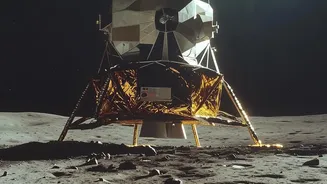
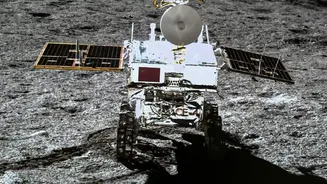
To find the answer, you have to go to the source. China's historic Chang'e-6 mission did just that, becoming the first-ever to successfully land on the lunar far side and return samples to Earth. It touched down in a scientifically fascinating location: the South Pole-Aitken (SPA) basin. The SPA basin is one of the largest and oldest known impact craters in the entire solar system, stretching roughly 2,500 kilometres across. Scientists believe the colossal impact that created it billions of years ago was so violent it may have punched deep into the Moon’s crust, possibly even dredging up material from the upper mantle. This makes the samples collected by Chang'e-6, amounting to nearly two kilograms of rock and soil, an unprecedented treasure trove of geological clues.
What the Far-Side Rocks Revealed
Upon analysing these precious fragments, a team of researchers led by Professor Hejiu Hui of Nanjing University made a critical discovery. They systematically compared the far-side rocks with samples from the near side, collected during the Apollo and previous Chang'e missions. The results were illuminating. They found that while the deep mantle material from both hemispheres appeared chemically similar, the crustal rocks were not. This suggests the difference between the two sides isn't a deep-seated feature of the entire Moon, but rather something that happened in the crust and upper layers. The analysis supports a leading theory that involves the Moon’s ancient past, when it was still covered in a global ocean of molten rock.
The Earth's Lingering Influence
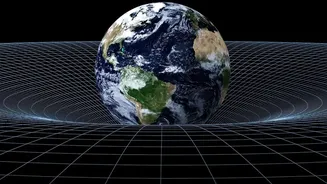
The emerging theory points a finger directly at our own planet. Shortly after its formation, the Moon became tidally locked with Earth, meaning the same side always faces us. Billions of years ago, the young Earth was still incredibly hot, radiating immense heat. The new evidence suggests this uneven heating from Earth had a profound effect on the Moon's cooling magma ocean. The side facing Earth stayed hotter for longer, while the far side cooled more quickly. This temperature difference could have created massive, slow-moving convection currents in the magma. These currents would have effectively pushed the lighter, floating crustal materials—like a layer of planetary scum—towards the cooler far side, causing them to pile up and form a thicker crust. Meanwhile, heat-producing radioactive elements like potassium and thorium were concentrated on the near side, fuelling the prolonged volcanism that formed the dark maria we see today.