


A Classroom Unlike Any Other
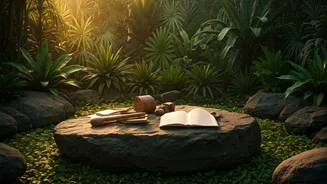
Imagine a mathematics lesson where children count fallen leaves to understand addition, or a science class that involves identifying insects in their natural habitat. This isn't a scene from a storybook; it's the daily reality in India's emerging 'green
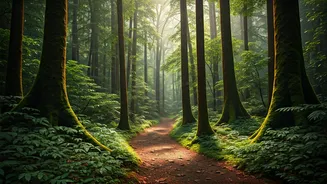
classrooms'. In these spaces, the rustling of trees replaces the hum of air conditioners, and the sky serves as the ceiling. Here, education is a sensory experience. Instead of memorising facts from a textbook, students learn about ecosystems by being part of one. They feel the texture of bark, smell the damp earth after a monsoon shower, and learn resilience by navigating uneven terrain. This pedagogical approach, often called forest schooling or nature-based learning, dismantles the physical and mental walls that have long defined formal education, fostering a deeper, more intuitive connection with the world.
Beyond Bricks and Mortar
At its core, the 'green classroom' philosophy is a response to the perceived limitations of conventional schooling. Proponents argue that the traditional system, with its emphasis on rote learning and standardised testing, often stifles creativity, curiosity, and critical thinking. By moving learning outdoors, educators aim to cultivate these very skills. The unstructured environment of nature encourages problem-solving—how do we build a shelter with these branches? It promotes collaboration, as children work together on tasks. Crucially, it replaces the passive absorption of information with active, inquiry-based discovery. The teacher’s role shifts from a 'sage on the stage' to a 'guide on the side,' facilitating learning by asking questions and encouraging exploration rather than simply providing answers. This model values experiential knowledge just as much as academic achievement.
Learning from Nature's Textbook
The benefits of this approach are multi-faceted, touching upon cognitive, emotional, and physical development. Studies globally have shown that children who spend more time learning in nature demonstrate improved concentration, better problem-solving abilities, and enhanced creativity. The constant physical activity builds gross motor skills and overall fitness, a welcome antidote to the increasingly sedentary lifestyles of modern children. Furthermore, being in nature has a proven calming effect, reducing stress and anxiety levels. In an Indian context, it also serves a vital cultural and environmental purpose. By fostering an early and intimate connection with the natural world, these programmes are cultivating a generation of environmentally conscious citizens who understand the importance of biodiversity and conservation not as an abstract concept, but as a lived reality.
Pioneers of a Greener Pedagogy
While still a niche movement, nature-based education is gaining traction across the country. In Goa, forest schools guide children through coastal ecosystems and verdant forests. In the Himalayan foothills, educational initiatives use the mountains as a living laboratory for lessons on geology and ecology. Urban centres like Bengaluru and Mumbai are seeing a rise in 'farm schools' and weekend nature clubs, where city kids can get their hands dirty and learn where their food comes from. These initiatives are often started by passionate educators, environmentalists, and parents seeking an alternative to the high-pressure, exam-oriented mainstream system. They are small, community-driven, and tailored to their local environment, from the arid landscapes of Rajasthan to the lush backwaters of Kerala, proving the model’s adaptability.
Challenges on the Path Ahead
Despite its many benefits, taking the classroom outdoors is not without its hurdles. The most significant challenge is scalability and integration with the formal education board curriculums, which remain rigidly structured. Concerns about safety, unpredictable weather, and access to basic facilities can be deterrents for parents and administrators. Moreover, there is a shortage of teachers trained in outdoor pedagogy. Mainstreaming this approach would require a fundamental shift in educational policy, teacher training, and societal attitudes towards what 'school' should look like. For now, it remains largely accessible to those who can afford private alternative schools or live in communities where such initiatives have taken root. The question remains: can the principles of the green classroom be adapted and integrated into the public school system, bringing its benefits to millions more?