







A Proven Model, A New Destination
The idea of NASA partnering with private industry isn't new. The Commercial Crew and Cargo programs successfully ended reliance on foreign rockets to supply the International Space Station, fostering a vibrant commercial launch market in the process.
This success provided a blueprint. NASA is now extending that philosophy beyond low-Earth orbit, first with the Commercial Lunar Payload Services (CLPS) program, which pays companies to deliver science to the Moon, and now with a more ambitious target: Mars. This strategic pivot is not just about saving money; it’s about increasing the frequency of missions and accelerating the pace of discovery. By offloading the development of rockets and spacecraft, NASA can focus its resources on what it does best: world-class scientific research and instrument development.
Mars as a Commercial Service
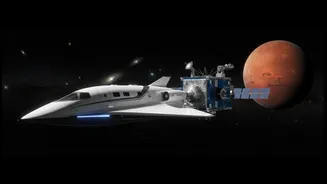
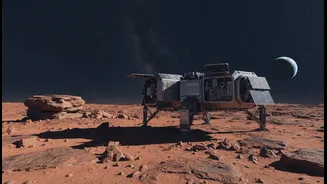
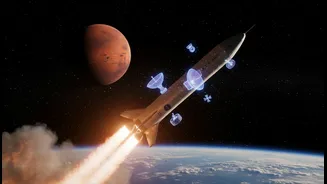
Recent announcements show this model in action. In a landmark agreement, NASA has partnered with Relativity Space for a Mars mission scheduled for 2028. Under this public-private partnership, NASA's Ames Research Center will provide a suite of four scientific instruments called Aeolus, designed to create the first daily, global view of Martian weather. Relativity Space, in turn, is responsible for the rest: building the spacecraft, launching it on its rocket, and managing the interplanetary flight. NASA essentially buys a delivery service for its scientific payload. This approach is a significant departure from the traditional model where a single, massive NASA-managed project would handle everything from conception to data analysis.
Why This Changes Everything
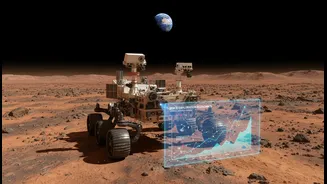
The benefits of this approach are compelling. As NASA Administrator Jared Isaacman stated, these partnerships are a "force multiplier for science." By leveraging commercial innovation and investment, the agency aims to send more science to Mars, more often. For future human missions, understanding Martian weather is not an academic exercise; it's a critical safety requirement. The Aeolus mission's data on winds, dust, and temperature is essential for designing entry, descent, and landing systems that can safely deliver astronauts to the surface. Furthermore, this model fosters a new deep-space economy. Instead of NASA being the only player, it becomes an anchor customer, enabling companies to build businesses around interplanetary services that could one day serve other clients.
Beyond a Single Mission
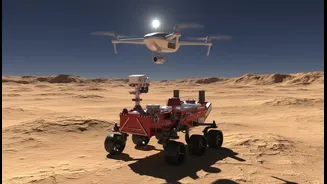
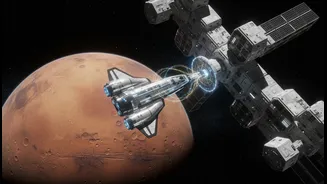
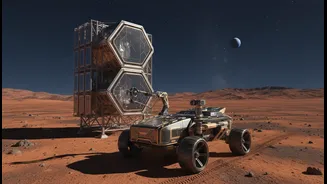
This is more than just one mission. NASA is actively soliciting industry studies for a range of potential commercial services at Mars, from delivering small and large payloads to providing surface imaging and next-generation communication relays. Another critical area is the Mars Sample Return mission. After acknowledging that its original plan was too slow and costly, NASA turned to the private sector, awarding contracts to seven companies—including Blue Origin, SpaceX, and Lockheed Martin—to study faster, more affordable ways to bring Martian rocks back to Earth. This suggests a future where a complex mission is broken down, with different commercial providers handling different legs of the journey, from launch to surface mobility. The recently announced STRIDE initiative, which funds companies to develop advanced robotic mobility systems, further reinforces this vision of a multi-partner ecosystem.