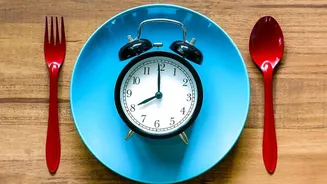







Your Body Runs on a 24-Hour Clock
Deep inside our bodies, a master clock is ticking. Known as the circadian rhythm, this 24-hour cycle governs everything from our sleep-wake patterns to hormone release and metabolism. This internal clock, located in the brain, is primarily synced by light
and darkness. However, it also coordinates a host of smaller 'peripheral' clocks in our organs, including the liver and pancreas. These peripheral clocks are highly influenced by our meal times. When we eat, we send a signal to these organs that it's the 'active' part of the day. For our bodies to function optimally, it's important that all these clocks are synchronised. Problems can arise when the master clock is winding down for sleep, but a late meal tells our digestive system to power up.
When Mealtime Clashes With Bedtime
Eating a large meal close to when you go to bed can create a form of internal jet lag. Your brain is getting ready for sleep, triggered by darkness, which should signal a drop in core body temperature and the release of the sleep hormone melatonin. However, the process of digestion is an active one that generates heat, known as diet-induced thermogenesis. This can raise your body temperature at the very moment it should be falling, potentially delaying sleep onset. Furthermore, studies show that a late dinner can result in higher blood sugar levels overnight. This is because our body's ability to manage sugar is less efficient in the evening as insulin sensitivity naturally decreases. Over time, this repeated clash can disrupt hormonal balance and metabolic processes.
Unlocking Your Fat-Burning Potential
One of the most compelling reasons to finish eating earlier is its effect on fat metabolism. Research has shown that eating a late dinner can reduce the amount of fat your body burns overnight. When you eat late, your body is busy processing the carbohydrates and other nutrients from that meal. This means it's less likely to tap into its stored fat for energy while you sleep. In contrast, finishing your last meal several hours before bed creates a longer overnight fasting window. This encourages your body to shift from using the energy from your recent meal to burning stored fat. Studies have demonstrated that this shift can lead to lower overall body fat and better weight management outcomes.
Paving the Way for More Restful Sleep
The link between an early dinner and better sleep is not just a popular trend; it's rooted in biology. Going to bed on a full stomach can lead to physical discomfort from issues like acid reflux and indigestion, both of which can fragment sleep and cause nighttime awakenings. Research has shown that people who eat within three hours of bedtime tend to wake up more frequently during the night. By giving your body ample time—ideally three to four hours—to digest your evening meal before you lie down, you allow it to focus on the crucial restorative processes that happen during sleep. This includes cellular repair, memory consolidation, and the release of growth hormone, all of which happen most efficiently when the digestive system isn't working overtime.
Simple Tips to Make the Shift
The idea of eating dinner by 6 or 7 p.m. might seem daunting, but you don't have to make the change overnight. Start by bringing your dinner time forward by 15 or 30 minutes each week. Plan your meals in advance so you're not scrambling to cook late in the evening. Making lunch your largest meal of the day can also help reduce evening hunger. If you do feel hungry before bed, opt for a small, protein-rich snack rather than a large, carbohydrate-heavy meal. The key is to listen to your body and find a rhythm that works for your schedule. Even a small shift can start aligning your meals with your body's natural clock, paving the way for significant health benefits.