




The Modern Trend: Vegetarian Snack Boards
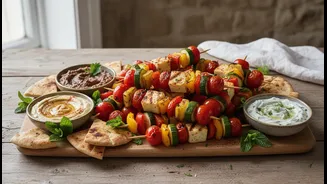
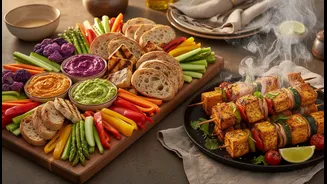
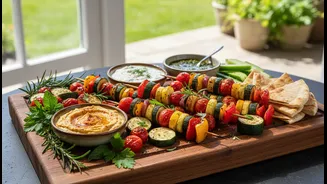
The classic kebab may have its roots in meat grilled by soldiers over open fires, but its modern evolution is wonderfully inclusive. Enter the vegetarian kebab snack board—a perfect centrepiece for any gathering. It’s colourful, versatile, and caters
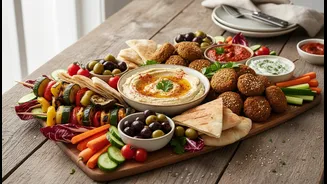
to everyone. The beauty of a snack board is its variety. You can mix and match textures and flavours, pairing soft, melt-in-the-mouth kebabs with crunchy vegetables, creamy dips, and artisanal breads. This approach transforms the humble kebab from a singular dish into an interactive and shareable feast, blending traditional Indian flavours with a contemporary grazing style.
Building Your Perfect Veggie Board
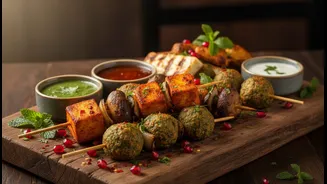
Crafting a vegetarian kebab board is all about balance. Start with a few standout kebabs. Dahi Ke Kebab, made from spiced hung curd, are delightfully creamy and tangy. Hara Bhara Kebabs, packed with spinach, peas, and potatoes, offer an earthy and wholesome bite. For something more substantial, consider Paneer Kebabs, marinated in yoghurt and spices and grilled with peppers and onions, or Mushroom Galouti, which provides a rich, umami flavour. Arrange these alongside fresh cucumber, cherry tomatoes, and pickled onions. Add dips like mint chutney and hummus, and finish with an assortment of naan, pita, or crackers for scooping.
Honouring Tradition: Smoky Regional Kebabs
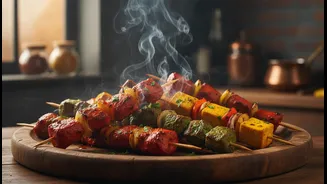
While vegetarian options are on the rise, the heart of India's kebab legacy lies in its smoky, meat-based regional specialties. For centuries, royal kitchens, or 'khansamas', across the country have perfected recipes passed down through generations. From the refined and delicate flavours of Awadhi cuisine in Lucknow to the robust, tandoor-fired creations of Punjab, each region offers a unique interpretation. The common thread is often a deep, smoky aroma that speaks of charcoal grills and age-old cooking techniques, a flavour that is central to the identity of a truly great kebab.
Iconic Kebabs Worth Celebrating
No discussion of Indian kebabs is complete without mentioning the legends. The Galouti Kebab from Lucknow is famously so soft it melts in your mouth, a dish supposedly created for a toothless Nawab. Also from Lucknow, the Kakori Kebab is another masterpiece of texture, known for its silky consistency. From Delhi's bustling streets comes the Seekh Kebab, where spiced minced meat is moulded onto skewers and cooked over coals. And from Hyderabad, the Shikampuri Kebab offers a rich, aromatic experience, often stuffed with hung curd and mint. Many chefs and restaurants are now reviving these and other forgotten recipes, bringing India's diverse kebab heritage to a new generation of food lovers.
The Secret to Smoky Flavour at Home
Want to achieve that authentic, smoky flavour without a traditional grill? Try the Dhungar method. This ancient Indian technique involves infusing your dish with smoke from a piece of hot charcoal. Once your kebabs are cooked, place them in a deep pot. In the centre, set a small metal bowl or a piece of foil. Using tongs, heat a piece of natural charcoal over a flame until it’s glowing red hot. Place the hot coal in the bowl and pour a spoonful of ghee or butter over it. As it starts to smoke profusely, immediately cover the pot with a tight-fitting lid and let it sit for a few minutes to trap the aromatic smoke. This finishing touch adds a layer of complexity that elevates homemade kebabs to restaurant quality.