








The Old Way vs. The New Way
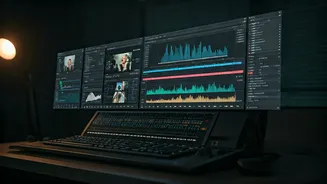
Traditionally, creating even a short promotional video involved a lengthy process: scripting, storyboarding, casting, shooting, and extensive post-production. This could take weeks or months and require a significant budget for crew, locations, and equipment.
AI video models flip this workflow on its head. Now, a creative director or marketer can type a text prompt—'a cinematic shot of a futuristic car driving through a neon-lit city at night'—and receive multiple video concepts in minutes. This transforms the process from manual labor to creative direction, allowing teams to test ideas at an unprecedented speed.
Accelerating Pre-Production and Ideation
One of the most significant time savings comes during the earliest stages of production. Instead of a designer spending days creating storyboards or animatics to visualize a concept, AI can generate visual proofs almost instantly. This allows stakeholders to see a director's vision and make decisions faster. Marketers can test multiple creative angles for a campaign by generating dozens of video variations to see what resonates with audiences, a task that would have been prohibitively expensive and slow using traditional methods. This iterative speed is a game-changer, enabling more creative risk-taking and data-driven decisions before committing to a full-scale production.
Automating the Repetitive Work
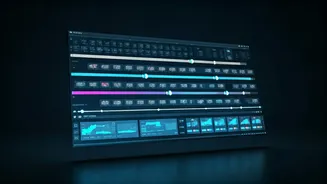
Beyond ideation, AI is automating many of the most time-consuming tasks in video editing. Need B-roll of a bustling market or a serene landscape? An AI model can generate it on demand, eliminating the need to search through stock footage libraries. Repetitive editing tasks like removing filler words from interviews, transcribing audio for subtitles, or even performing initial color correction can now be done automatically. This frees up human editors to focus on the more nuanced aspects of storytelling, pacing, and emotional impact, enhancing the final product's quality.
Real-World Impact and Time Savings
The claims of massive time reduction are not just theoretical. Case studies from various industries show dramatic results. Some marketing agencies report cutting video production for social media campaigns from days down to a single day. Training departments are creating educational content 75% faster, allowing them to keep materials up-to-date. Some businesses have documented an 80-90% reduction in production time for certain types of videos, turning what was once a multi-week project into something achievable in a few days. This efficiency doesn't just save time; it saves money, with some companies reporting cost reductions of 70% or more.
A Tool, Not a Replacement
Despite the impressive capabilities, it's crucial to understand the current limitations. AI models can still struggle with complex physics, maintaining character consistency across multiple shots, and depicting nuanced human emotions. The 'uncanny valley' remains a challenge, where AI-generated people look almost real but feel subtly wrong. Therefore, the most effective workflow is not to simply 'press a button and publish'. The best results come from a human-led process where creators use AI as a powerful assistant to generate options, accelerate grunt work, and test ideas, while a human hand provides the final polish, creative judgment, and storytelling instinct.