

The solar system has run like clockwork for billions of years, but its end is inevitable. While we knew the inner planets were doomed, a new study is rewriting the fate of the outer giants, suggesting a far more chaotic and imminent end.
The Sun’s Final Act
Our Sun, currently
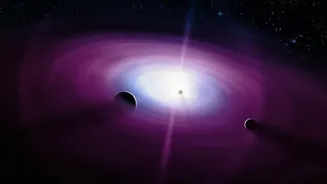
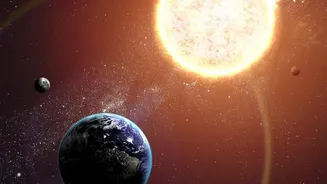
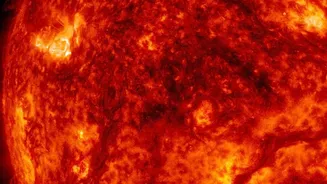
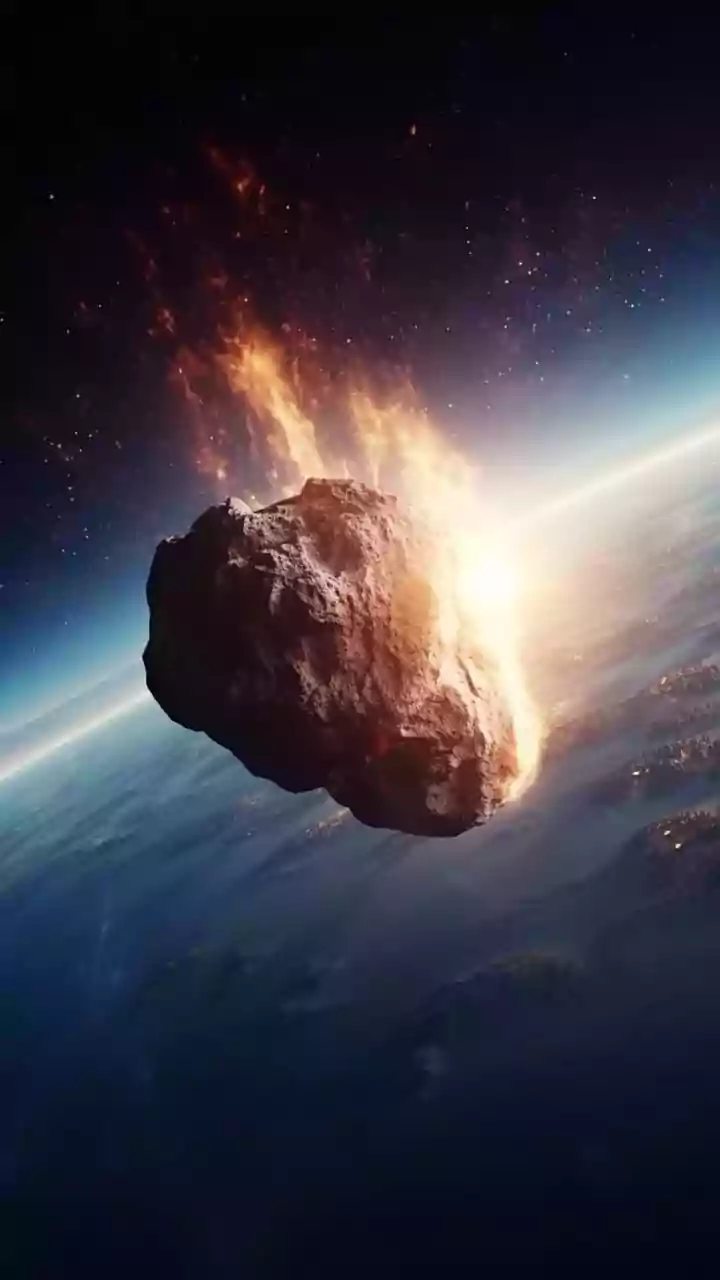
a middle-aged star, has been fusing hydrogen into helium for about 4.6 billion years. But in another 5 billion years or so, that fuel will run low. The Sun will then swell dramatically into a red giant, its atmosphere expanding to potentially swallow Mercury, Venus, and possibly even Earth. After this phase, which lasts about a billion years, the Sun will shed its outer layers and collapse into an incredibly dense, Earth-sized remnant known as a white dwarf. This tiny, cooling core is the final stage of our star's life. For a long time, astronomers believed this process, while catastrophic for the inner planets, would be a relatively gentle affair for the outer giants: Jupiter, Saturn, Uranus, and Neptune.
The Old, Stable Picture
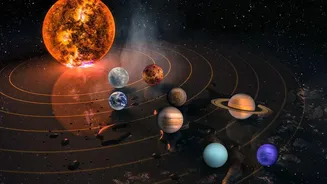
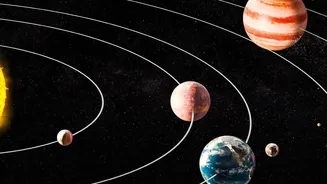
Previous models of the Sun's death assumed it would lose mass in a smooth, continuous way. As the Sun's mass decreases, its gravitational pull weakens. This would cause the surviving giant planets to drift gently outward into larger, but still stable, orbits. According to these older calculations, the outer solar system's architecture could remain intact for an astonishingly long time—anywhere from 100 billion to even a quintillion years. The only expected threat to this distant stability would be the chance gravitational tug of a passing star, an exceedingly rare event. This painted a picture of a remarkably resilient outer solar system, long outliving its parent star.
A New, Chaotic Model
A recent study published in The Astrophysical Journal Letters challenges this long-held view. Researchers, including astrophysicist Konstantin Batygin, proposed a different, more realistic picture of the Sun's mass loss. Instead of a smooth process, they modeled the Sun shedding its mass in thousands of discrete, uneven bursts. Observations of other dying stars suggest this 'jerky' or 'stochastic' mass loss is more likely. Each of these asymmetric ejections would give the dying Sun a tiny gravitational kick, like the recoil from a gun. While each individual nudge is small, their cumulative effect over millions of years is profound. These random kicks would slowly perturb the delicate gravitational balance holding the giant planets in their orbits.
Rewriting the Timeline
The results of the new simulations are dramatic. The study found that this 'stochastic forcing' could trigger widespread orbital instability far earlier than ever imagined. Instead of lasting for hundreds of billions of years, the outer solar system could descend into chaos within just a few billion years after the Sun becomes a white dwarf. In fact, the simulations showed that in roughly 40% of scenarios, major disruptions could begin even while the Sun is still in its red giant phase. In about 90% of the simulations, the system became unstable within 3 billion years of the Sun becoming a white dwarf, cutting the previous estimates of its lifespan by a factor of a billion or more.
A Game of Cosmic Billiards
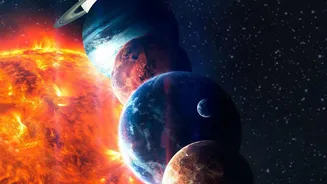
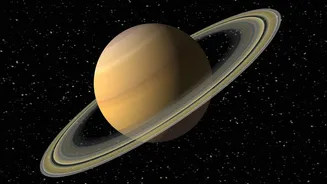
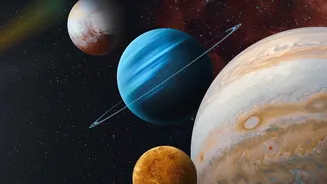
What does this instability look like? It's a cosmic demolition derby. The simulations showed planets' orbits becoming highly elliptical and starting to cross one another. This leads to violent gravitational encounters. In some scenarios, Saturn was ejected from the solar system entirely. In others, Uranus and Neptune switched places. Many simulations ended with the giant planets colliding and destroying each other. The ultimate outcome is a planetary system that is not just rearranged, but fundamentally broken apart. Some of these giant worlds could be cast out to wander the galaxy as free-floating 'rogue' planets, forever untethered from any star.