






The Desk Job and The Mystery Knee Pain
When we think of desk-related ailments, we usually point to a sore back or a stiff neck. But a growing number of office workers and work-from-home professionals are reporting knee pain with no obvious cause. This discomfort, often called 'theatre sign'
because it flares up after long periods of sitting, isn't random. It’s frequently the result of a biomechanical chain reaction that starts with how you sit. Poor posture and incorrect chair height don't just affect your spine; they travel down your body, putting your knees in a compromised and painful position for hours on end. This prolonged, static load is something the knee joint simply wasn't designed to handle.
How Bad Ergonomics Puts Knees at Risk
The problem begins with improper alignment. The ideal sitting position keeps your knees at roughly a 90-degree angle, with your feet flat on the floor and your hips at or slightly above your knees. However, many people sit in chairs that are too low or too high. If the chair is too low, your knees are bent at an angle greater than 90 degrees, which increases the compressive force on the joint. If it's too high and your feet dangle, your body may slide forward, causing you to sit with your knees sharply bent. This sustained flexion presses the kneecap (patella) against the thigh bone (femur). This misalignment creates what's known as patellofemoral pain syndrome, where the kneecap tracks improperly in its groove, causing irritation.
The Pressure Problem: From Discomfort to Damage
Imagine constantly pressing down on one part of a delicate machine. That's what happens to your knee cartilage with poor desk posture. The sustained pressure between the back of the kneecap and the femur is the 'abnormal knee joint pressure' mentioned in the headline. This consistent force irritates the smooth, slick articular cartilage that allows the joint to move without friction. Initially, this might just feel like a dull ache or stiffness when you stand up after a long meeting. Over time, however, this chronic irritation can lead to a condition called chondromalacia patellae, which literally means 'softening of the kneecap cartilage'.
What Is Early Cartilage Breakdown?
Cartilage is the vital cushioning in our joints, but it has a very limited blood supply, meaning it can't heal itself well once damaged. Chondromalacia is essentially the first stage of this breakdown process. The cartilage, which should be firm and smooth, starts to soften, fray, or develop rough patches. This is the 'early cartilage breakdown'. You might notice a grating or grinding sensation (crepitus) when you extend your leg. While this condition is different from generalised osteoarthritis, which affects the entire joint, it is a precursor. Allowing this abnormal pressure to continue day after day can accelerate the wear-and-tear process, leading to more significant and permanent joint damage later in life.
Your 5-Minute Ergonomic Knee-Saver Audit
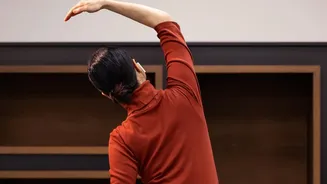
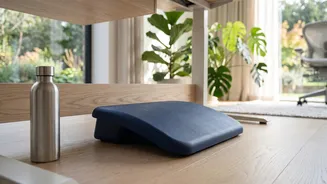
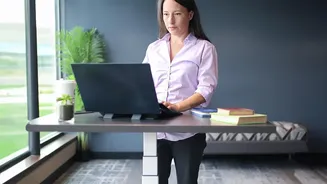
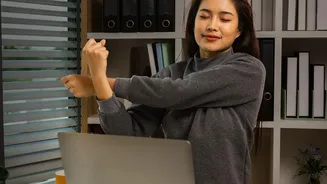
The good news is that you can dramatically reduce this harmful pressure with a few simple adjustments. Take a moment to assess your workstation right now: 1. Chair Height: Adjust your chair so your feet are flat on the floor. Your knees should be at a 90-degree angle, level with or slightly below your hips. Use a footrest if your desk is too high to allow this. 2. Seat Depth: You should be able to fit two or three fingers between the front edge of the seat and the back of your knees. This prevents the seat from cutting off circulation. 3. Posture Check: Sit back fully in your chair so your lower back is supported. Avoid crossing your legs, which puts rotational strain on your knees. 4. Move Regularly: The most crucial step is to avoid staying in one position for too long. Set a timer to stand up, stretch, and walk around for a few minutes every hour. This restores blood flow and gives your joints a break from the static load.