



The Sun's Fiery Temper
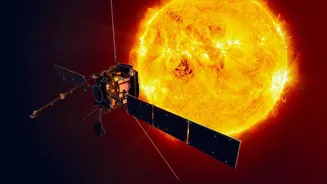
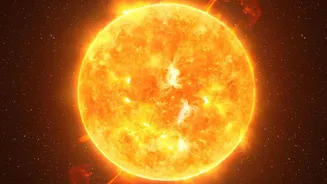
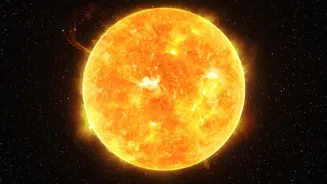
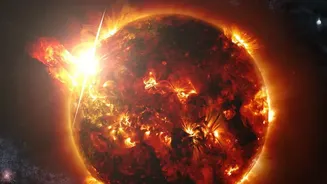
A solar flare is a gigantic explosion on the sun's surface, occurring when magnetic energy built up in its atmosphere is suddenly released. This event unleashes a torrent of radiation across the entire electromagnetic spectrum, from radio waves to high-energy
X-rays and gamma rays. This radiation travels at the speed of light, reaching Earth in about eight minutes. Often accompanying flares are Coronal Mass Ejections (CMEs), which are colossal bubbles of plasma and magnetic fields that travel more slowly, taking one to three days to reach Earth. While a flare is a flash of light, a CME is like a cannonball of solar material. Both pose significant threats to our technological infrastructure in space.
Satellites in the Firing Line
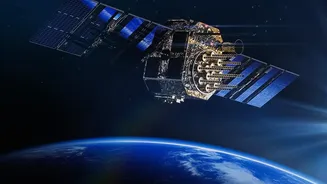
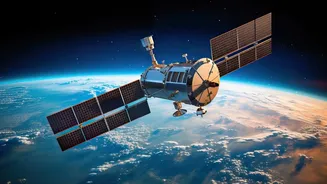
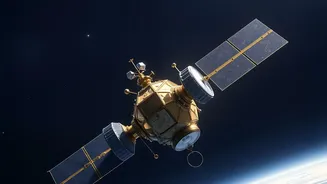
Orbiting spacecraft are particularly vulnerable to this solar onslaught. With little to no atmosphere to protect them, they face the full force of space weather. The high-energy particles from a solar storm can penetrate a satellite's shielding and wreak havoc on its electronics. This can cause 'single-event upsets,' where a charged particle flips a bit in a computer's memory, leading to errors or phantom commands. More severe storms can cause permanent damage to circuits and solar panels. Another major threat is increased atmospheric drag; the energy from a storm heats and expands Earth's upper atmosphere, increasing friction on satellites in low-Earth orbit. This can cause them to lose altitude and, in a worst-case scenario, burn up, as happened to a batch of newly launched Starlink satellites in 2022.
Our Eyes on the Sun
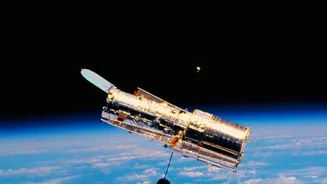
To protect these vital assets, we have a network of sentinel satellites constantly watching the sun. The primary tools for detecting solar flares are instruments that monitor X-ray and extreme ultraviolet (EUV) light. The Geostationary Operational Environmental Satellite (GOES) system, a joint effort by NASA and NOAA, is a cornerstone of this network. The X-Ray Sensor (XRS) aboard GOES satellites continuously measures the sun's X-ray output, allowing scientists to spot a flare the moment it happens. Other missions, like the Solar Dynamics Observatory (SDO), provide high-definition images that help scientists see the structure of the sun's magnetic fields, offering clues about when and where a flare might erupt.
From Detection to Action
The moment a significant flare is detected by satellites like GOES, the data is instantly relayed to ground stations. This information flows to organisations like the US National Oceanic and Atmospheric Administration's (NOAA) Space Weather Prediction Center (SWPC). Forecasters there analyse the flare's intensity and determine the potential threat level. Based on this analysis, they issue alerts and warnings to government agencies, infrastructure operators, and commercial satellite companies around the world. These alerts provide a critical, albeit sometimes short, window of time to prepare for the incoming radiation and charged particles. For the light-speed radiation from a flare, the warning is simultaneous with the event; for the slower-moving CMEs, operators can get hours or even days of notice.
Battening Down the Hatches
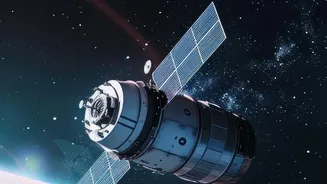
When a solar storm warning is issued, satellite operators spring into action. Their primary goal is to protect the sensitive electronics and maintain control of the spacecraft. A common strategy is to put the satellite into 'safe mode'. This involves shutting down non-essential systems, ceasing scientific operations, and focusing all available power on basic survival functions like maintaining orientation and charging batteries. Operators might also reorient the spacecraft to point its most robust shielding towards the incoming particle stream or adjust its orbit to minimise drag. Once the storm passes and SWPC gives the all-clear, operators can begin the process of carefully reactivating systems and resuming normal operations.