
A New Window on the Cosmic Dawn
To understand how the first giant galaxies came to be, we need a time machine. Luckily, we have one: the James Webb Space Telescope (JWST). Because light takes time to travel across the universe, when Webb peers at the most distant objects, it's actually
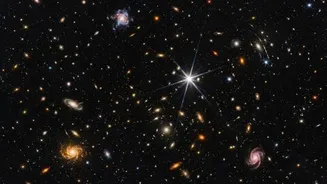
looking back in time to the universe's infancy. Its powerful instruments can capture the faint light from galaxies that existed just a few hundred million years after the Big Bang, an era known as the cosmic dawn. These new observations are providing an unprecedented level of detail, cutting through the cosmic dust to reveal the structures and processes that governed the early universe. This allows astronomers to move beyond theory and witness the assembly line of galaxy formation in action.
Giants in the Cosmic Nursery
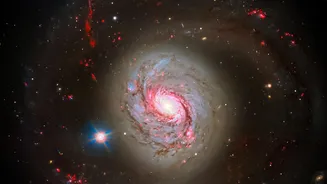
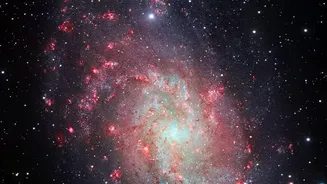
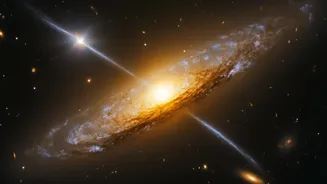
The long-standing theory of galaxy formation is known as the hierarchical model. It suggests that large galaxies are built slowly over billions of years, through the gradual merger of many smaller galaxies and gas clouds. However, recent JWST observations are painting a different picture. Astronomers are finding massive, well-structured, and chemically mature galaxies far earlier in cosmic history than expected. Some galaxies seen just 1.4 billion years after the Big Bang are already huge and have stopped forming stars, a state called quiescence that was thought to take much longer to reach. These discoveries suggest that some of the universe’s giants didn't grow slowly; they appeared to spring into existence almost fully formed.
A More Rapid, Violent Formation?
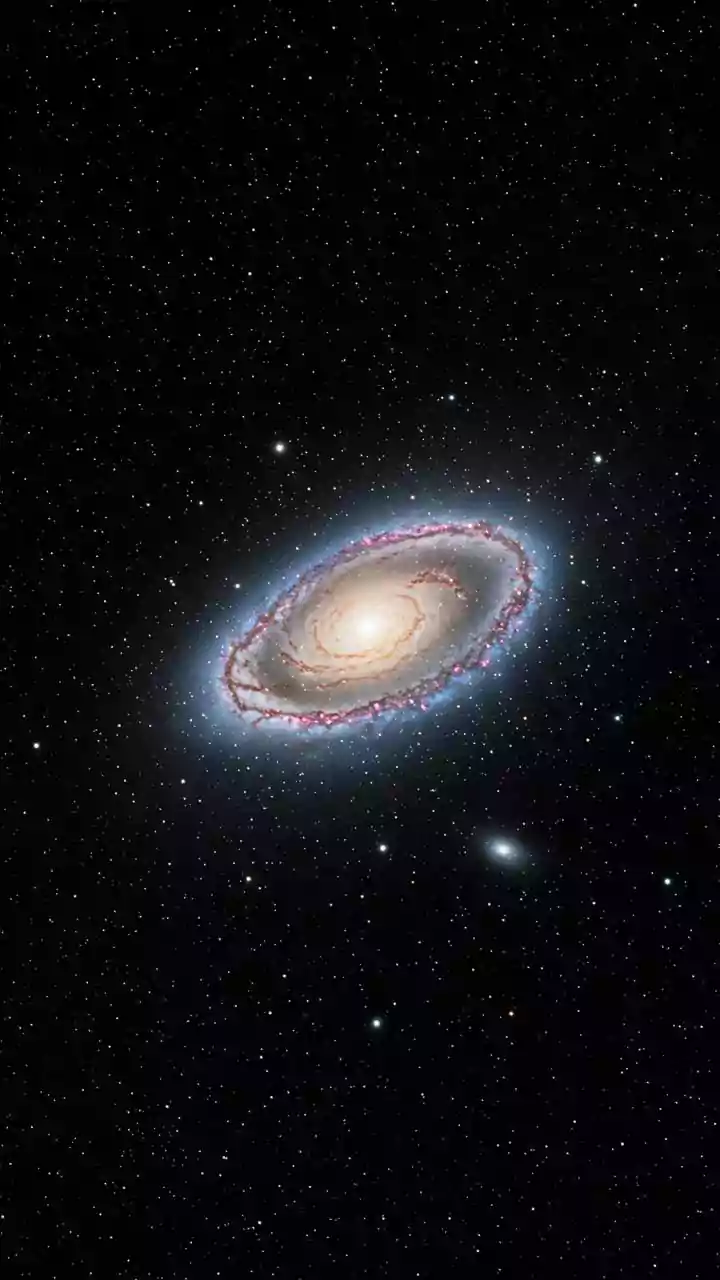
So if not through slow and steady mergers, how did these early giants grow so quickly? One emerging theory points to a much more rapid and violent process. Research focusing on a protocluster—a massive collection of young galaxies—named SPT2349-56 suggests that some giant elliptical galaxies may form through the swift collapse of an entire primordial structure. Instead of taking billions of years, a massive galaxy might emerge in just a few hundred million years. Another possibility involves stellar bars, which are long structures of stars that can form early in a galaxy's life. These bars act like cosmic funnels, driving gas and stars toward the galactic centre, which could rapidly build up a dense core and fuel intense bursts of star formation far earlier than previously thought possible.
Rethinking the Role of Black Holes
At the heart of nearly every massive galaxy lies a supermassive black hole, and their growth is intimately tied to the evolution of their host galaxy. Some of the latest findings investigate how these central engines affect their surroundings. One study, focusing on a galaxy nicknamed the "Red Potato," suggests that energetic activity from its central black hole is violently heating and expelling the gas needed to form new stars. This process, known as feedback, can effectively shut down star formation, or 'quench' a galaxy, much earlier in its life than expected. Understanding this relationship is crucial, as the discovery of surprisingly large black holes in the early universe also challenges models that assume they grow in tandem with their galaxies.