






A Strategic Partnership Takes Flight
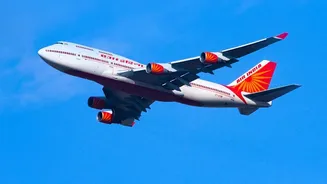
The partnership between Singapore Airlines (SIA) and the Tata Group solidified following the merger of Vistara with Air India. This landmark deal resulted in SIA taking a 25.1% stake in the newly enlarged Air India group. The move was seen as a strategic
masterstroke, combining Tata's vision for a revitalised national carrier with SIA's global reputation for excellence and operational prowess. For Singapore Airlines, it represented a deeper commitment to the fast-growing Indian aviation market, transforming its joint venture stake in Vistara into a significant holding in India's largest international airline. The infusion of capital and expertise was intended to accelerate Air India's transformation and re-establish it as a world-class carrier.
Decoding the H1 FY27 Loss
Recent financial disclosures from Singapore Airlines have provided a window into Air India's performance, estimating a loss of around ₹10,500 to ₹10,800 crore for the first half of the 2026-27 financial year (April-September 2026). While this is a staggering figure, it represents a notable improvement. SIA's share of Air India's losses fell by 16% compared to the same period last year, indicating that the total loss has narrowed from approximately ₹12,500 crore previously. This suggests that while the airline is still incurring heavy losses, the financial trajectory is moving in a positive, albeit slow, direction. The full-year loss for the prior fiscal year (FY26) was a massive ₹22,238 crore.
The High Price of a Complete Overhaul
The substantial losses are not a sign of failure, but rather a direct consequence of the monumental investment required to transform the airline. The 'Vihaan.AI' five-year plan, launched in 2022, involves a top-to-bottom overhaul. This includes massive expenditure on a historic order for over 570 new Airbus and Boeing aircraft, a USD 400 million program to retrofit the interiors of the existing widebody fleet, and significant investment in new IT systems, training, and branding. Integrating Vistara and Air India Express has also come with substantial one-time costs. Furthermore, the airline industry has been hit by external shocks, including a sharp rise in jet fuel prices, which surged by over 86% year-on-year.
A Long-Haul Flight to Profitability
Both the Tata Group and Singapore Airlines are playing the long game. They understood from the outset that turning around an airline that had suffered from decades of underinvestment would be a capital-intensive marathon, not a sprint. The initial five-year timeline for profitability under the Vihaan.AI plan now looks more likely to extend to a decade. The focus remains on rebuilding the fundamentals of the airline to capture at least 30% of the domestic market and significantly grow its international presence. To fund this, Tata Sons has approved further capital infusions, demonstrating a continued commitment to seeing the transformation through despite the heavy near-term financial burden.
What Does This Mean for Passengers?
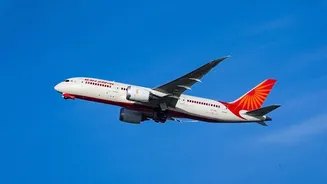
For the average flyer, these corporate-level losses are translating into tangible improvements in the travel experience. The investments are directly funding the new and retrofitted aircraft that are steadily being introduced into service, featuring modern seats, in-flight entertainment, and refreshed interiors. By the end of 2026, more than half of Air India's long-haul flights are expected to operate with these upgraded aircraft. The airline is also expanding its network, adding new routes and increasing frequencies to both domestic and international destinations. The current financial pain is the price for creating a more reliable, comfortable, and competitive airline for the future.