



Our Natural Spotlight
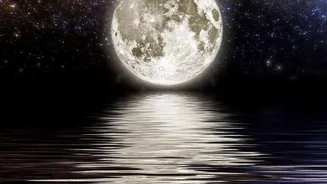
First, it's important to understand that the Moon is essentially a giant mirror, reflecting the Sun's light back at us. When it's full or close to full, it can be incredibly bright. A full Moon can be more than 2,000 times brighter than the brightest
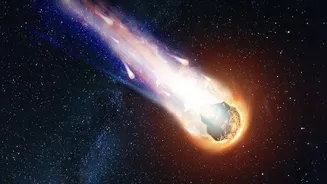
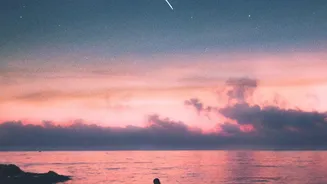
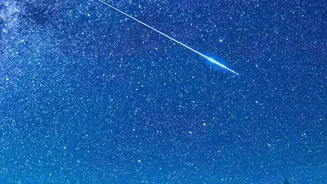
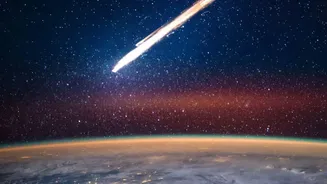
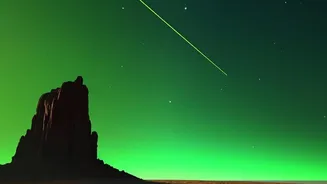
star in the sky, Sirius. This intense brightness is the core of the problem for meteor watchers. A meteor, or shooting star, is the streak of light we see when a tiny piece of space debris burns up in our atmosphere. Many of these meteors are incredibly faint, and our ability to see them depends entirely on having a dark background.
The Science of Skyglow
The Moon doesn't just light up itself; it lights up the entire sky. This effect is known as 'skyglow'. Light from the Moon enters Earth's atmosphere and scatters off air molecules, dust, and water vapour. This scattering process creates a diffuse, hazy brightness across the night sky, similar to the light domes we see over cities from artificial light pollution. Think of it like trying to see a single candle flame from across a brightly lit stadium. The candle is still burning, but its faint light is completely overpowered by the stadium's floodlights. In this analogy, the faint meteor is the candle, and the Moon is the floodlight, turning the sky from a black canvas into a washed-out grey one.
Losing the Contrast
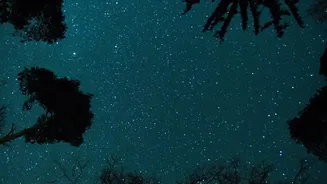
Our eyes need contrast to perceive objects, especially faint ones. In a pitch-black, moonless sky, even a very faint meteor streak creates a noticeable contrast against the dark background. But when moonlight creates a bright skyglow, that contrast is drastically reduced. The sky is no longer truly black, so the faint light from a distant meteor doesn't stand out. NASA astronomers note that a bright Moon can reduce the number of visible meteors by more than half. For example, a shower like the Perseids, which might produce 50 to 60 meteors per hour in ideal dark-sky conditions, could be reduced to just 10 or 20 per hour under a full Moon.
Can You Still Watch a Shower?
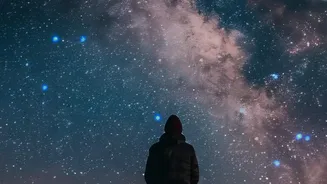
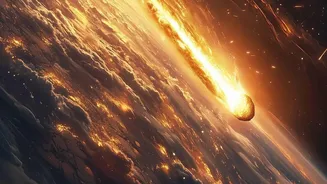
Yes, but you'll need to adjust your strategy. Even with a bright Moon, you can still catch the brighter meteors, which are often called fireballs. To maximize your chances, find a viewing spot far from city lights. Even though you can't escape the Moon, you can reduce man-made light pollution. Once you're there, try to position yourself in a 'moon shadow' by using a building, a line of trees, or a hill to physically block the Moon from your direct line of sight. Keeping the bright lunar disc out of your eyes will help your pupils adapt better to the darkness you do have. Finally, be patient. Your eyes need at least 20-30 minutes to adjust to the dark. Avoid looking at your phone, as its white light will ruin your night vision.
Timing Is Everything
Another effective strategy is to plan your viewing for times when the Moon is not in the sky. Check local moonrise and moonset times. Often, the best window for meteor watching is between midnight and dawn, as this is when your part of Earth is rotating into the path of the meteoroid stream. If the Moon sets before dawn, those pre-sunrise hours can offer a precious window of darkness. This is particularly relevant for the upcoming Orionid meteor shower on October 21-22, 2026, where the pre-dawn hours after the moon sets will be the best viewing window. The Draconid shower on October 8-9, however, will be ideal as the near-new moon will keep skies dark.