








A Landmark Liftoff for Private Spaceflight
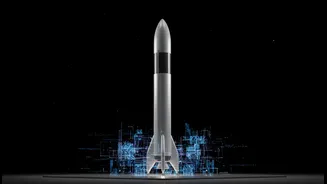
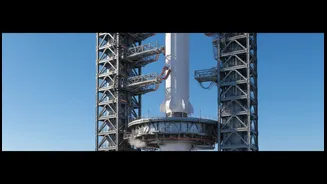
On July 18, all eyes will be on Sriharikota as Skyroot Aerospace attempts to launch its Vikram-1 rocket, a seven-storey-tall vehicle designed to carry small satellites into orbit. The mission, named 'Aagaman' or 'arrival', is a landmark moment. If successful,
it will mark the first time a rocket completely designed and developed by a private Indian company has reached orbit, a feat only a handful of private entities have achieved globally. For years, the Indian Space Research Organisation (ISRO) was the sole player. Now, Skyroot's launch symbolises a dramatic shift, one where private companies move from being mere suppliers to pioneers, enabled by government reforms that opened up the sector in 2020.
More Than Just One Rocket
The true promise of Vikram-1 lies not in a single launch, but in the ecosystem it represents. A successful mission is a proof of concept that can unlock a torrent of investment, innovation, and, most importantly, jobs. Skyroot's co-founder Naga Bharath Daka noted the launch represents the work of around 1,000 people and over 400 suppliers. This is the ripple effect in action. A thriving launch industry needs specialists in propulsion, avionics, materials science, software, and logistics. It stimulates demand for high-precision manufacturing, testing facilities, and ground station operations. Every rocket that lifts off carries with it a chain of economic activity, creating roles that extend far beyond a single launchpad.
The New Space Policy: From Gatekeeper to Enabler
This new era wouldn't be possible without a fundamental policy shift. The establishment of the Indian National Space Promotion and Authorisation Centre (IN-SPACe) in 2020 was a game-changer. IN-SPACe acts as a single-window agency, allowing private firms to use ISRO's world-class facilities, from launchpads to testing centres, which they could not afford to build themselves. The Indian Space Policy 2023 further clarified the roles, positioning ISRO as a research-focused body while empowering private companies to handle commercial operations. This framework is designed to transform India's space economy, with ambitions to grow it to $44 billion by 2033 and capture a larger share of the global market.
The Talent Challenge: Building the Workforce
Despite the optimism, creating a sustainable job ecosystem is not guaranteed. India's private space sector faces a significant talent crunch. While over 200 space-tech startups have emerged, they struggle to find engineers with specialised skills in rocketry, photonics, and propulsion. Many companies are forced to hire from other engineering streams and invest up to a year in on-the-job training. Furthermore, there is a 'brain drain' issue, with skilled graduates often opting for higher-paying jobs overseas. For the ecosystem to be sustainable, there needs to be a concerted effort between industry and academia to develop specialised courses and make careers in the domestic space sector more attractive.
The Road Ahead: From Launch to Longevity
The Vikram-1 launch is a critical first step, but sustainability will depend on achieving a regular, reliable launch schedule—what the industry calls 'launch cadence'. Skyroot's goal is to eventually produce one orbital rocket per month. This requires not just technical success but also a steady flow of customers and significant patient capital, as space ventures are high-risk and have long gestation periods. Startups also face hurdles like delayed government procurement and intense global competition from established players like SpaceX. The success of Skyroot and its peers will depend on their ability to prove reliability and cost-effectiveness, turning the promise of 'Aagaman' into a lasting presence in the global space market.