

Seeing the Invisible
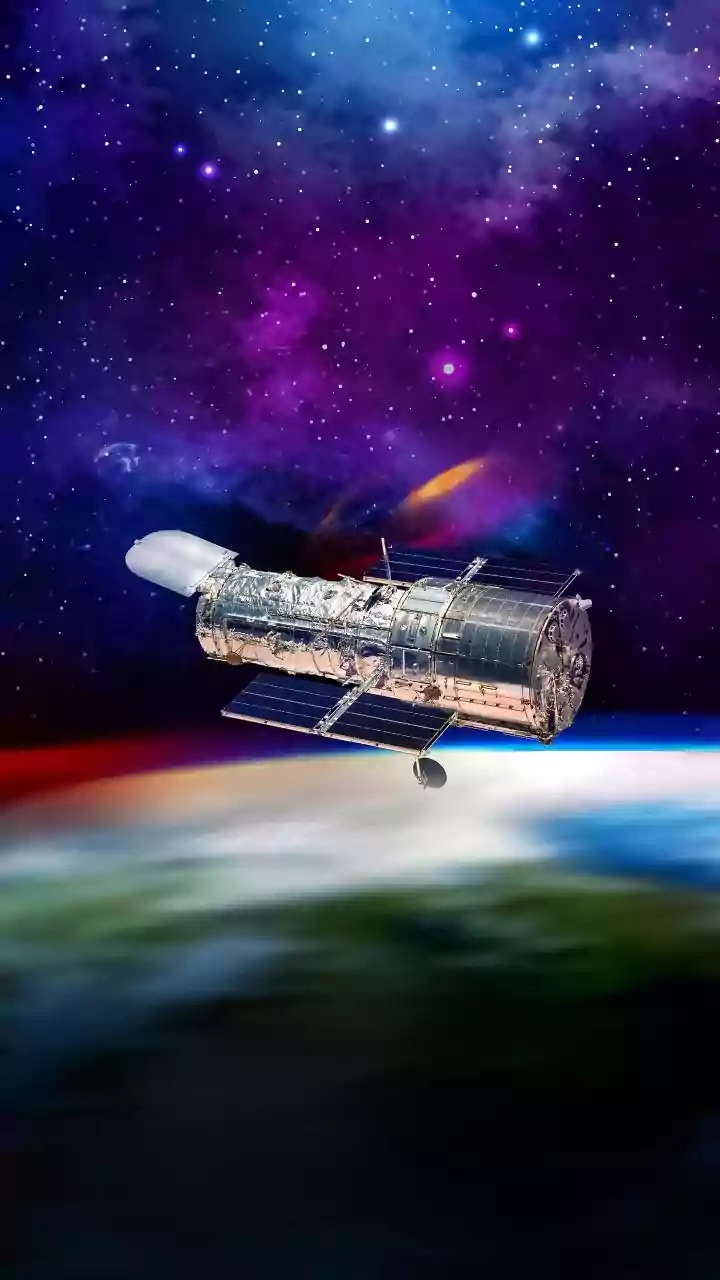
For decades, astronomers have been discovering thousands of exoplanets, but understanding what they are truly like has been a major challenge. Telescopes like Hubble could detect some atmospheric components, but their vision was limited. The game-changer
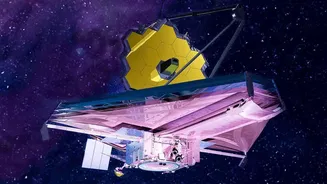
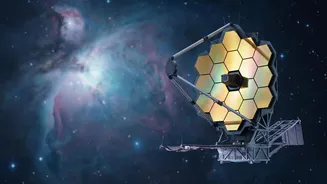
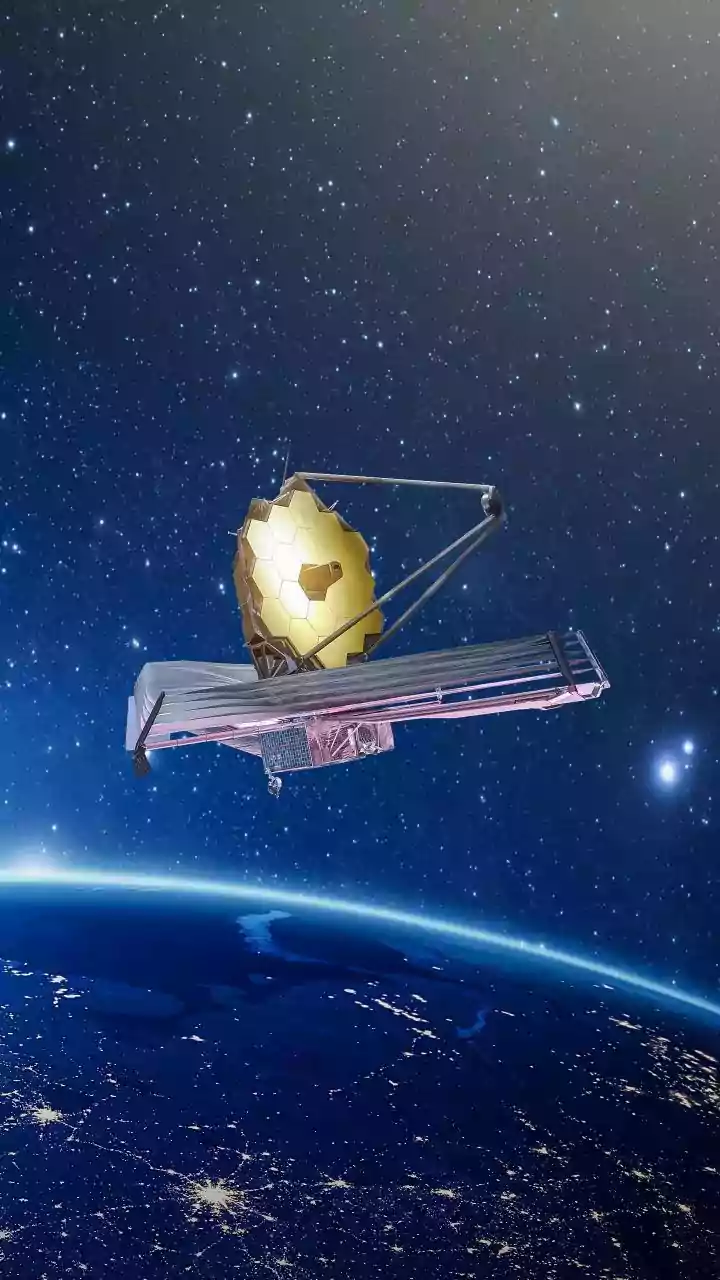
with the JWST is its powerful and precise ability to see the universe in infrared light. This part of the light spectrum, which is invisible to the human eye, holds the chemical fingerprints of molecules that are essential for understanding a planet's atmosphere. By focusing on infrared, JWST can pick up signals from gases like carbon dioxide, methane, and water vapor with astonishing clarity, something that was previously difficult or impossible.
A Chemical Fingerprint in Starlight
The primary method JWST uses is called transmission spectroscopy. When an exoplanet passes, or 'transits', in front of its host star from our point of view, a tiny fraction of the starlight filters through the planet's atmosphere. Different gases in that atmosphere absorb specific wavelengths, or colors, of this starlight. JWST's highly sensitive spectrographs capture the starlight before and during this transit, and by analyzing the 'missing' colors, scientists can create a detailed profile of the atoms and molecules present. This technique essentially allows them to perform a chemical analysis of a world they can never visit, revealing its composition, temperature, and even signs of active chemistry.
A 'Hot Saturn' Reveals Its Secrets
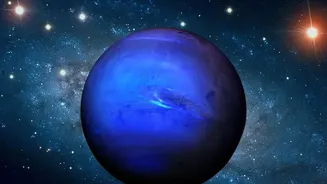
One of the telescope's first major successes in this area was its observation of WASP-39 b, a gas giant known as a 'hot Saturn' located 700 light-years away. While earlier observations had hinted at its atmospheric makeup, JWST provided a complete menu of its contents. For the first time ever on an exoplanet, JWST detected clear evidence of sulfur dioxide. This was a landmark discovery because sulfur dioxide is created by photochemistry—chemical reactions triggered by the intense light from the planet's star. This finding confirmed that active chemical processes, similar to those that create Earth's ozone layer, are happening on distant worlds. The telescope also delivered a full profile including sodium, potassium, water, carbon monoxide, and a high-resolution look at carbon dioxide.
The Search for Life's Building Blocks
The capabilities of JWST have also intensified the search for habitable worlds. A prime target has been K2-18 b, a planet 120 light-years away that orbits in its star's habitable zone. Observations by JWST confirmed the presence of carbon-bearing molecules, including methane and carbon dioxide, which are crucial components of a potentially habitable environment. Even more intriguing was the potential, though still debated, detection of dimethyl sulfide (DMS). On Earth, DMS is overwhelmingly produced by life, particularly marine phytoplankton. While the presence of DMS on K2-18 b is not yet confirmed and could have non-biological origins, the mere ability to search for such specific biosignatures represents a monumental leap forward. It moves the science of exoplanetology from simply finding planets to actively searching for signs of life.
Beyond Detection to Characterization
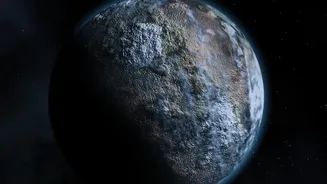
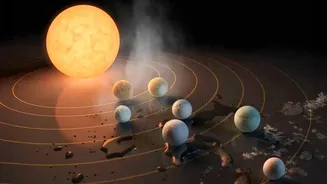
Before JWST, the study of exoplanet atmospheres was about detecting isolated ingredients. Now, it's about creating a holistic picture. The telescope's precision allows scientists not just to identify molecules, but to measure their abundance. This data provides clues about how a planet formed, where it formed in its solar system, and how it has evolved over time. For instance, the detailed chemical inventory of WASP-39 b suggests it formed far from its star and migrated inwards. Furthermore, JWST is capable of studying a wide variety of planets, from gas giants to smaller, rocky worlds like those in the TRAPPIST-1 system, which were previously out of reach for detailed atmospheric study. This ability to comprehensively characterize diverse exoplanets is what truly redefines our understanding.