




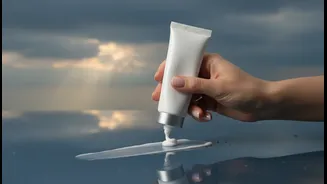


The Great Monsoon Misconception
For many, the arrival of the monsoon signals a welcome break from the intense summer sun. The logic seems simple: no bright sun, no need for sunscreen. This is one of the most common and damaging skincare myths. While the thick cloud cover reduces the sun's
visible light and heat, it does not form an impenetrable barrier against harmful ultraviolet (UV) radiation. Experts confirm that even on the most overcast days, a significant portion of UV rays reaches the Earth's surface, silently contributing to skin damage. This creates a false sense of security, leading people to forgo protection when their skin is still very much exposed.
The Invisible Threat: UVA vs. UVB Rays
To understand why cloudy-day sunscreen is critical, it helps to know the difference between the two main types of UV rays that reach us: UVA and UVB. Think of UVB as the 'burning' rays; they are responsible for immediate skin damage like sunburns. Their intensity varies by season and time of day. Clouds, especially thick ones, can block a good portion of UVB rays, which is why you are less likely to get a classic sunburn on a gloomy day. However, UVA rays are the 'ageing' rays. They make up about 95% of the UV radiation reaching Earth and have a longer wavelength that allows them to penetrate clouds, glass, and deeper layers of your skin. Their intensity remains consistent throughout the year and all daylight hours, making them a persistent threat regardless of the weather. It is this constant exposure to UVA that leads to premature wrinkles, pigmentation, and an increased risk of some skin cancers over time.
The Cloud Cover Deception
Clouds are not the reliable shields we might imagine them to be. Scientific studies show that up to 80% of the sun's UV rays can penetrate through cloud cover. The level of protection depends on the cloud's thickness, but even the darkest storm clouds don't block all radiation. In some cases, a phenomenon known as the 'broken-cloud effect' can actually increase UV intensity. Scattered clouds can reflect and scatter the rays, leading to higher levels of UV exposure on the ground than on a perfectly clear day. This is why many people report getting their worst sunburns on partly cloudy days—they feel cooler and stay outside longer, completely unaware of the heightened UV levels.
Your Monsoon Sunscreen Strategy
Given that UVA rays are the primary concern during the monsoon, your sunscreen choice matters. Dermatologists recommend a 'broad-spectrum' sunscreen, which means it protects against both UVA and UVB rays. Look for a Sun Protection Factor (SPF) of 30 or higher. For the humid and sticky conditions typical of the Indian monsoon, the formulation is key to ensuring you'll actually wear it. Heavy creams can feel uncomfortable and clog pores. Instead, opt for lightweight, non-greasy, and non-comedogenic (won't clog pores) formulas. Gel-based or fluid sunscreens are often recommended as they absorb quickly without leaving a heavy residue. Water-resistant formulations are also a smart choice, as they offer better protection against sweat and, of course, rain.
Application in High Humidity
Applying sunscreen correctly is just as important as choosing the right one. In humid weather, sweat can cause sunscreen to wear off more quickly. It's crucial to reapply every two to three hours, especially if you've been outdoors, sweating, or have been caught in the rain. Rain can wash away even water-resistant products, so reapplying once your skin is dry is necessary to maintain protection. For everyday use, apply a generous amount to all exposed skin about 15-20 minutes before heading out to allow it to form a protective film. For those who find reapplication over makeup a hassle, sunscreen mists or sticks can be convenient options for topping up protection during the day.