





The Great Data Bottleneck
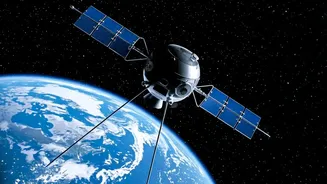
For decades, the model for Earth observation has been straightforward: a satellite captures images or data, and then transmits that enormous, raw file to a ground station. Only then can analysts begin the work of sifting through it for useful information.
This process is slow, expensive, and incredibly inefficient. Satellites generate staggering volumes of data every day, and the bandwidth to downlink it all is limited and costly. Furthermore, a huge portion of this data is unusable—think images completely obscured by clouds. For time-sensitive applications like disaster response or military intelligence, waiting hours or even days for data to be downloaded and processed can render it useless.
Giving Satellites a Brain
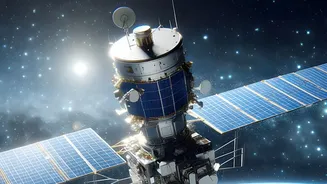
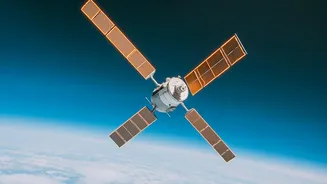
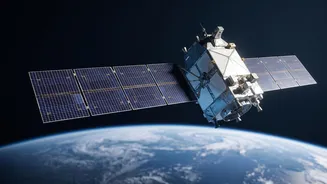
The solution is to process the data where it is collected: in space. This concept, known as edge computing, involves equipping satellites with powerful, compact computers and artificial intelligence algorithms. Instead of being a passive data pipe, the satellite becomes an active analyst. The onboard AI can perform tasks in near real-time, such as identifying specific objects, detecting changes on the ground, or even filtering out those cloudy images before they ever consume precious bandwidth. For example, an AI model can analyze a vast image of the ocean, identify potential illegal fishing vessels, and send down only those small, relevant clips with coordinates, rather than the entire terabyte-sized image.
From Raw Data to Real-Time Alerts
The real-world implications of this shift are profound. For disaster management, an AI-equipped satellite can spot the initial signs of a wildfire or map the extent of flooding and send an alert to emergency responders in minutes, not hours. In agriculture, satellites can analyze crop health and soil moisture on the fly, providing farmers with timely insights to improve yields. For security, it enables the rapid detection of activity in remote areas. This move from delivering raw data to providing 'analysis-ready' insights is transforming the business of geospatial intelligence. Companies like Planet, SpaceX, and startups such as Starcloud are heavily investing in this technology, aiming to build constellations of intelligent satellites.
The Challenges of Computing in Space
Putting a data center in orbit isn't simple. The hardware must be incredibly robust, able to withstand the extreme temperatures and radiation of space, which can damage electronics and cause 'soft errors' in processing. These AI systems also require significant computational power, which is hard to achieve on a satellite with a limited power budget. Furthermore, there are significant security concerns. An AI system in space could be vulnerable to hacking or data tampering, with little chance for physical intervention. If a flawed AI model is uploaded, it could compromise the entire mission, making the process of updating and maintaining software in orbit a complex challenge.
A New Era for Orbital Infrastructure
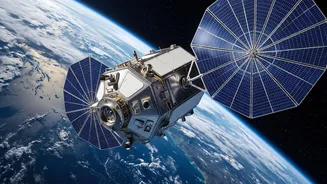
Despite the hurdles, the push for onboard AI processing is accelerating. Companies like Airbus and various government agencies are actively developing and deploying satellites with these capabilities. The European Space Agency's Φ-sat missions have already demonstrated the power of onboard AI for filtering images and other tasks. Recent launches, such as China's Supercomputing-1 satellite, highlight the global race to build this next generation of orbital infrastructure. The industry is evolving from simply launching hardware to creating a sophisticated, interconnected network of intelligent sensors in the sky. This will not only make data from space more accessible and timely but also unlock entirely new applications and services that we are only just beginning to imagine.