






The Strain of the Modern Workday
In our digitally driven world, spending hours fixed on a screen is the norm. This static posture, often with our heads tilted forward, creates what is now commonly known as 'tech neck'. When your head leans forward, the weight on your cervical spine increases
dramatically, forcing the muscles in your neck and upper back to work overtime just to hold your head up. This constant muscle engagement leads to fatigue, tightness, stiffness, and pain. It’s not just the neck; slouching or hunching over a laptop can lead to misaligned hips, compressed spinal discs, and overall postural strain that affects your entire body.
Why Long Breaks Aren't Enough
Many believe a full lunch break is sufficient to counteract hours of sitting, but the damage from static posture is cumulative. The strain builds up minute by minute. While a longer break is good for your mind and overall well-being, it doesn't undo the continuous tension that your postural muscles have endured for hours. The key to preventing this strain isn't just about taking one long pause, but about frequently interrupting the cycle of muscle fatigue before it can set in deeply. Think of it as hitting a reset button for your body throughout the day.
The Power of the Micro-Reset
This is where micro-breaks come in. These are short, intentional pauses, lasting anywhere from 30 seconds to a few minutes, taken frequently throughout the day. Research suggests taking a break every 20-30 minutes is effective. A micro-break works by allowing your muscles to relax, improving blood circulation, and reducing the continuous pressure on your spine. It gives your body a chance to shift out of a fixed position, which can alleviate postural discomfort and even reduce the onset of new neck and low-back pain. It's a small investment of time that pays huge dividends in physical comfort and can even boost mental focus.
Simple Micro-Breaks You Can Do Anywhere
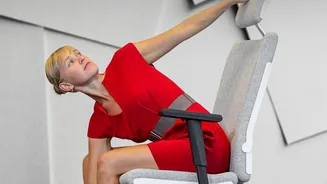
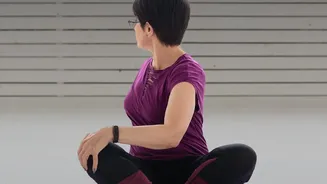
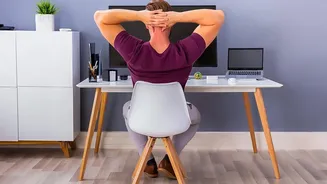
The beauty of a micro-break is that it doesn't require a gym or even leaving your desk. The goal is simple movement and a change of focus. Try these simple activities: Look Away: Follow the 20-20-20 rule. Every 20 minutes, look at something 20 feet away for 20 seconds to give your eyes a rest. Neck Stretches: Gently tilt your head from side to side (ear to shoulder) and perform chin tucks, where you gently pull your chin back to create a 'double chin' to activate and stretch neck muscles. Shoulder Rolls: Inhale and lift your shoulders up toward your ears, then exhale and roll them back and down. This releases tension in the upper back and shoulders. Stand and Stretch: Simply standing up from your chair, reaching your arms overhead, and taking a deep breath can work wonders. If you have space, a gentle torso twist or a forward fold can release back tension. * Take a Short Walk: Walk to the water cooler, the pantry, or even just a lap around your immediate work area to get your blood flowing.
Making Micro-Breaks a Habit
Knowing you should take breaks is one thing; remembering to do it is another. To build this healthy habit, try linking it to your workflow. For example, decide to stand up and stretch after you send every long email or finish a report. You can also use technology to fight technology-induced pain. Set a recurring timer or use a productivity app that reminds you to pause at regular intervals. The key is consistency. Start with just a few micro-breaks a day and notice the difference it makes. Before long, these small moments of self-care will become an automatic and essential part of your productive workday.