





An Unexpected Signal
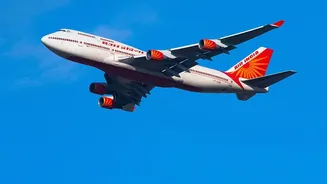
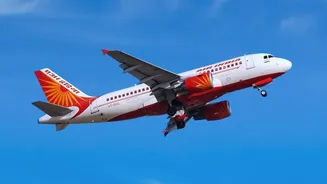
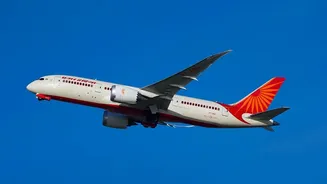
On a routine flight from Frankfurt to Delhi, Air India's Boeing 787, flight AI 2030, sent a signal that no one in aviation ever wants to see. The aircraft's transponder began 'squawking' the code 7500. For air traffic controllers (ATC) monitoring the flight,
this was an unambiguous and alarming message: the aircraft was declaring a state of unlawful interference, a term for hijacking. The immediate result was a diversion to Jaipur International Airport, where the aircraft was directed to an isolation bay to be met by security personnel. While the alert was eventually confirmed to be false, the incident triggered a full-scale emergency response, highlighting the critical nature of this specific code.
Decoding the Emergency 'Squawks'
So, what exactly are these codes? Commercial aircraft are equipped with a device called a transponder, which communicates with ground radar, helping ATC identify and track planes. Pilots enter a four-digit code, or 'squawk', assigned by ATC. While most codes are for routine identification, a few are reserved for universal emergencies, standardized by the International Civil Aviation Organization (ICAO). The three most critical are: 7500 for unlawful interference (hijacking), 7600 for a radio communication failure, and 7700 for a general emergency, like a fire or medical issue. A simple pilot's mnemonic helps remember them: '75, man with a knife (or can't drive); 76, radio fix; 77, going to heaven'. These codes allow a flight crew to signal distress silently and instantly, without a potentially dangerous radio call.
The Anatomy of an Emergency Response
The moment a 7500 squawk appears on a controller's screen, a well-rehearsed, high-stakes protocol begins. There is no ambiguity; authorities treat the signal as a genuine threat until proven otherwise. The first step for ATC is to attempt to confirm the code with the pilots. However, official procedure notes that if the pilots do not reply, this is taken as confirmation that the alert is real and not an error. Simultaneously, security and military agencies are notified. In many countries, this can lead to the scrambling of fighter jets to intercept and visually inspect the aircraft, a procedure known as Quick Reaction Alert (QRA). The aircraft is given priority over all other air traffic, and the ground is prepared for every eventuality.
Human or Machine Error?
False alarms, while rare, do happen. They can be triggered by a technical malfunction in the transponder or radio systems, as was the case in a recent Corendon Airlines incident in Europe. More commonly, it can be a simple human error. A pilot might inadvertently enter the wrong code while switching between frequencies. Given the gravity of the signal, these mistakes are taken very seriously, and procedures are designed to minimise them. However, in the high-pressure environment of a cockpit, mistakes can occur. The subsequent investigation into the AI 2030 incident will focus on pinpointing the exact cause to prevent a recurrence.
Why a False Alarm Still Matters
Even without a real threat, a false 7500 alert has significant consequences. It diverts immense resources, from air traffic controllers to airport security and potentially military assets. For passengers on board, the experience of an unexpected diversion and a heavy security presence can be incredibly stressful. It also presents a 'cry wolf' risk; too many false alarms could theoretically dull the sharpness of the response, though current protocols are built to resist this. Most importantly, it serves as a live-fire drill for the entire aviation safety system. It tests the communication chain between civil and military authorities and the on-ground emergency procedures, revealing both strengths and potential weaknesses in a real-world scenario.