




What is Ragi?
Ragi, known scientifically as Eleusine coracana, is a robust millet that has been a staple food in parts of India and Africa for thousands of years. Often referred to as finger millet, this hardy crop thrives in arid conditions, making it a sustainable
and reliable food source. For generations, it has been milled into flour and used to make everything from flatbreads and porridges to traditional dishes like ragi mudde in Karnataka. Recently, this humble grain has captured the attention of health-conscious consumers worldwide, celebrated not just for its versatility but for its impressive nutritional credentials and its suitability for modern diets.
A Nutritional Powerhouse
Ragi stands out in the world of cereals for its dense nutritional profile. It is renowned for being one of the best plant-based sources of calcium, crucial for bone health in growing children and adults. Finger millet is also packed with dietary fibre, which aids digestion, helps promote a feeling of fullness for weight management, and can assist in regulating blood sugar levels. Furthermore, it's a good source of essential minerals like iron, which is vital for preventing anaemia, and contains amino acids, protein, and B vitamins. Its low-fat content and negligible cholesterol levels make it a heart-healthy choice. The combination of these benefits has earned ragi the status of a superfood.
A Superior Gluten-Free Choice
For individuals with celiac disease or gluten sensitivity, ragi is an excellent and safe dietary option because it is naturally 100% gluten-free. Unlike many processed gluten-free products that can be high in starches and low in nutrients, ragi provides a wholesome, whole-grain alternative. The flour binds well in recipes, reducing the need for the gums and additives often found in gluten-free baking. This makes it a clean and simple swap in many dishes. When purchasing ragi flour, it's wise to check for a 'certified gluten-free' label to ensure there has been no cross-contamination during processing if you have a severe sensitivity.
Crafting the Perfect Ragi Crepe
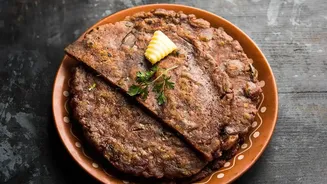
Making savoury ragi crepes, often similar to a dosa, is a straightforward process. There are two main approaches: a quick, instant batter or a traditional fermented one. The fermented method, which involves soaking urad dal and fenugreek seeds before grinding them and mixing with ragi flour, results in a batter with a tangy depth and improved digestibility, thanks to probiotics. This batter is left to ferment overnight. For a quicker meal, an instant batter can be made by simply whisking ragi flour with rice flour, a bit of semolina (rava) for crispness, water or curd, and salt until it reaches a thin, runny consistency. The key is a hot, lightly oiled pan or tawa. Pour the batter from the outside in to create a lacy, thin crepe that cooks until crisp.
Delicious and Versatile Pairings
The earthy, nutty flavour of ragi crepes makes them a perfect canvas for a variety of savoury fillings and accompaniments. Finely chopped onions, green chillies, ginger, and coriander leaves can be added directly into the batter for an instant flavour boost. These crepes pair wonderfully with traditional South Indian accompaniments like coconut chutney and sambar. You can also get creative with fillings. Consider a classic spiced potato masala, a protein-rich paneer bhurji, or a simple mix of sautéed vegetables. The versatility of these crepes means they can be adapted for a light breakfast, a satisfying lunch, or a nutritious dinner, proving that healthy eating can be both easy and incredibly flavourful.