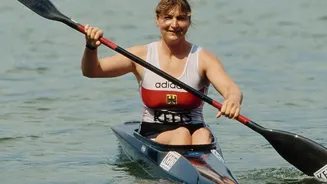







The choice between gliding across the water in a kayak or standing tall on a paddleboard often comes down to one question: which is the better workout? Both offer a refreshing escape, but their demands on the body are surprisingly different.
The Core Question: Stability vs. Rotation
Stand-up paddleboarding
(SUP) is famous for its core-strengthening benefits. The simple act of balancing on the board forces your deep core muscles, abdominals, back, and legs to remain constantly engaged. Every ripple on the water and each gust of wind requires micro-adjustments, turning even a calm paddle into a continuous stability challenge. Kayaking, on the other hand, builds core strength through powerful rotation. While you are seated, an efficient kayak stroke originates from your torso, not your arms. This twisting motion heavily recruits the obliques and lower back, providing a focused workout on your rotational muscles. If your goal is overall stability and engaging your legs, SUP has the edge; for rotational power, kayaking is superior.
Calorie Burn: Effort Outweighs Equipment
Many people assume one activity must burn more calories than the other, but the reality is more nuanced. The intensity of your effort is the most significant factor. A leisurely hour of paddleboarding might burn between 300 and 450 calories, while a casual kayak trip could burn up to 400 calories. However, when you increase the pace, the numbers climb. Vigorous SUP in choppy water or a SUP yoga session can burn over 500 calories an hour. Similarly, a fast-paced touring kayak session can burn well over 400 calories. The conclusion is clear: a high-intensity session in one sport will always burn more calories than a relaxed session in the other. Your workout's intensity, not the vessel, dictates the caloric burn.
Muscle Engagement: Full Body vs. Upper Body Focus
Stand-up paddleboarding is widely considered a full-body workout. Balancing requires constant activation of your leg and glute muscles, your core is always on, and paddling works your arms, shoulders, and back. This makes it an excellent choice for those seeking a single activity that targets nearly every muscle group. Kayaking is more of an upper-body powerhouse. The repetitive pulling motion is fantastic for building strength and endurance in your back, shoulders (lats and deltoids), and arms. While your legs and core are engaged for stability and power transfer, the primary focus remains on the torso and upper limbs. For a workout that feels more like traditional strength training for your upper body, kayaking is ideal.
Cardiovascular Impact and Accessibility
Both sports provide excellent low-impact cardiovascular exercise, making them easier on the joints than activities like running. Kayaking allows paddlers to settle into a steady aerobic rhythm more quickly, as balance is not a primary concern. This makes it a preferred choice for long-distance endurance training. Paddleboarding can also provide a great cardio workout, but beginners often find their heart rate spikes from correcting their balance rather than from consistent paddling. In terms of accessibility, kayaking's seated position can be more forgiving for those with balance issues, bad knees, or ankle problems. Conversely, the freedom to stand, kneel, or sit makes paddleboarding feel more versatile for others.