





The Oxygen Problem on Mars
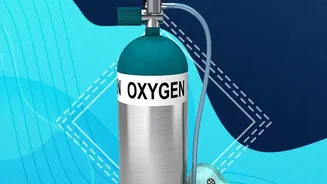
Any long-term human presence on Mars faces a fundamental logistical hurdle: oxygen. The Martian atmosphere is about 100 times thinner than Earth's and is composed of 96% carbon dioxide (CO2), with only a tiny fraction of oxygen. For astronauts to survive,
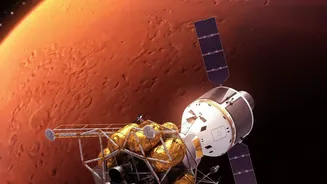
they need a constant supply of breathable air. But the bigger need is for rocket propellant. To launch a crew off Mars for the journey home, a hypothetical Mars Ascent Vehicle would require tens of tonnes of liquid oxygen. Transporting that much oxygen from Earth is prohibitively expensive and complex, adding immense weight and cost to any mission. This single problem has been one of the greatest barriers to planning a sustainable, round-trip human mission to the Red Planet. The solution isn't to carry more but to live off the land, a concept known as In-Situ Resource Utilization (ISRU).
A Mechanical Tree for Mars
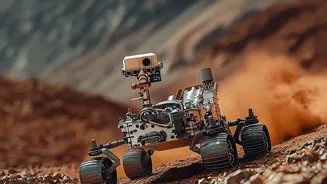
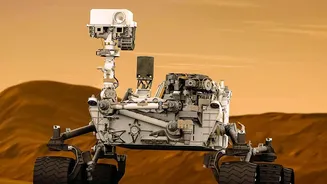
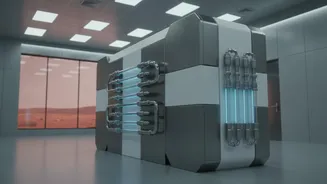
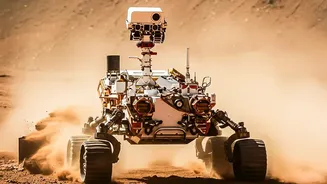
At the heart of this new approach is an instrument called MOXIE (Mars Oxygen In-Situ Resource Utilization Experiment), a toaster-sized device aboard NASA’s Perseverance rover. MOXIE works like a mechanical tree, breathing in the toxic Martian atmosphere and exhaling pure oxygen. The process is called solid oxide electrolysis. It starts by pulling in Martian air through a HEPA filter to remove dust. The air is then compressed and heated to a blistering 800°C. At this extreme temperature, the CO2 is fed into a stack of ceramic cells. An electric current is applied, which splits the carbon dioxide molecules (CO2) into oxygen ions (O-) and carbon monoxide (CO). The ceramic electrolyte material is specially designed to allow only the oxygen ions to pass through, which then recombine on the other side to form pure, breathable oxygen (O2). The carbon monoxide is vented back into the atmosphere as a waste product.
From a Toaster to a Factory
Between 2021 and 2023, MOXIE successfully and repeatedly produced oxygen on Mars, proving that the core technology works in the harsh Martian environment. In its final run, it produced nearly 10 grams of oxygen in an hour. While this is a monumental achievement—the first time a natural resource on another planet has been harvested for human use—it’s a small amount, roughly enough to keep a small dog alive for a couple of hours. The challenge now is scaling up. A full-scale system capable of producing enough oxygen for a return journey would need to be about 200 times larger than MOXIE, generating two to three kilograms of oxygen per hour. This 'Big MOXIE' would require about 25-30 kilowatts of continuous power, likely supplied by a dedicated solar farm or a small nuclear reactor. Researchers are already designing and testing larger-scale electrolysis stacks on Earth, building on the lessons learned from the rover experiment to create a robust, autonomous oxygen factory on Mars.
The Dual-Purpose Game Changer
The oxygen produced on Mars has a dual purpose that makes it a true game-changer. The most immediate benefit is providing breathable air for astronauts within their habitats. But the vast majority of the oxygen produced—over 75%—would be used as a liquid oxidizer for rocket propellant. By manufacturing the propellant for the return trip on Mars itself, missions can launch from Earth with significantly less mass. This not only reduces costs but also opens up new possibilities for mission design. The carbon monoxide byproduct from the electrolysis process could also be used. Scientists are exploring how to combine it with hydrogen (potentially from Martian water ice) to create methane, another powerful rocket fuel. This would mean future explorers could potentially create a full propellant package—fuel and oxidizer—entirely from Martian resources, a critical step towards making Mars a sustainable base for exploration.