




What is the Square Kilometre Array?
The Square Kilometre Array (SKA) is an ambitious international project to build the world's largest and most sensitive radio telescope. Unlike traditional optical telescopes that see visible light, the SKA is designed to detect radio waves—extremely faint
signals that have been travelling across the cosmos since the universe was in its infancy. Its name comes from its goal: to create a total collecting area of one square kilometre. Construction on this massive instrument began in December 2022, and it is steadily moving toward full operational status, with key components now coming online. The project is not just one telescope, but a vast network of antennas spread across two continents, all working together as a single, powerful eye on the universe.
A Tale of Two Continents
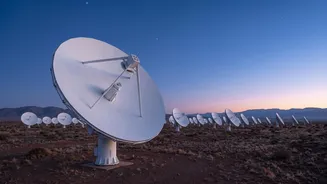
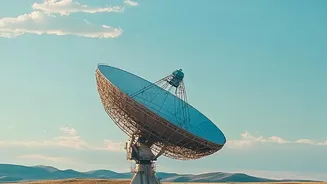
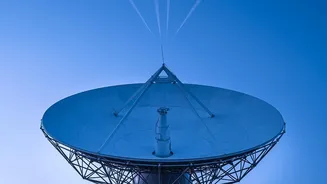
The SKA is split into two distinct components, hosted in the remote, radio-quiet deserts of South Africa and Australia. In South Africa's Karoo region, the SKA-Mid array will consist of nearly 200 large dish antennas. This part of the telescope, which builds on the successful MeerKAT precursor array, will observe mid-frequency radio waves. Meanwhile, in Western Australia on the traditional lands of the Wajarri Yamaji, the SKA-Low telescope will comprise over 131,000 small, Christmas-tree-like antennas. This array is designed to capture low-frequency signals. By placing these arrays thousands of kilometres apart and combining their data through a process called interferometry, astronomers can achieve incredible resolution, simulating a single telescope of immense scale.
Listening for the Cosmic Dawn
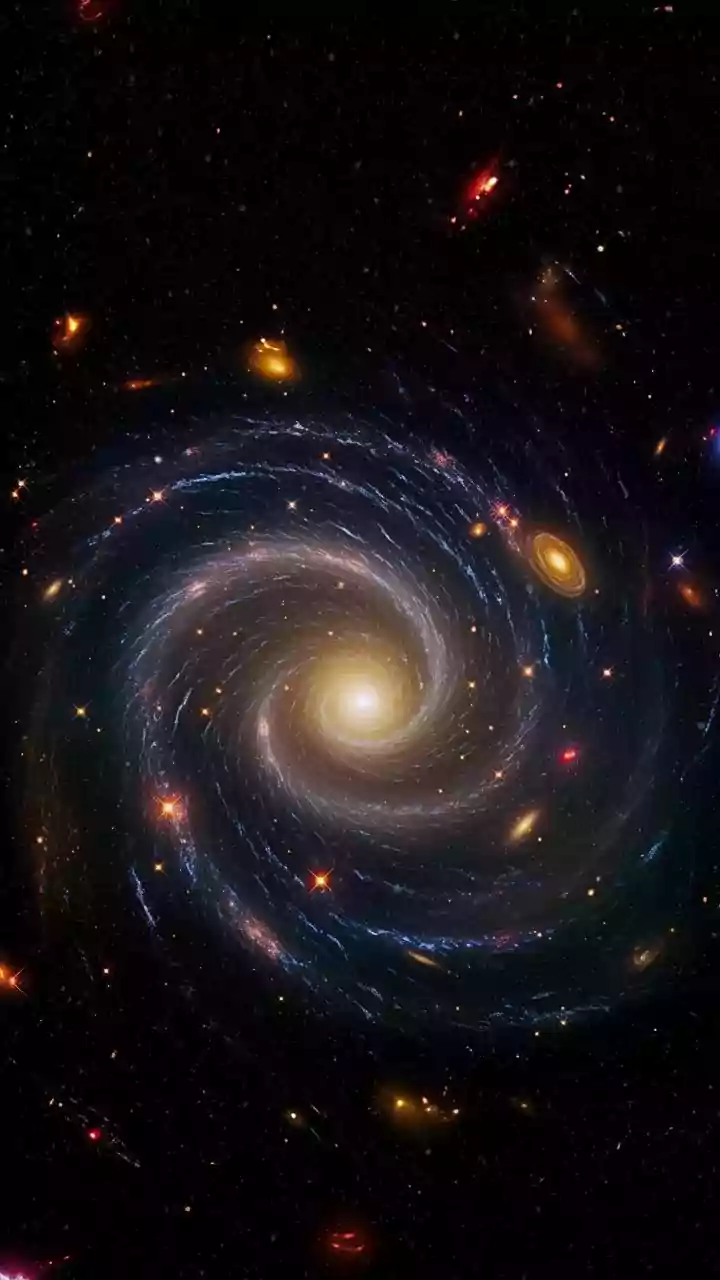
One of the SKA's primary missions is to explore a period known as the Cosmic Dawn and the subsequent Epoch of Reionisation. This refers to the era, just a few hundred million years after the Big Bang, when the very first stars and galaxies began to form, lighting up what had been a dark, neutral universe. The light from these first objects is now incredibly faint and stretched into long radio wavelengths by the expansion of the universe. The SKA-Low telescope in Australia is specifically designed to detect the faint signature of neutral hydrogen from this era, allowing scientists to create the first maps of the early universe and watch as the first stars were born. It's the astronomical equivalent of listening for the universe's first heartbeat.
More Than Just First Light
Beyond the early universe, the SKA's science goals are vast and transformative. It will conduct extreme tests of Einstein's theory of general relativity by timing the signals from pulsars—rapidly spinning neutron stars that act as nature's most precise clocks. It will also investigate the nature of dark energy and dark matter, the mysterious components that make up most of our universe, by mapping the distribution of millions of galaxies. The telescope's incredible sensitivity will also open new windows into studying cosmic magnetism, the formation of planets, and even the search for technosignatures—potential signals from extraterrestrial intelligence.
A Data Revolution in Progress
The SKA isn't just an astronomical instrument; it's a data-processing marvel. The sheer volume of information collected by its hundreds of thousands of antennas will be staggering, far exceeding the data generated by most other scientific projects. Each array will require a supercomputer capable of performing over 100 quadrillion calculations per second to process the signals in real time. As of early 2026, crucial milestones have been achieved, with the SKA-Mid in South Africa achieving its "first fringes" by successfully combining signals from two dishes. Science commissioning has also begun at SKA-Low in Australia, and the project remains on track to begin delivering revolutionary science by the end of the decade.